Neighbor News
Senator Pete Harckham Tours Pace University's Nursing Labs
College of Health Professions' Faculty & Staff outline ways to increase critical staff pipeline
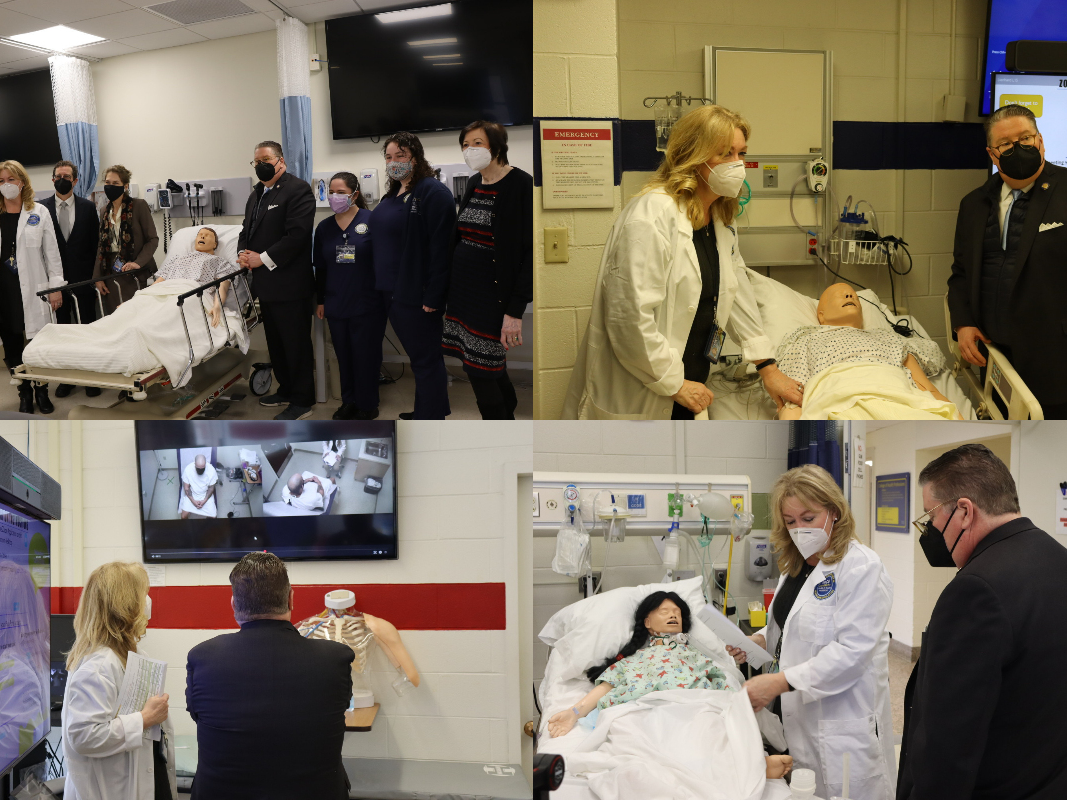
Pace University hosted New York State Senator Pete Harckham on a tour of its clinical simulation labs and held a roundtable discussion on addressing New York’s critical need for nurses and other primary care professionals.
In visiting Lienhard Hall, home to Pace’s College of Health Professions and its Lienhard School of Nursing, Harckham joined faculty, staff, and nursing students – all of whom shared their experiences in the field and discussed ways to address the nursing shortage and expand the healthcare worker pipeline, a staffing issue that has been exacerbated by the COVID-19 pandemic.
"The stress and strain of the pandemic have exacerbated the existing shortage of nurses in New York State,” said Senator Harckham. “I am thrilled to be able to spend time with this new generation of nurses at Pace University, who will greatly benefit the workforce. It is critical that we encourage and reward people to join the nursing profession, which needs rejuvenation and reinforcements."
Find out what's happening in Pleasantville-Briarcliff Manorfor free with the latest updates from Patch.
“Simulation is an evidence-based component of training of multiple health professions that has been proven to enhance student learning, confidence, clinical skills and ultimately improve the quality of patient care,” said Marcus Tye, dean of Pace University’s College of Health Professions. “Incentivizing preceptors and expanding the use of simulation in healthcare training will help increase the supply and quality of our future health workforce.”
Nurses provide 90% of all care to patients in hospitals, and by 2030 there is a projected shortage of more than 39,000 registered nurses in New York, according to the New York State Department of Health. The challenge is so great across the country that The American Nurses' Association called for the Department of Health and Human Services to declare a national nurse staffing crisis.
Find out what's happening in Pleasantville-Briarcliff Manorfor free with the latest updates from Patch.
Further complicating the situation is that many schools are limited in the number of licensed nurses they can prepare, despite great interest in the field, because of a shortage of clinical training experiences.
“I have met with numerous chief nursing officers from NYC and Westchester County healthcare agencies, all of whom voiced deep concern about current and pending severe staffing shortages,” said Rhonda Maneval, vice dean for the College of Health Professions and the Lienhard School of Nursing at Pace University, who Pace University faculty have been leaders in advocating for ways to prepare and educate more people for a career in healthcare through a series of measures and proposals including providing practitioners with tax credits as well as passage of a bill that would recognize a portion of a student’s time spent in a controlled simulation laboratory count toward their required clinical hours.
“When it comes to preparing nurses for a complex work environment, far too many healthcare facilities and schools are in a catch-22 situation: They have a shortage of nurses and space to dedicate to student clinical experiences, and as a result, schools are therefore limited in the number of healthcare workers they can prepare for the workforce,” said Dr. Harriet R. Feldman, chief wellness officer, professor and dean emerita of the College of Health Professions and the Lienhard School of Nursing. “Through smart legislation and policy, however, nursing schools and host institutions can work together to increase the pipeline of workers ready to respond to emergencies.”
For Cristina DeRose, a senior majoring in nursing, classes that take place in a simulation lab are productive and mirror real life emergencies. “With simulation, you know every student has gotten the experience necessary to work in the field.”
Senior Alexis Ninonueva agreed: “Simulation is especially helpful. Time in the sim lab gives you confidence and Pace is doing a great job preparing us for the profession.”