Schools
Once Upon a Fraction
Dobbs Ferry Middle School implements program to teach writing across the curriculum.
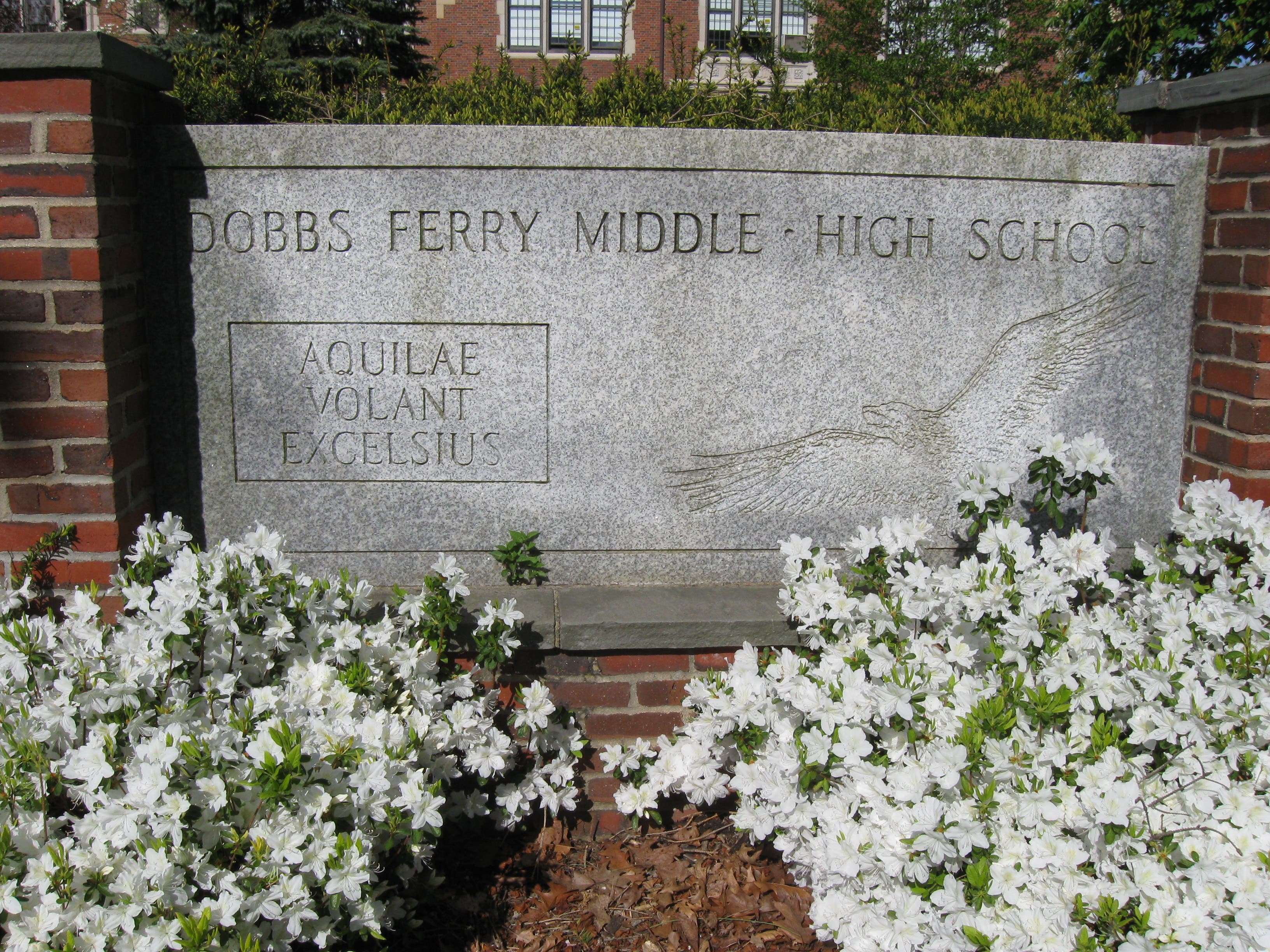


Once they reach middle school, most kids are accustomed to having to write papers and essays and stories in their English classes. But in math? Or science?
In Dobbs Ferry, the answer is, "Yes."
"I gave an assignment in which students had to pretend they were red blood cells," said Dobbs Ferry seventh-grade science teacher Adrienne Earley. "And they had to explain their journeys through the parts of the heart and make that into a story."
Find out what's happening in Rivertownsfor free with the latest updates from Patch.
Projects like Earley's are part of a program initiated in 2008 designed to emphasize writing across the entire curriculum. Implemented district-wide from kindergarten through high school, it is an attempt to bring the district's writing program to the next level.
The program encourages the idea of writing as an instructional tool, regardless of the content. This new way of doing things understandably caught some students off guard. "We still hear from students, 'Why are we writing in math? This is math!' But the point is that writing transcends all content areas," Marjorie Holderman, Director of Curriculum and Instruction, said. "It's a tool for learning. We're using writing not as a formal instruction, but as a way to help them better understand new concepts."
Find out what's happening in Rivertownsfor free with the latest updates from Patch.
Though the entire District is incorporating the program to some degree, the concept has been especially embraced by the Middle School, where the teachers have let their imaginations run wild. For example, a seventh-grade math teacher had the kids create mathematical fairy tales such as "Snow Right and the Acute Angles."
In science, in addition to the adventures through the heart, students were given an assignment in which they pretended to be animals living in a biome and wrote about the struggles they would face and what they would need to do to adapt to their habitats.
Not only do exercises such as these help build writing proficiency, they give the children an opportunity to delve deeper into the subject by coming at it from a different angle. "Looking at our students and looking at the data, we all came to the conclusion that students were thinking that writing was just for English, and not realizing that it needed to go across the content areas. They needed to be able to express themselves in a written form with different types of information," Earley said.
Dobbs Ferry Middle School Assistant Principal Ann Pecunia is a great proponent of the program, seeing it as a benefit not just for the students, but for the teachers as well. "The professional growth that we've had with the sharing between teachers has been really great," she said. "The science teacher worked closely with the English teacher to understand how to teach writing and reinforce it. She's actually reinforcing concepts that were already taught in the English."
"We see teachers talk about different strategies they're using to promote writing in their classrooms," Holderman said. Also a fan, she pointed to multiple benefits the students get from the increased emphasis on writing, which include: clarifying thinking, reinforcing learning and encouraging reflection on the subject at hand--all real-world skills that will help them later on in life.
"Writing is really what we do in our every day life,"Holderman said. "We write lists as reminders. We write letters to say 'thank you.' We write reflections to help us think more deeply about what we've learned. The teachers will tell you that student learning is deeper and richer as a result of increased writing."
Earley agreed. "I think the writing program has brought on an awareness for the students that grammar, spelling and punctuation all count across the content areas," she said. "Ultimately when they get out into the real world, they're going to have to be able to express themselves with the written word."
By finding ways to make the assignments creative, teachers such as Earley have gotten their students more engaged in both the writing and the subject matter. "They're given the opportunity to be creative," she said. "They're still applying the same information and learning the information, but it's piquing their interest. When a kid is more interested in the material they're studying, they're going to grasp that material much more quickly than they would, say, sitting bored in a lecture."
While they have yet to receive the students' assessment scores to see if there has been quantifiable improvement, Holderman and Pecunia both feel that the program has been an unqualified success, and there is no plan to alter or eliminate it.
The district will continue to emphasize writing across the curriculum for the foreseeable future. "All teachers teach writing," Pecunia said. "Basically that's the bottom line. Every teacher teaches writing."