Kids & Family
Historian Recounts "Shameful" NY Riots at Rye Historical Society Luncheon
At the Rye Historical Society luncheon, keynote speaker historian Barnet Schecter described the 1863 Civil War Riots as "the most shameful episode in New York history."

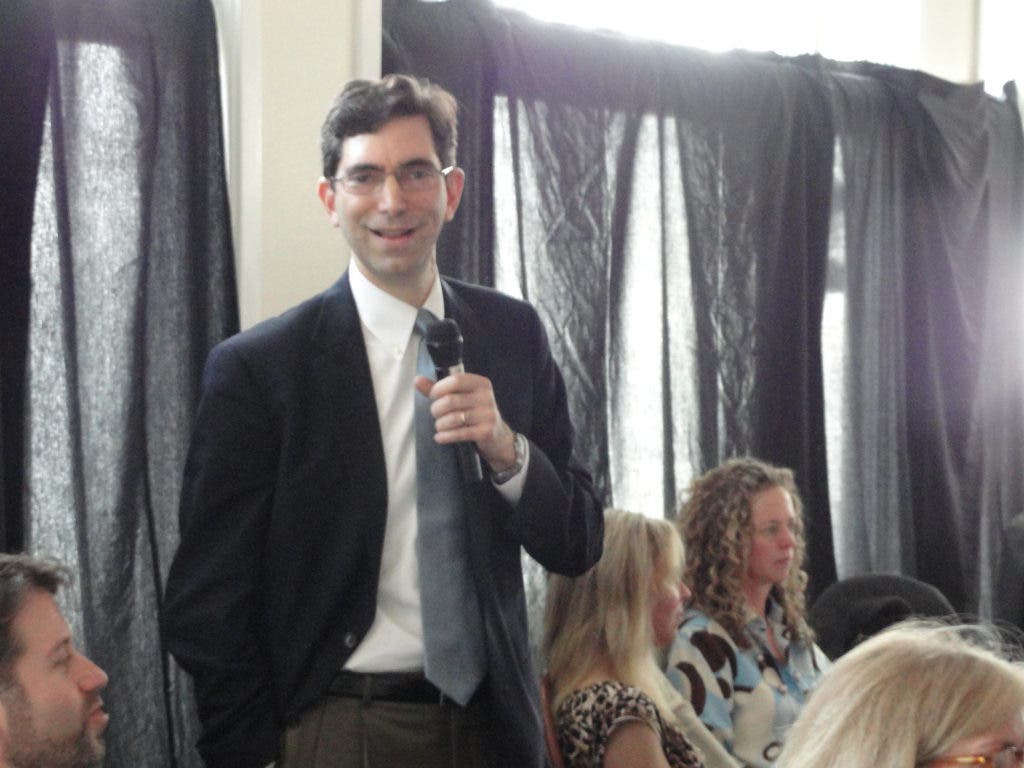
"It was the most shameful episode in New York history," said historian Barnet Schecter to his audience at the on Thursday. Schecter was keynote speaker at the 's annual luncheon and riveted the guests with his narrative of the 1863 Civil War riots which took place in New York City in July of 1863.
When director Sheri Jordan invited Schecter to give the luncheon's keynote address, he thought they wanted him to speak on a different topic: his 2010 book, George Washington's Maps: A Biography Through His Maps.
But Jordan had other ideas, Schecter said she suggested he talk about the events of another of his three books (all focused on New York history) titled The Devil's Own Work: The Civil War Draft Riots and the Fight to Reconstruct America.
Find out what's happening in Ryefor free with the latest updates from Patch.
Schecter said the topic is timely. Commemorations of the 150th anniversary of the Civil War will span 2011 to 2015, including the anniversary of President Lincoln's Gettysburg Address and the New York Civil War Riots that Schecter vividly described at the luncheon.
Tensions erupted after President Abraham Lincoln called for the first federal draft in the United States history. The seceded states of the Confederacy had already begun drafting soldiers to fight the conflict between the states and the Union forces needed reinforcements to counter.
Find out what's happening in Ryefor free with the latest updates from Patch.
The core of the resentment, Schecter offered, was two-fold. The draft allowed those with the financial means to evade conscription by either paying $300 cash or providing a substitute man to take their place. Schecter said men of means "bid up the price" of a proxy to upwards of $1000 in some cases. The lesser-discussed cause was racism. Schecter said the federal draft "laid bare the depth of anti-war sentiment and pro-slavery [attitudes]" in New York City and other parts of the North.
And the brunt of the outrage was taken by New York City's population of approximately 12,500 free African-Americans within the estimated 800,000 city residents.
"It began in the wee hours of the morning," said Schechter of the riots. He called them a "horrifying kind of racial pogrom" that spanned four days of arson, lynching and looting.
Schecter said 5,000 black men, women and children left homeless. While some newspapers claimed there were 105 people left dead, the true number "was probably close to 500." Schecter said accounts in one of New York's African American newspapers reported 175 African-Americans left dead.
"People tend to shy away from covering these events," said Schechter, but stressed the overlooked episodes had a ripple effect on the unfolding of American race relations far into the twentieth century.
Get more local news delivered straight to your inbox. Sign up for free Patch newsletters and alerts.