Arts & Entertainment
Lincoln, Shakespeare, Painting & Civil War at JHC
Rye's historic Jay Heritage Center has an illustrious trifecta featuring dramatic readings, portrait unveiling and landmark exhibit with the promise of more to come showing the Bard's influence on America's historical leaders.
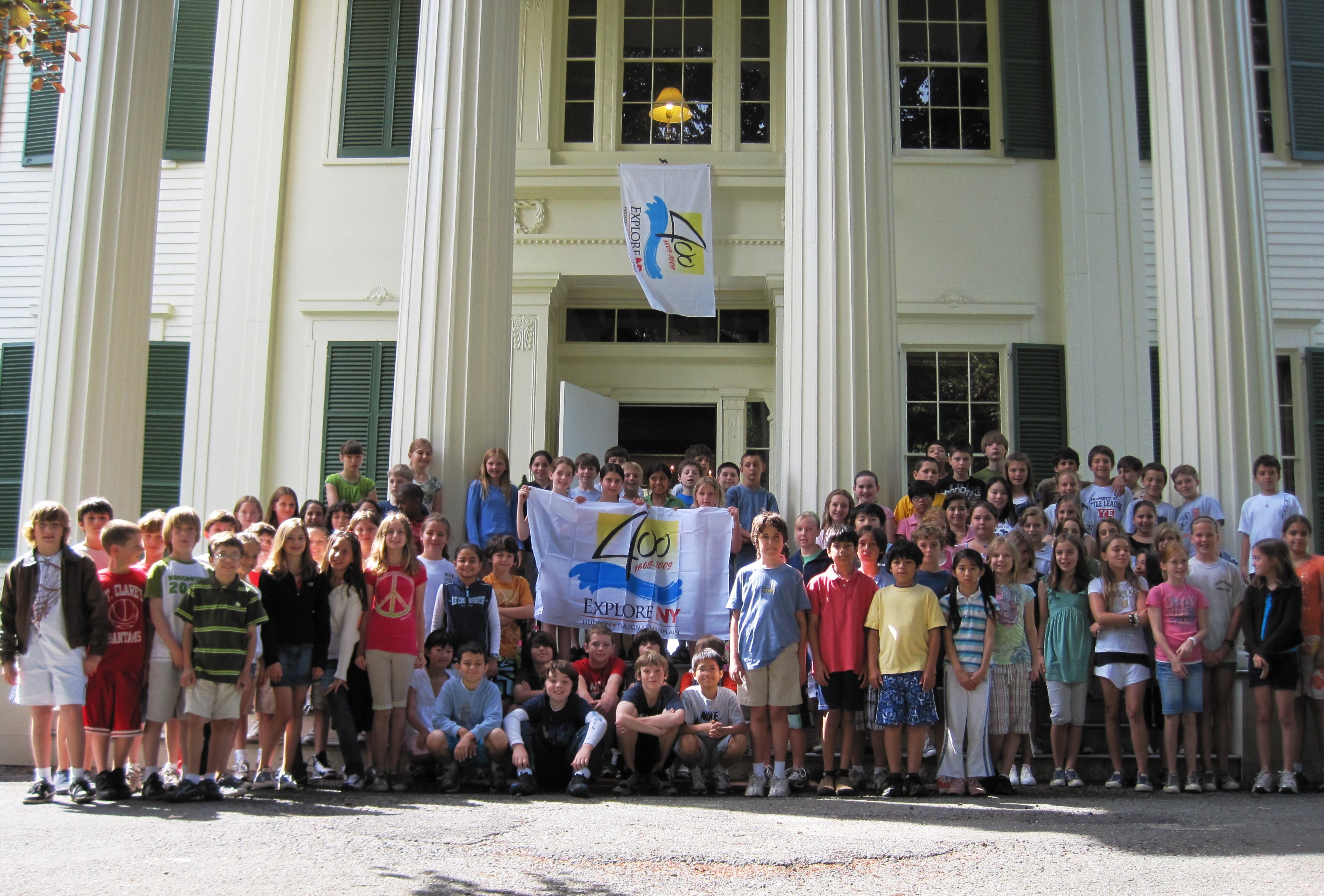
Show biz, Shakespeare, art and history are on tap in a historical trifecta in Rye.
For openers, the curtain went up on an event filled with Lincoln and Shakespeare dramatic readings by noted Broadway stars. That performance set the stage for Rye’s Jay Heritage Center’s plan to present future programs mingling the Bard with American history.
The program –co-sponsored by The Shakespeare Society –featured theatre luminaries Jefferson Mays and John Douglas Thompson and essayist Adam Gopnik in a program called “Lincoln and Shakespeare: Dramatic Readings.”
Find out what's happening in Ryefor free with the latest updates from Patch.
It was the curtain-raiser on an ongoing program that examines how our nation’s historical leaders –including Rye’s own John Jay -- invoked literary works by Shakespeare to inspire the American public.
The Shakespeare-Lincoln program is part of an unusual Jay Heritage trifecta Sunday that also includes the unveiling of a priceless portrait of Alice Jay, John Jay’s granddaughter, by pre-eminent New York artist Daniel Huntington (1816-1906).
Find out what's happening in Ryefor free with the latest updates from Patch.
The painting was donated by one of John Jay’s descendants, Ada Harcourt Hastings of Great Barrington, Mass., in celebration of the continued restoration of the 1838 Jay House in Rye.
It hangs once again in the mansion’s drawing room as it did during the Civil War days when Alice’s father, Dr. John Clarkson Jay (John Jay’s grandson) was a vocal opponent of slavery like his grandfather and father before him.
He was instrumental in leading efforts in Rye to recruit volunteers for the Union efforts during the Civil War, a campaign which drew enlistments from Alice’s two older brothers, Peter, who became Captain of a local militia, and John, who served as an assistant surgeon.
Another Civil War link in the JHC trifecta is the grand opening of an ongoing free exhibit called “The Jays and the Abolition of Slavery: From Manumission to Emancipation” co-sponsored by The New York Historical Society and New York Heritage Weekend. Hours: 10 a.m. to 4 p.m. in the 1838 Jay Mansion.
The landmark exhibit examines the prevalence of slavery in New York and the role of John Jay and his descendants in abolishing it. Ironically Jay, like many of the Founding Fathers, grew up with slaves at his home and owned slaves himself but was nevertheless committed to the elimination of this practice and the slave trade that perpetuated it.
The exhibit tells the stories of all the 18th and 19th century residents of the Jay estate, including Jay slaves, Caesar, Clarinda, Mary and Pete, and includes the fact that the slaves were also emancipated and buried with respect on the same land as their owners.
The exhibit is open Sundays, May 22 - October 2, 2 p.m. to 5 p.m. One of the leading characters in that exhibit will be Rye's own John Jay (1745-1829), first Chief Justice of the U.S. Supreme Court, second governor of New York State, a president of the Continental Congress, a former U.S. Ambassador to Spain and France, a co-author of the Federalist Papers, as well as a leading spokesman against slavery who passed laws for the emancipation of slaves in 1789.
John Jay's historic background, the Alice Jay portrait unveiling and the exhibit commemorating the 150th anniversary year of the Civil War provide a dramatic backdrop for the program featuring the Lincoln and Shakespeare Dramatic readings.
Essayist and author Adam Gopnik (whose works include “Lincoln and Modern Life”) examine the words of Lincoln and Shakesepeare, going beyond the rhetorical echoes and linguistic similarities to show how they both shared a view of the Civil War as the great human catastrophe.
That viewpoint was dramatically illustrated by Mays and Thompson with readings from Macbeth, Henry IV, Henry VIII, and Hamlet as well as Lincoln’s writings.
Each actor brought his own interpretative talents to his readings. Mays, perhaps best known for his “I Am My Own Wife” and “Measure for Measure," is a Tony and Drama Desk Award winner; Thompson, renowned for his performances in “Othello” and “Emperor Jones,” is an Obie and Lortel Award winner and has been called one of the world’s great Shakespearian actors by NY Times drama critic Ben Brantley.
JHC president Suzanne Clary, a former art history major at Yale, and one of the prime movers behind the historic Rye trifecta, brings it all home to Rye by pointing out that like Lincoln, John Jay was a devoted reader of Shakespeare perhaps most famously evidenced by his reference in Federalist Paper No. 2, under the pseudonym of Publius, to Shakespeare’s Henry VIII.
Writing in 1788, in a rallying cry to the nation to oppose forces jeopardizing our nation’s solidarity, Jay warned the nation that: “I sincerely wish that it may be as clearly foreseen by every good citizen, that whenever the dissolution of the Union arrives, America will have reason to exclaim, in the words of the poet: “FAREWELL! A LONG FAREWELL TO ALL MY GREATNESS.”
It all promises to add up to inspired words, inspired readings, an inspired painting, an inspired exhibit and an inspired planning behind an inspired historic trifecta with the promise of more to come. Bravo!