

A few months ago, four Sayville girls learned about the story of Marisa Carney and her family in their fight against ROHHAD.
Marisa was diagnosed with ROHHAD (Rapid-Onset Obesity with Hypothalamic Dysfunction, Hypoventilation and Autonomic Dysregulation Presenting in Childhood), in June 2010 at the age of four.
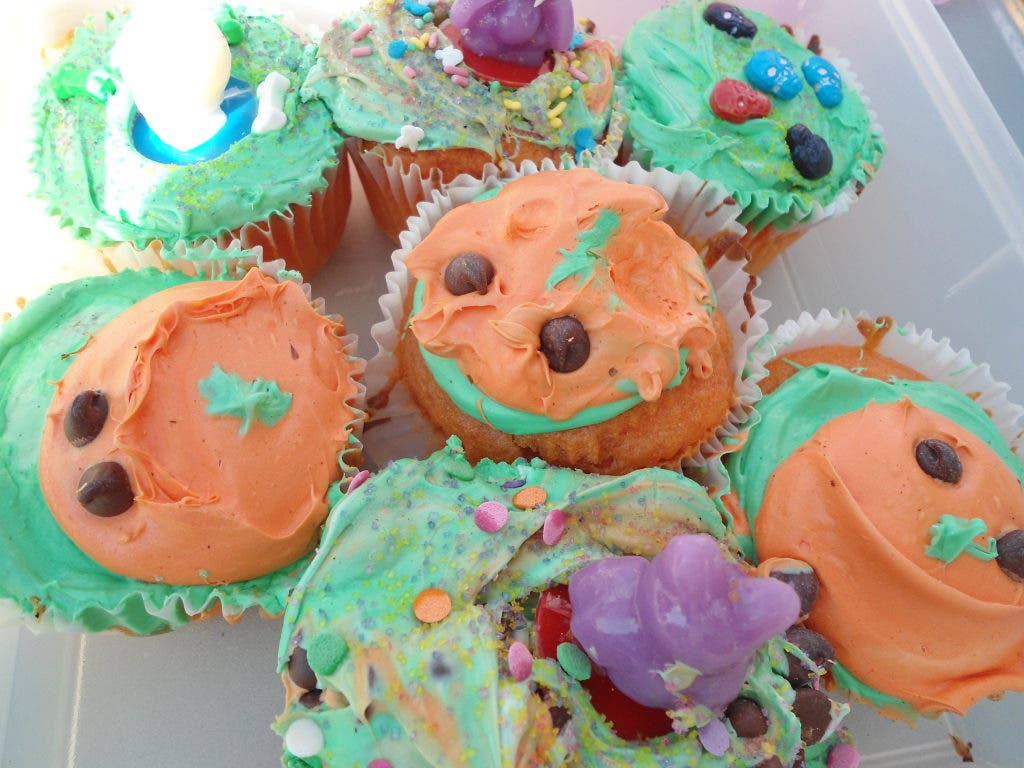
After reading about Marissa’s story, they wanted to do something to help her out anyway they could. Emma and Hannah Schrader, Alexa Levin and Nicole Sgroi used cupcakes as their inspiration.
Find out what's happening in Sayville-Bayportfor free with the latest updates from Patch.
As Hannah and Emma’s mother Laurie held a garage sale at their home on Lincoln Avenue, the girls thought it would be a perfect time to coordinate their cupcake sale.
Setting up small table outside filled with wonderfully decorated Halloween-themed cupcakes, the girls took turns selling each treat for $1. With Marissa’s picture from the cover of Newsday attached the table, donors understood their money was going toward a good cause.
Find out what's happening in Sayville-Bayportfor free with the latest updates from Patch.
“These girls don’t even know Marissa,” said mom Laurie when asked about the connection to the little girl. “If this allows this little girl just to get something extra, then we did our part. If it makes her just a little happier, that is all that matters.”
At the end of the garage sale, Laurie told the girls she would match any donations they received. They ended up with $150 to be donated to www.rohhadfight.org.
“If what they did inspires someone else to do something nice, then that is great,” Laurie said. “It may just make people stop and think about how lucky they are.”
ROHHAD is a very rare disease with approximately 75 cases documented worldwide. There is no treatment or cure for ROHHAD and the source of this disease has not yet been determined. Symptoms of ROHHAD vary for each child and are usually misdiagnosed. They generally start with rapid onset obesity in the first two to four years of life then lead to impairment of the nervous system and inevitably reduced lung function, leaving most ROHHAD patients unable to breathe without the assistance of a ventilator.