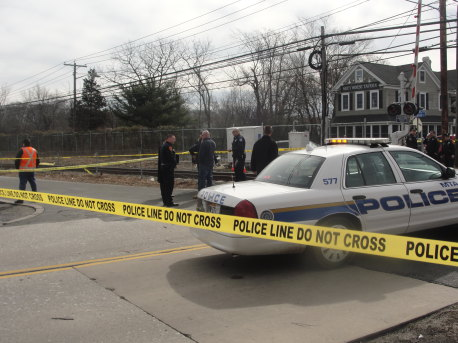
The tragic death of a 14-year-old boy at the Sayville train crossing this weekend was a focal point today at Sayville High School with staff and administrators ensuring that students are aware of support services and available counseling.
“Our district plan offers counseling for students at all levels as we don't always know how a tragedy such as this impacts neighbors, friends,” said Superintendent Dr. Walter Schartner in an email to Patch.
District leaders also said parents can contact their child’s guidance counsel on the secondary level or a school social worker at the elementary level for any support that may be needed in light of the teenager’s death.
The death, which a MTA spokesperson stated was likely not an accident, comes just over a year after a 24-year-old Bayport man, Matthew Omans, killed himself on the tracks at the Bayport Avenue crossing on March 9, 2012.
If the Sayville teen’s death, which occurred Saturday at about 9:30 p.m., is officially ruled a suicide it would be the fourth such incident on the tracks between the communities of West Sayville and Bayport in the past three years.
On August 21, 2011, Stephen Caracost, 22, of Sayville, was killed by a train near McConnell Avenue in Bayport. Maryanne Cannon, 47, of Oakdale, died on August 6, 2010, on the tracks between Rollstone Avenue and Cherry Avenue in West Sayville.
According to the MTA the county medical examiner offices in Suffolk and Nassau make the final determination on whether a fatality on the tracks is a suicide or accident.
In a Patch article last year the MTA Police provided figures regarding suicide incidents for the years 2007 to 2011.
In 2011 there were six in Suffolk and six in Nassau. In 2010 there were nine in Suffolk and three in Nassau. In 2009 there were three suicides on the tracks in Suffolk and nine in Nassau. The year 2008 had three in Suffolk and four in Nassau. The year of 2007 had nine in Suffolk and seven in Nassau.
The MTA said the figures do not represent a total as there were some suicide incidents in Queens and some incidents remain undetermined, according to MTA spokesman Salvatore Arena.
In 2009 the MTA, in a partnership with two local suicide prevention organizations, launched the LIRR Suicide Prevention Program, to deter suicides on railroad property through community outreach.
The program provides experienced counselors to intervene and talk to callers considering suicide, and established a toll-free 24-hour hotline, (877) 5-TALK-TO-US (877-582-5586), for individuals that may be contemplating suicide on LIRR property.
According to material provided by the MTA, if the caller is on LIRR property, the counselor will immediately notify MTA Police and local police and direct them to the location. Since the program’s inception, the MTA said at least two cases in which a potential suicide was avoided as a result of this program.
Get more local news delivered straight to your inbox. Sign up for free Patch newsletters and alerts.