Community Corner
The Early Years of Bayport
What went on in Bayport before the hamlet received its current name? Our history columnist discusses Bayport's early history in this week's column.
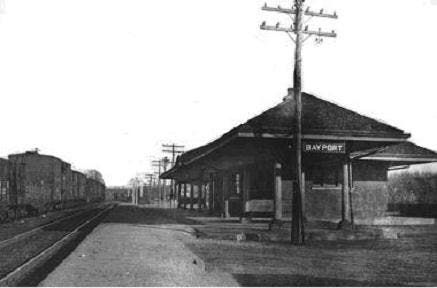

A majority of the area's history occurred before Bayport even received its current moniker. It all started when William Nicoll III, born to a wealthy family in Islip, Northamptonshire, United Kingdom, purchased a vast region of land that encompassed many current Long Island towns, including Bayport.
The land deed, dated 1697, did not include the Great South Bay bottom; this was unfortunate for this prominent citizen as it prevented him from profiting from all the bay had to offer. In those days, the bay was a major source of income for residents.
William Nicoll III died in 1780, and his son William Nicoll IV, despite what was asked for in Nicoll III's will, broke up the land. Nicoll IV sold the portions of this massive property to clear his debt. When Jeremiah Terry and Gersham Hawkins bought the land plots in 1786, the town now known as Bayport was born.
Find out what's happening in Sayville-Bayportfor free with the latest updates from Patch.
In 1820 and 1823, Nicoll IV sold more land, most of which was used by the new residents for farming. The addition of new families and farms to the area provided the little town with durability. Around this time the area was referred to as Southport or Middle Roadville. The hamlet was given the name Bayport in 1871.
In 1850 the national census reported approximatley 56 families living in Bayport, an increase from the families present less than a century earlier. In 1790, when George Washington passed through Bayport on a tour of Long Island as President of the new republic, Bayport had only 10 families.
Find out what's happening in Sayville-Bayportfor free with the latest updates from Patch.
Seventy percent of the households of the mid-19th century relied on their lands to farm or the bay as means for income. By 1860 there were as many as 70 families that called this hamlet their home. Just nine years later, in 1869, the Bayport railroad terminal was built, which helped transition the town into a summer resort for city folk.
Being how beautiful the landscape and homes were, not to mention its access to the bay, Bayport was an excellent getaway for people needing to escape city life. In 1885, just 15 years after construction of the Bayport railroad terminal, the Long Island Rail Road reported that Bayport had enough accommodations to satisfy 296 guests.