Community Corner
Smithtown, A History: Judge J. Lawrence Smith and His Homestead
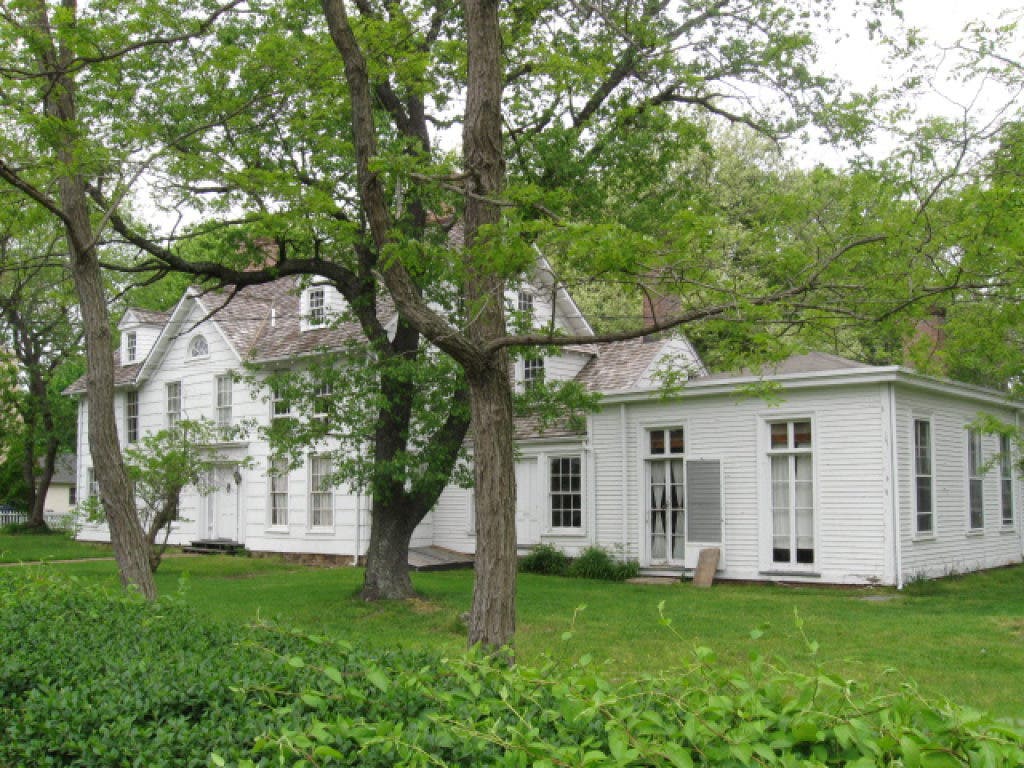
Judge J. Lawrence Smith's home still stands today as a reminder of a prominent Smith and a bygone era.


Long after Smithtown was established in 1665, descendants of our town founder, Richard Smythe, continued to live in the area. In the 1800s, a prominent member of this family was Judge J. Lawrence Smith.
Smith was born on September 29, 1816 in the Nissequogue area of Smithtown. According to his biographical sketch in the “History of Suffolk County” published by W.W. Munsell & Co. in 1882, he first attended Yale University but then left the school in 1833 for Princeton. Graduating with a law degree in 1837, he first practiced in New York City and was admitted to the bar in 1840.
After working in the city for a few years, Smith returned to Nissequogue. According to he married Sarah Nicoll Clinch in 1845. Mrs. Smith found Nissequogue to be too quiet so her husband bought a house at 205 Middle Country Road. This home still exists today on the property of the Smithtown Historical Society.
Find out what's happening in Smithtownfor free with the latest updates from Patch.
In Smith’s biographical sketch in the “History of Suffolk County”, he is listed as a member of the State Assembly in 1846. His political career continued in 1850 as district attorney of Suffolk County and in 1858 county judge. He was renominated to the county judge seat in 1862.
Besides his legal career, the judge was also the writer of “The History of Smithtown” chapter that appeared in “History of Suffolk County”. He wrote of Smithtown’s past, the local mills, and the different sections of our town. Smith also included information on the town’s agriculture, fish and game, and the railroad’s arrival.
Find out what's happening in Smithtownfor free with the latest updates from Patch.
As for Smith’s homestead, Kiernan Lannon, Executive Director at the Smithtown Historical Society, said while the house still exists at its originally location, renovations have occurred over the years.
According to “Colonel Rockwell’s Scrap-Book”, the oldest part of the house was built by William Blydenburgh I before1768, even though there were some conflicting records that listed part of the home as being built earlier.
The judge bought his homestead from descendants of Blydenburgh in 1845. When Smith died in 1889, his son James Clinch inherited the home. With his passing, ownership switched to his sister Bessie. When the scrap-book was published by the Smithtown Historical Society in 1968, F.L. Peter White, a great grandson of the judge, owned it.
The home is described as having a Victorian feel in “Colonel Rockwell’s Scrap-Book”. The ground floors feature black marble mantelpieces and windows that extend almost to the floor. A large ballroom on the east end was also described in the scrap-book where the Smiths would host dances.
Besides a family home, the homestead has provided other uses. According to the Smithtown Historical Society’s website, when the judge became ill in later years, he would try cases in his personal chambers instead of traveling to Riverhead.
Local historian Noel Gish said a library association was also once set up at the home around 1907 through 1908. Most likely it was located in a back room with an entrance on the west end.
In recent years elementary school students visit the homestead as part of the Smithtown Historical Society’s Victorian Era education program. Now this home of a Smith plays a part in bringing a bit of our town’s past into the present..