Community Corner
Smithtown, A History: The Judge's Book
Judge J. Lawrence Smith, a descendant of Smithtown's founder, left behind a detailed history of our town.
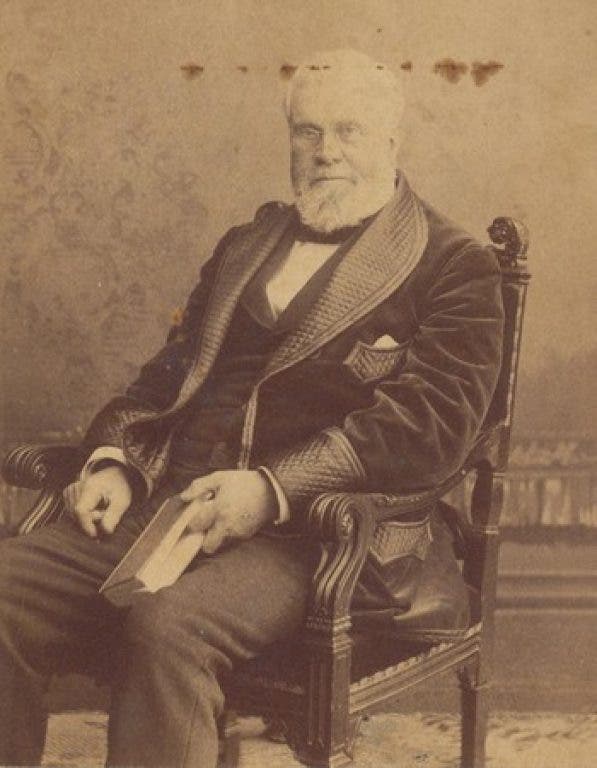


In The History of Smithtown published in the 1882 book History of Suffolk County, New York, wrote of the history of our town, as well as various neighborhoods and residents, leaving future generations with a vivid picture of the early days of Smithtown.
Current residents can find Smith’s writings in the Smithtown Library’s Long Island Room. The reader will find various local facts including Obadiah Smith being the first white man to be buried in Smithtown. The son of town founder Richard Smythe, Obadiah drowned at the inlet of Smithtown Harbor.
One will also learn that a racetrack once existed in St. James. Called the St. James Driving Park, Smith described the mile racecourse for training and trotting horses as the best driving track in the county.
Find out what's happening in Smithtownfor free with the latest updates from Patch.
He also described The Landing area as “a public landing and watering place laid out by the town’s authorities.” Richard Blydenburgh and Henry Conkling had a general store here and in 1806 a dock was built. so ships could transport cordwood and fertilizers.
Darlingtown once existed not far from The Landing on the west side of the Nissequogue River and north of the Landing Methodist Episcopal Church that still stands today. According to the judge, this area was named after John Darling and his sons Adam, John and Hamilton who were the first to settle that section of the town.
Find out what's happening in Smithtownfor free with the latest updates from Patch.
was also among the early residents that the judge wrote about. Arthur started out as a blacksmith and then took up dentistry. According to the book, after studying dentistry with a noted New York City dentist, Arthur became a skillful dental surgeon.
The history writer also wrote of residents who lived passed their 90s and found documentation of slaves who surpassed 100 years of age. Smith attributed this to the air that he described as “pure, delicious and healthful”.
As for the residents’ livelihoods, many were farmers. Smithtown was once known for growing wheat, rye, Indian corn, oats and potatoes. During the winter the farmers would cut cordwood. Smith wrote, “Cordwood has always been one of the chief products of this town.” However, he also wrote that wood was becoming scarce due to the clearing of the forests for cultivation as well as fires.
The Nissequogue River provided well for the town too. Smith stated that “almost every farmer can have a trout preserve at his door.” Since the early days of the town, oyster and clams also provided revenue.
Smith’s The History of Smithtown demonstrated his great love for this town, which he summed up best when he wrote, “We have thus described, as briefly as we could, one of the fairest portions of our land, which for combined beauty of scenery, healthfulness of climate, fertility of soil, and contentment and happiness of its people is hardly surpassed by any town of equal size in this or any other state.”