Politics & Government
Advocacy Groups Blast Proposed End Of Protection For Salvadorans
"This is an ethnic cleanse — pure and simple." — Minerva Perez, executive director, Organización Latino-Americana, or OLA.


LONG ISLAND, NY — After the Trump administration announced it is planning to revoke temporary protective status for about 200,000 Salvadorans who came to the United States after earthquakes devastated their country in 2001 — they will have 18 months before they have to leave the country — local immigrant advocacy groups, as well as New York State Governor Andrew Cuomo, are denouncing the proposal.
Immediately following the news, Cuomo took measures to protect residents, directing the New York State Department of State to increase access to and offer additional resources for communities impacted by the Trump administration's "arbitrary" decision to end temporary protected status for individuals from El Salvador, Haiti and Nicaragua.
Of the 114,127 Salvadorans currently living in New York State, 16,200 are TPS beneficiaries and will be impacted by the federal government's decision, Cuomo said.
Find out what's happening in Southamptonfor free with the latest updates from Patch.
"After fleeing a horrific natural disaster, Salvadorans found safe haven on our shores and have called the U.S. home for more than a decade. They have worked hard, paid taxes, bought homes, and had families — all in an effort to achieve the American Dream," Cuomo said. "This federal administration's decision to tear families apart, disrupt small businesses, and lead those who have become part of the American fabric to an uncertain future, is disgraceful and unjust. We will work day in and day out to connect with impacted New Yorkers and make sure they know their rights and legal options in order to help protect these hard-working men and women."
The Trump administration announced Monday it was ending TPS recognition for Salvadorans living in the U.S., effective September 9, 2019.
Find out what's happening in Southamptonfor free with the latest updates from Patch.
El Salvador residents had been granted TPS since 2001, when an earthquake rocked the Central American country.
The decision to end TPS for Salvadorans follows the Trump administration's recent termination of TPS recognition for Haiti, impacting 50,000 individuals nationwide, and Nicaragua, impacting 2,800 individuals nationwide, Cuomo said.
Counteracting the news, Cuomo has directed the New York State Office for New Americans and the Liberty Defense Project, both operating under the auspices of the New York State Department of State, to increase outreach and communication efforts to impacted residents and communities across the state to ensure they understand their rights and legal options.
A release from Cuomo's office explained that, since 1990, the United States has offered TPS to immigrants from 10 countries that have experienced civil unrest, violence, a natural disaster or an epidemic. Those who are granted TPS — approximately 342,570 individuals in the United States — have the legal right to reside and work in the United States. El Salvador, Haiti and Honduras constitute the countries with the most TPS beneficiaries in the U.S., Cuomo pointed out.
Jose Calderon, president of Hispanic Federation, spoke out: "By terminating the Temporary Protected Status program to Salvadorans, the Trump administration has turned its back on America's promise to be a haven for those unable to safely return to their home country. Ending TPS will not make us richer or safer. Instead it will damage our economy irreparably, heartlessly break up families, and destabilize established communities."
Nearly one-third of TPS holders own homes in their communities, he said.
Salvadorans' protected status faced a deadline Monday, Jan. 8, that forced Secretary of Homeland Security Kirstjen Nielsen to decide whether to extend the program. Previous administrations had repeatedly extended the protected status.
"The substantial disruption of living conditions caused by the earthquake" no longer exists, the department said in a statement.
Long Island advocacy groups react
On Long Island, Minerva Perez, executive director of Organización Latino-Americana, or OLA, blasted the proposal to take TPS away from El Salvadorans: "It is a revolting act of pointless vengeance on roughly 200,000 people who have all the sentiments of gratitude toward the USA for allowing them TPS over the years due to continued natural disasters as well as worsening gang activity," she said.
Sending 200,000 tax paying, contributing, supporters of the United States back to a country that cannot safely assimilate them will tear families apart, Perez said.
Many families may choose to not risk allowing their children to come with them, "to be used as gang fodder and worse." Ending the TPS safety net is "an act that will one day be seen as an example of an administration's concerted act to 'cleanse' the United States of Latinos," she said.
Instead, she said, El Salvadorans and other law abiding, tax paying, military volunteering Latinos should be seen as what the nation would aim to attract, the "next generation Americans."
Perez said the act was one of racism. "This is an ethnic cleanse — pure and simple," she said.
"For many people, this will be a disaster"
Margarita Grasing, director of the Hispanic Brotherhood of Rockville Centre, also spoke out on the news. "For many people, this will be a disaster," she said.
Many individuals affected came to the United States almost 20 years ago; many came to her agency to renew their status yearly, each paying around $300 to renew their TPS.
"The hope was that somewhere along the line, the government would make them residents," she said. Many individuals, she said, were paying Social Security and other taxes, "with no hope of every retiring" and seeing those benefits, "because they weren't legal. I call it economic slavery," she said.
Some share an inaccurate perception that those who've received TPS didn't apply for residency. In truth, Grasing said, "They couldn't, otherwise they would have applied for residency from the beginning. You have to be invited by a relative in this country" or appy through other means, such as employment or being granted asylum.
"The gangs in El Salvador are just as bad as the earthquake"
Many, she said, had "no choice" but to seek refuge in the United States, a place where they were given a chance to survive. "The gangs in El Salvador are just as bad as the earthquake," Grasing said. "I had one mother tell me, 'I'd rather be here illegally than watch my kid get killed.'"
Grasing, who has been with the Hispanic Brotherhood of Rockville Centre for 34 years, added, "I have no faith in this Congress. I think we have a lot of racism right now. They don't see anyone with dark hair or eyes anymore. The ideal look is the Trump look."
She added that if all groups spotlighted were forced to leave, the nation would pay a heavy price. "These are good workers, doing jobs that no one else wants to do," she said.
The climate right now amongst many of the individuals who seek her services is one of fear. "We're telling people not to get an attorney yet, just hold on."
The goal is to see how the situation unfolds, she said, and to see if people can fill out the paperwork in their own. All too often, Grasing said, scammers charge up to $1,000 to work on the case of those crying out for help, and then, make off with the funds. But with few options, people pay the money, anyway, she said.
"People are desperate," she added. "Some have bought houses, businesses in this country. They're not just cleaning floors."
Children born to parents with TPS are residents and can stay, she said.
Reflecting on the situation, Grasing said: "It's a disgrace that we have a president who, with all the need in this country, want to spend more than $20 billion for a wall to stop illegal immigration."
On the North Fork and in Riverhead, Sister Margaret Smyth of the North Fork Spanish Apostolate, said for many, "it's a very confusing time. Right now, there's nothing but panic."
People need more information, she said; questions are swirling. Some who are in the country might have other options, such as seeking asylum. Others are wondering what other countries they might be able to relocate to.
"They're afraid to go back," she said.
With an eye toward sharing information, Smyth has organized a meeting for Jan. 21 at 3 p.m. at the North Fork Spanish Apostolate, located at 546 St. John's Place in Riverhead.
At the meeting, a lawyer will come to help explain the issues and answer questions.
Sister Margaret is also inviting Hondurans to the meetings, a group she fears "is next on the chopping block."
Parents are worried about their kids, many of whom can legally stay in the United States alone and visit their parents — who may be forced to go back to countries where they will endure poverty and danger — whenever they wish. But, she said, of the plan, "It's tearing families apart."
In the meantime, Sister Margaret has words of advice for those whose lives are steeped with uncertainty: "Calm down until we find out exactly what's going on. This whole thing could be changed again. We just have to stay calm until we find out what all of this means."
Cuomo offers resources for those impacted
According to Cuomo, anyone impacted by the TPS decision may contact the New Americans Hotline at 1-800-566-7636.
The Office for New Americans' 27 neighborhood-based Opportunity Centers, and lawyers specializing in immigration law and members of the Liberty Defense Project, will provide free up-to-date information and advice to TPS individuals from all affected countries and through individual consultations. The consultations can also provide guidance and screening for possible adjustment of immigration status.
To locate an Office for New Americans Opportunity Center, click here. To view the Office for New Americans Opportunity Centers Map, click here.
Upcoming Know Your Rights seminars and consultations will take place on the dates included below. Locations will be announced as soon as possible and made available through the hotline and online here.
- February 8 - Hispanic Federation and Make the Road New York
- February 15 - Northern Manhattan Coalition for Immigrant Rights and Hispanic Federation
- February 22 - Opportunities for a Better Tomorrow
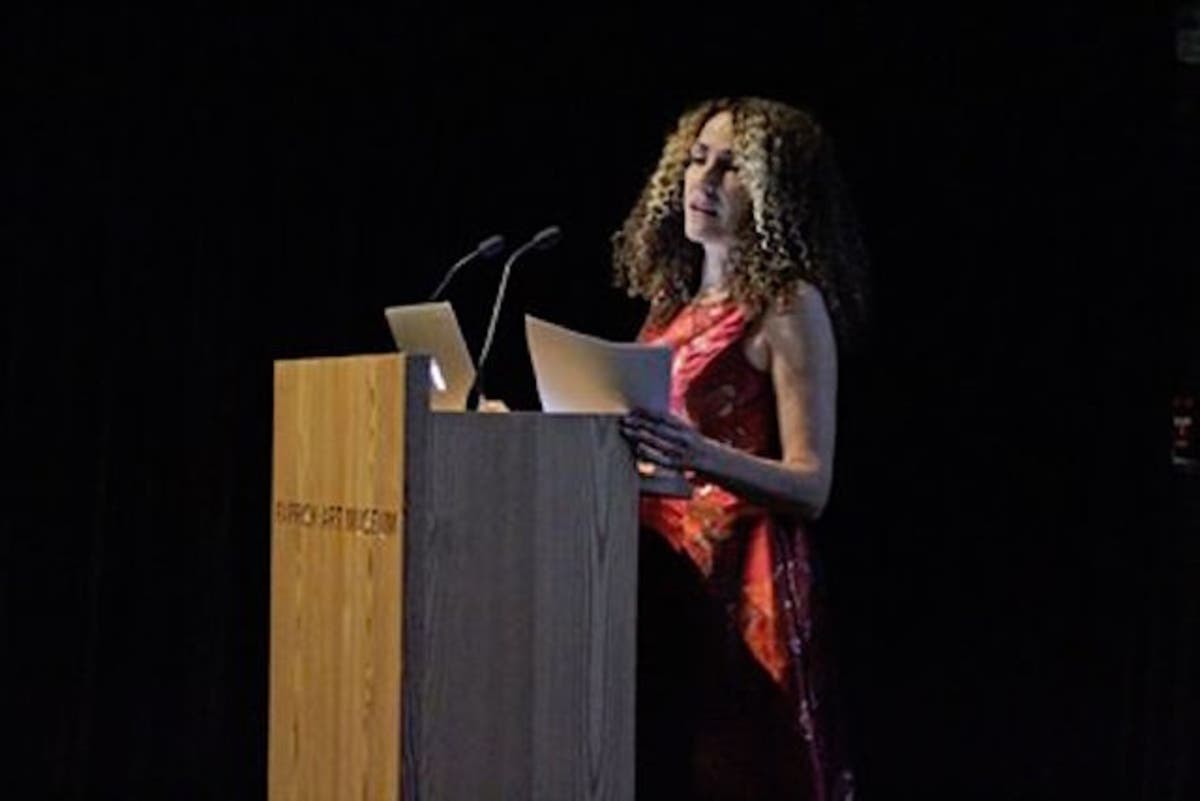
Patch courtesy photo of Minerva Perez, executive director of OLA Eastern Long Island.
Get more local news delivered straight to your inbox. Sign up for free Patch newsletters and alerts.