Community Corner
After Son's Heroin Overdose, 'Guardian Angel' Mom Finds Hope, Saves Others
The story of a mother who lost her son to heroin — and a young man who has just begun to live a life free of addiction, because of her love.


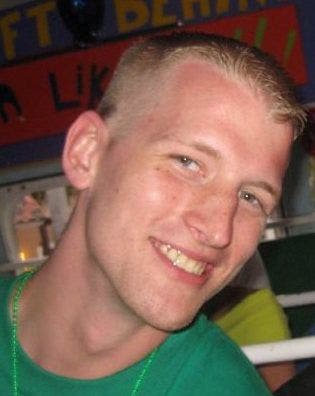
SAG HARBOR, NY — This year will mark five years since Rocky Point mom Tracey Farrell last saw her beloved son alive. Five years since she's heard him laugh, seen his smile, gotten to share dinner and stories and make plans for a bright future he was never to experience.
Her son Kevin Norris died of a heroin overdose when he was just 26 years old.
But in the years since, Farrell (she was married recently; her name was previously Budd) has taken the worst moment of a mother's life and chosen a path to help others struggling from addiction, starting a not-for-profit in her son's name that helps to pay for airfare for those seeking treatment for addiction. And in that quest, she's met some young people who've touched her heart, given her hope, and loved her unconditionally.
Find out what's happening in Southamptonfor free with the latest updates from Patch.
This is the story of one young man, Nick McErlean, 28, of Sag Harbor, who boarded a flight to recovery with Farrell's help. A story of love, and faith, and the bond that can flourish between two people who've not even yet met — a bond so strong that McErlean calls her "Mama". It's a story about recovery and finding light at the end of a tunnel so dark it seems impossible that any hope can ever rise from the proverbial ashes.
This is their story.
Find out what's happening in Southamptonfor free with the latest updates from Patch.
A mother turns tragedy to hope
Five years ago, on that day that changed her world forever, Farrell went about her normal routine, not worrying when she saw the car belonging to her son still parked in the driveway. She just thought her son might have overslept or gotten a ride to work with a friend.
But what Farrell and her daughter Breanna found was a nightmare beyond what any family should have to endure: Her daughter was able to circumvent the locked door they found to Kevin's room — and found him dead of a heroin overdose.
"She told me, "He's not breathing'. I could tell he'd been dead for awhile," Farrell said, her voice breaking. "My daughter was on the phone with 911, but I told her it wasn't going to help. He was gone. The only solace I found was in his face. He looked like he was asleep. He just looked at such peace. I knew that his struggle was finally over."
Kevin died on September 10, 2012.
Her son Kevin, who had been playing football since he was eight, as a quarterback, was injured during a game, he needed surgery and was prescribed Vicodin, she said. "That's where the addiction began."
And in the years since her son's death, Farrell found comfort in creating "On Kevin's Wings — Hope Takes Flight", a not-for-profit that raises funds to help provide airfare and a means for those struggling with addiction to find help.
She says since her son's death, she sees no sign of the rampant drug scourge slowing down on Long Island and across the United States. "I only see it getting worse. It's terrible. I sent my first 17-year-old to treatment in Louisiana recently,' she said. "It scares me if we're sending 17-year-old kids to rehab."
What makes the crisis even more troublesome is that the deadly drugs are now synthetic and are lethal, with much higher doses of Narcan needed to revive a person who's overdosed from heroin or fentanyl, and those killer drugs being laced into marijuana and cocaine to keep users powerfully addicted.
She is outraged by the recent heroin ring bust along Route 110 in Suffolk County and said, unlike in some cases, where dealers are just addicts themselves struggling, those arrested in the recent takedown had lavish cars and seemed to be "in it for the money."
Farrell fears the escalating heroin epidemic could signal the death of a generation.
First responders have told her, Farrell said, that they have been called to the same home, multiple times, reviving a person again and again.
"I say to them, 'Please, don't give up. As long as there's life, there's hope,'" Farrell said.
And hope is what Farrell tries to imbue, through her work on the advisory board of Families in Support of Treatment, or FIST, with executive director Anthony Rizzuto — FIST, along with the Long Island Recovery Association and Long Island Council on Alcoholism and Drug Dependence were awarded state funding to open a recovery center, the THRIVE Long Island Recovery Center, located at 1324 Motor Parkway in Hauppauge.
Speaking of her own foundation, North Shore Drug Awareness, Farrell said she knew she wanted to do something in her son's name. After founding "On Kevin's Wings — Hope Takes Flight," she hosted her first fundraiser in January, and in just over two months, she's raised enough for airfare or bus fare to send 20 people for treatment so far.
Farrell said she thought of the idea to provide financial support for transportation after her daughter, who also struggled with addiction, came home from a program in Florida. She came back home after 45 days, although that's not recommended, Farrell said. "A few weeks after she came home she went back to using. She totaled her car. She just decided for herself that she did not want this life anymore, so she told me, 'I'm going back to Florida. You have to bring me to the airport.' Thank God I had the means to buy a plane ticket. But so many people don't."
And with that, a dream was born.
Southwest has donated eight flights to Farrell's foundation and she's put out an appeal to other airlines including Delta and Jet Blue.
The rest of the airfare is paid for through fundraising, Farrell said.
And the miracles of recovery have already begun.
McErlean was the very first young person Farrell's foundation helped to send to treatment in Florida.
In Florida, he was sent to a sober house, where life turned around, hope was ignited, and the two forged a lifetime bond.
"He literally calls me every day or we speak on Facebook," Farrell said. "I'm so grateful. He's amazing."
Farrell said she believes her son "has a hand" in guiding her toward those she's meant to help. "I think Kevin has something to do with it," she said.
Another young man, also named Nick, from Ohio — Farrell's organization helps individuals from across the country — had been sleeping in the doorway of a business. "He said, 'If I don't leave here, I'm going to die.'"
And so, she helped to facilitate a scholarship for a treatment facility in Florida, got him on a plane, and, along with others, helped buy him new clothes and sneakers. "He told me all he had was a small garbage bag with his belongings," Farrell said.
In that nurturing, Farrell's maternal side shines. "You can't help but become attached," she said.
And in that caring for other young people, helping to find the elusive light, she's found healing.
So much so that on Mother's Day, Farrell will travel to Florida, "to be with my two Nicks." She said while most of those she helps, she rarely speaks with, there are some, such as McErlean, who touch her heart.
"I don't know what the connection is, but I'm glad it's there," she said.
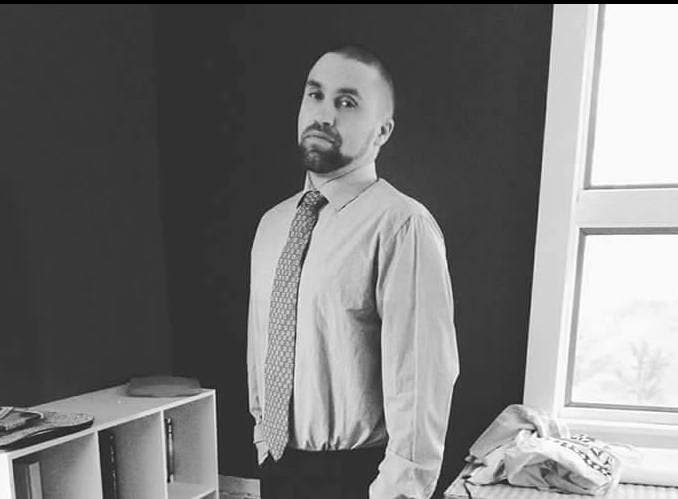
Nick's story
McErlean, like so many on the East End, grew up in Sag Harbor, attending Pierson Middle-High School and going to parties with his friends — before he became ensnared in the grip of a cocaine addiction that almost cost him his life and dreams.
He'll turn 28 next week and now, sober, he said, "It'll be the best birthday ever."
The first time he drank, he said, he was 14 years old. "I was at a party and figured, 'Why not?' All my friends were drinking and I wanted to fit in."
Next, he began smoking marijuana, "very heavily, multiple times a day. I couldn't get through my day without smoking pot. I didn't want to do anything without smoking pot first, going to school, going to the movies, it was, smoke a joint first."
He obtained an amateur boxing license, competing in a Golden Gloves competition, and stopped using drugs until a "freak accident" in the ring led to a broken hand when he was 17.
"I was in a depression about it, and that's when the drinking started more heavily during the week, on school nights, lying to my parents about where I was," McErlean said.
Along with the drinking, he began smoking marijuana again and experimented with mushrooms, acid and ecstasy.
At college in Boston, McErlean said he "took advantage of the whole party scene, drinking heavily five nights a week, missing class, smoking weed, doing cocaine."
After an arrest for drug possession, his grades suffered and he was "not invited back" after sophomore year.
Ironically, McErlean said, his major was criminal justice.
Back on the East End, McErlean said he tried to pick up the pieces, attending Suffolk County Community College, "but the partying just took over. I remember my 21st birthday. I was driving to and from school that night, wasted. I could have killed somebody."
Cocaine, he said, took over his life. "I even stopped smoking pot in lieu of doing the coke because my cocaine habit had become so expensive; all my money went to that."
His parents, McErlean said, loved him unconditionally, through the dark days of his addiction, although they weren't aware of his cocaine use at first. "They alway had my back," he said. "They had nothing to do with why I reached out to drugs or alcohol."
Looking back, McErlean says his survival is nothing short of miraculous. "There were so many times I could have overdosed," he said.
His first attempt at sobriety came at 22 and lasted "all of four months," he said.
His painful journey includes a suicide attempt, McErlean said. "I was so depressed. Drugs had taken over my life."
The pain of a breakup with a girlfriend, he said, contributed to the despair.
Recalling that dark day, he said, "I had gotten high on coke, then the coke ran out. I was just so depressed and so angry at myself, at position I'd put myself in from years of abusing my body. I had a bottle of pills and I took the whole thing."
McErlean took 75 Vicodin pills, he said. When asked about how he'd survived, he said, "I call it God." He learned that even while in a blackout, he'd called 911 himself.
"When I woke up in the hospital, it wasn't my drinking buddies around me. It was everyone I'd hurt."
And then, there was a turning point.
"When I woke up in the hospital, it wasn't my drug buddies or drinking buddies around me. It was everyone I'd hurt, by doing drugs. My dad, my stepmother, my uncle, my brothers. They were all there, with tears coming from their eyes, telling me how much they loved me, even after all that. It was beautiful, and also, very sad. That's why I take this so seriously now."
He added, "This is life and death. There's no sugar coating on it. Drug addiction and alcoholism is an everyday, life and death struggle."
After that moment of truth, McErlean said he ended up in the sober house where he'd been 10 months before.
And that's when, he said, Farrell came in.
"I call Tracey 'Mama,'" he said. "She's my guardian angel."
They were in contact after "God came into play," he said. He said he wanted to go to rehab off Long Island, and found a facility in Florida, where he was told he could have a bed if he could find a flight. He hadn't even told his parents yet, McErlean said.
"For the first time in 40 days, I hit my knees," he said. "I didn't pray to come to Florida. I prayed for whatever God saw fit for me to do. The next morning, I got a call from Tracey, who told me she'd started a foundation, 'On Kevin's Wings' in memory of her son, who she lost to an overdose. I was crying at this point. She said, 'I heard you want to go to Florida.'"
Four days later, he was on a plane, and four months later, today, he is celebrating a life of sobriety.
"I had been trying to get sober since I was 22, six years ago, but never hitting bottom. That's crucial, you have to hit bottom, where you want to be different, cut out the nonsense," McErlean said.
In Florida, he found a sober house of men from New York that he finds as close as brothers; he found a sponsor who has inspired. "I have a job, I can pay my rent, I have food in my belly. I'm grateful for the little things," McErlean said. "I'm truly happy again. I'm busting through the barriers of my life, barriers that held me back even before the drinking and drugging."
He's even begun boxing again and will compete in June.
"I'm finding out who Nick really is, and I'm at peace with who that person is. I'm not only accepting who I am, but thoroughly enjoying who I am."
Every day, he said, "I do something to feed my recovery, because I could wake up tomorrow and still drink. I don't want to, and it's not going to happen. But you have to do something every day", so he won't slip, he said.
And now, he said, his mission is to help others just as Farrell helped him. "It's not about being selfish, it's about being selfless," he said. "If I can help one person, I did my job. If I can help one person see a way out, then I'm happy. I've had too many friends die this past year. Drugs and alcohol are no joke. It's killing our generation."
He added, "Someone asked me last week, everyone knows about Baby Boomers, what we'd call our generation. I said, 'Sadly, it's Generation Rx."
But now, McErlean said, "I can pick a future where I’m happy and whole, beyond my wildest dreams, without drinking or drugging. I owe my life to Tracey. I love that woman with all my heart. And we've never even met."
Sobering statistics
According to the Centers for Disease Control and Prevention, there were more deaths from drug overdoses in the United States in 2014 than during any previous year on record. "From 2000 to 2014 nearly half a million persons in the United States have died from drug overdoses. In 2014, there were approximately one and a half times more drug overdose deaths in the United States than deaths from motor vehicle crashes," the CDC reported.
Prescription drug abuse, according to the CDC accounts for one death every 19 minutes in the United States.
In addition, the CDC said, opioids, especially prescription pain relievers and heroin, are the main drugs associated with overdose deaths. In 2014, opioids were involved in 28,647 deaths, or 61 percent of all drug overdose deaths; the rate of opioid overdoses has tripled since 2000, the CDC noted.
Two trends are pointed out by the CDC: A 15-year increase in overdose deaths involving prescription opioid pain relievers and a recent surge in illicit opioid overdose deaths, driven largely by heroin.
Natural and semisynthetic opioids, which include the most commonly prescribed opioid pain relievers, oxycodone and hydrocodone, continue to be involved in more overdose deaths than any other opioid type, the CDC said. In addition, "drug overdose deaths involving heroin continued to climb sharply, with heroin overdoses more than tripling in four years."
And the disease has hit close to home: Suffolk County was named the leader in New York State in heroin overdoses last year.
Between 2009 and 2013, 337 heroin-related deaths were reported in Suffolk County, the "New York State Opioid Poisoning, Overdose and Prevention," report prepared for New York State Governor Andrew Cuomo and the New York State Legislature revealed.
According to the report, opioid-related emergency department visits increased 73 percent from 2010 to 2014. The number of heroin-related deaths increased in 2013 to 637, and opioid analgesics related deaths rose to 952, increases of 163 percent and 30 percent from 2009, respectively, the report states.
In 2013, an average of two New Yorkers a day died of heroin-related overdoses, the report said. More than four times as many men died of one of these overdoses compared to women; whites died of heroin-related overdoses at a rate of nearly twice that of blacks, and almost 1.35 times that of Hispanics.
"The upward trend in heroin-related overdose fatalities among younger New Yorkers is particularly alarming," the report states. "Half the people who died were under age 35."
Jeffrey Reynolds, president and chief executive officer of the Family and Children's Association in Mineola, said the crisis shows no signs of abating.
New synthetics such as carfentanil, may not have reached Long Island yet, but the drug, so strong it's used as elephant tranquilizer, is creeping insidiously across the country, claiming lives.
"Carfentanil has not yet appeared here; we'll know when it arrives because we will immediately see more fatalities. I say 'yet' because 15 years ago we warned about the burgeoning prescription pill crisis and it happened. Ten years ago we warned of the impending heroin crisis and it happened. Four years ago, we warned about the emergence of fentanyl after it appeared in several other regions; low and behold, that drug is now killing more Long Islanders than heroin," Reynolds said.
"Drugs travel very rapidly across the United States and change hands hundreds of times before they get to the end user. It seems like we are just chasing the drug du jour and not getting to the roots of substance use or taking enough steps to make treatment available. We are still swatting at the symptoms. We need good prevention that addresses mental health issues earlier on, that gives kids straight facts and that educates their parents."
To this day, Reynolds said, "There are barriers to treatment including insurance company discrimination and a lack of treatment options. There aren't nearly enough supports for people in early recovery, but then we blame them for a relapse rate that approaches 75 percent. We are watching the problem worsen and the death toll climb, but we haven't taken the bold or sustained action necessary to turn the tide. That's why, unless we do something differently, 2017 promises to be a whole lot worse."
One life at a time
But Farrell perseveres, saving one life at a time, putting one person on a plane at a time, soaring toward hope — in honor of her son Kevin.
The pain, however, lives on, the ache of what ifs and tomorrows not seen.
"I'm doing this for him," she said. "It helps me heal."
Still, she said, the flashbacks to that horrific day five years ago haunt, and the flashbacks are intensifying.
"Doing this gives me something to focus on," she said. "It's a way to honor him, to make something good come out of it."
If she could talk to her son again, Farrell said she would apologize, "for not understanding as much as I now do. We ask our kids to do all the work to go into recovery, but we don't do the work ourselves — and we need to, because we're actually going into recovery, also. With addiction, you have co-dependency, enabling behavior. You need to do the work, as well, because you are both trying to heal."
She added, "It's a family disease."
And recovery, too, means holding hands and hearts and facing the future together. "This foundation isn't a 'me' foundation, it's a 'we' foundation," Farrell said.
To donate or help with Farrell's mission, click here or go to the "On Kevin's Wings" Facebook page, or by writing, NSDA, Box 227, Sound Beach NY, 11789 or calling 631-743-6732.
First photo of Kevin Norris, courtesy of Tracey Farrell. Second photo of Nick McErlean.
Get more local news delivered straight to your inbox. Sign up for free Patch newsletters and alerts.