Community Corner
Human Faces Ravaged By Heroin, Opioid Crisis See Hope in New Task Force
Tracey Budd is one of countless Long Island parents who've faced the unspeakable grief of losing a child to heroin, right in her own home.


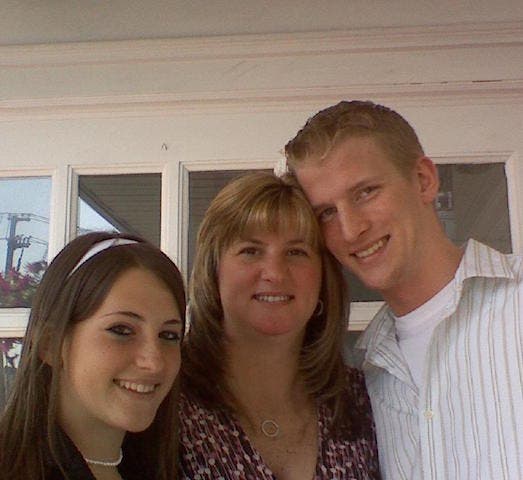
The day began like any other.
Rocky Point mom Tracey Budd, who works at home, went about her normal routine, not worrying when she saw the car belonging to her son, Kevin Norris, still parked in the driveway. She just thought her son might have overslept or gotten a ride to work with a friend.
But what Budd and her daughter Breanna found was a nightmare beyond what any family should have to endure: Her daughter was able to circumvent the locked door they found to Kevin's room — and found him dead of a heroin overdose.
Find out what's happening in East Hamptonfor free with the latest updates from Patch.
"She told me, "He's not breathing'. I could tell he'd been dead for awhile," Budd said, her voice breaking. "My daughter was on the phone with 911, but I told her it wasn't going to help. He was gone. The only solace I found was in his face. He looked like he was asleep. He just looked at such peace. I knew that his struggle was finally over."
Kevin died on September 10, 2012.
Find out what's happening in East Hamptonfor free with the latest updates from Patch.
He was 26 years old.
Her son Kevin, who had been playing football since he was eight, as a quarterback, was injured during a game, he needed surgery and was prescribed Vicodin, she said. "That's where the addiction began."
The tentacles of addiction entangled both her children: Budd's daughter Breanna, 24, has also struggled but celebrated two years in recovery on May 6.
Budd, whose mission today is to educate other parents about the dangers of addiction, was one of the many who lauded a new heroin task force announced this week by New York Gov. Andrew Cuomo.
The group, comprising a coalition of experts in healthcare, drug policy, advocacy, education, and parents and individual in recovery, will build on the state’s previous efforts to develop a comprehensive action plan to combat the state’s opioid epidemic, Cuomo said.
Members of the task force will hold public listening sessions across New York to help guide the process.
Budd and other prevention advocates applaud the effort as they seek to raise awareness of a crisis raging across the nation and stealing a generation.
Sobering statistics
According to the Centers for Disease Control and Prevention, there were more deaths from drug overdoses in the United States in 2014 than during any previous year on record. "From 2000 to 2014 nearly half a million persons in the United States have died from drug overdoses. In 2014, there were approximately one and a half times more drug overdose deaths in the United States than deaths from motor vehicle crashes," the CDC reported.
Prescription drug abuse, according to the CDC accounts for one death every 19 minutes in the United States.
In addition, the CDC said, opioids, especially prescription pain relievers and heroin, are the main drugs associated with overdose deaths. In 2014, opioids were involved in 28,647 deaths, or 61 percent of all drug overdose deaths; the rate of opioid overdoses has tripled since 2000, the CDC noted.
Two trends are pointed out by the CDC: A 15-year increase in overdose deaths involving prescription opioid pain relievers and a recent surge in illicit opioid overdose deaths, driven largely by heroin.
Natural and semisynthetic opioids, which include the most commonly prescribed opioid pain relievers, oxycodone and hydrocodone, continue to be involved in more overdose deaths than any other opioid type, the CDC said. In addition, "drug overdose deaths involving heroin continued to climb sharply, with heroin overdoses more than tripling in four years."
Devastation at the door
And the disease has hit close to home: Suffolk County was recently named the leader in New York State in heroin overdoses.
Between 2009 and 2013, 337 heroin-related deaths were reported in Suffolk County, the "New York State Opioid Poisoning, Overdose and Prevention," report prepared for Cuomo and the New York State Legislature revealed.
According to the report, opioid-related emergency department visits increased 73 percent from 2010 to 2014. The number of heroin-related deaths increased in 2013 to 637, and opioid analgesics related deaths rose to 952, increases of 163 percent and 30 percent from 2009, respectively, the report states.
In 2013, an average of two New Yorkers a day died of heroin-related overdoses, the report said. More than four times as many men died of one of these overdoses compared to women; whites died of heroin-related overdoses at a rate of nearly twice that of blacks, and almost 1.35 times that of Hispanics.
"The upward trend in heroin-related overdose fatalities among younger New Yorkers is particularly alarming," the report states. "Half the people who died were under age 35."
Families Shattered
No one knows the reality of the scourge better than Budd, who's seen both her kids battling the demon of addiction.
Her two children were so close, they shattered the stereotypical image of warring siblings. "He was wonderful with children, a very gentle soul, kind and caring. It's something you see with addicts a lot, they seem to be hurt, and feel things, more deeply than we do."
Brother and sister loved the same music, and "had the best relationship," she said.
Eventually, they shared their battle with addiction. Breanna, her mom said, suffered from anxiety and panic attacks in college, where she had a dean's scholarship, and started taking Xanax and Ambien.
Kevin, Budd said, saw his addiction escalate rapidly. "He was using his lunch money in school to buy Vicodin. They sell everything in school. It's sick. My daughter told me they do deals at the lunch table in middle school."
And yet, judging by their smiling, wholesome faces, her kids didn't fit the negative perception so often associated with heroin use. Recently, she met the principal who had both her children for social studies. "He said if he lined up 1,000 students, my two would be the last in line that he'd ever think would get involved with drugs. This can affect anyone."
After Vicodin, her son moved on to smoking marijuana. After suffering numerous concussions in football, she saw her son's personality change; he became easily agitated and depressed. "That's why I believe the drugs became more appealing to him. He began to self-medicate."
At the same time, Budd lost her mother to leukemia; her death deeply affected Kevin. One night she overheard him on the phone asking someone for lethal pain pill used to treat cancer patients. "That's when I knew something was up."
In and out of rehab a number of times, her son, Budd said, was 90 days clean when he relapsed and died; she believes it was the first time he'd used heroin since being clean.
Her son, she said, just gotten a new job and had a new girlfriend; life was rich with possibility. "He'd gotten a big paycheck. Money is a big trigger."
A mom who'd always lectured her children about the dangers of drinking and driving, Budd never thought she'd have to worry about drugs.
After he was hooked on Vicodin, she began testing his urine for the presence of opioids, and learned he'd been using heroin.
Eventually, he was asked to leave the family home, but she continued to give him money for food and gas, blanketed by despair, grief and crippling fear for her boy. "It was a terrible time to live through."
Budd says the insurance system is broken in New York, limiting treatment to 28 days. "After Kevin came out, 28 days later, I thought, 'He's fixed. He can go back to work. Go back to life.' It doesn't work that way."
When she was dealt the blow of her second child's addiction — she noticed the marks on her hands from the needles, marks she'd tried to cover up with makeup — she sent her daughter to Florida, where treatment is 45 days in-patient, with 30 days in a sober living facility to follow.
Rather than burrow in shame, Budd decided to tell her story, to save others. "I made a choice. I chose to speak my truth," she said, first at a meeting of the North Shore Youth Council.
Fighting for change
Today, Budd has become a champion for others fighting the scourge, creating the North Shore Drug Awareness Advocates Facebook group.
She's also helped film a public service announcement for Suffolk County Executive Steve Bellone and been an advocate for her first piece of legislation, a bill that would prosecute dealers pushing fentanyl on the federal level. Budd has also worked toward a new 24-hour county hot line for anyone needing help with the crisis. That number is 631-979-1700.
Another longtime prevention advocate, Kym Laube, executive director of HUGS, Inc. in Westhampton Beach who was just appointed to Cuomo's heroin task force, said the escalating death toll needs to stop.
"What I will continue to advocate for is every child in New York State to receive meaningful prevention. We must not limit our focus to where addiction ends, we must equally turn our attention on where it begins. Increased services for women and babies born addicted are essential, as well. In addition, access to care the exact moment someone needs must be something we demand to happen."
Michael's Hope
There's a grassroots movement of young people taking to the streets, heading into schools and communities to raise awareness about the horrors of addiction.
Michael's Hope, a not for profit founded by Laurel's Paul Maffetone and Kristina Amato, was created after Maffetone lost his brother Michael.
"The day my brother died from an overdose was a day that will haunt my mind for the rest of my life. Watching my brother take his last breath is something I never wish anybody would have to go through," he said.
He lauds Cuomo's heroin task force, calling it "a must." He added, "The people who are selling this poison on the streets making a profit off killing individuals need to be stopped and be held accountable for their actions."
A comprehensive approach
Jeffrey Reynolds, president and chief executive officer of the Family and Children's Association in Mineola, agreed the task force was critical.
"We clearly need a more comprehensive approach that emphasizes prevention, treatment on demand and support for people in recovery," he said. "There are really significant service gaps in each of those areas and the sooner we fill the gaps, the sooner we will turn a corner in addressing this crisis."
In addition, Reynolds said more evidence-based prevention programs in schools is needed, insurers shouldn't be allowed to block access to addiction treatment, and expanded services for families who are struggling must be provided.
"The overdose numbers continue to rise and while I'm thrilled that Naloxone distribution programs have expanded access to the antidote, bringing folks back from the brink of death is the least we can do, but it should never be the best we can do," Reynolds said.
Individuals who are resuscitated are often discharged from hospital emergency departments within hours with no linkage to care, only to wind up dead of a subsequent overdose a few hours later, he said.
Reynolds explained that the reason for the increased risk of overdose after being released from the ER can be both psychological and also, in some cases, the Narcan hasn't exited the body, meaning a person takes a "huge amount of heroin" to push past the opiate blocker, increasing the risk for a fatal overdose, he said.
"Naloxone gives overdose victims a second shot at life, but it's not a cure for addiction any more than CPR would be our primary approach to combatting heart disease. All in all, we have let go of our suburban denial and our preconceived notions about addiction, and mount a comprehensive response to a relentless brain disease that's gotten a ten year running head start on our kids," Reynolds said.
Susan Toman, executive director of the Guidance Center in Southold, said the numbers of deaths from 2001 to 2014, more than 300,000, are staggering. "It's too, too much," she said.
Action plan for saving lives
Cuomo aims to develop a master plan for battle.
“Opioid addiction is a national epidemic that continues to plague families in communities across New York — and the state has been taking aggressive action to tackle this crisis head on,” Cuomo said in a release. “The heroin task force will take these efforts to the next level with a comprehensive action plan developed by a diverse coalition of experts. We will use the task force’s recommendations to implement smart solutions that will protect public health, enhance safety in communities statewide and save the lives of vulnerable New Yorkers.”
Since 2014, Cuomo has implemented a series of reforms aimed at fighting back against heroin and opioid addiction, including signing the "Combat Heroin" legislation; expanding insurance coverage for substance use disorder treatment; increasing access and enhancing treatment capacity across the state, including a major expansion of opioid treatment services; implementing new and expanded recovery services; and launching a public awareness and prevention campaign to inform New Yorkers about the dangers of opioid use, a release sent out Tuesday said.
In March, new regulations took effect that require all prescriptions to be transmitted electronically from the prescriber directly to the pharmacy. The measure is part of New York’s comprehensive I-STOP law, first implemented in 2012, designed to reign in prescription drug abuse across the state, Cuomo said.
Through I-STOP, New York requires prescribers to consult a prescription monitoring program registry when writing prescriptions for Schedule II, III, and IV controlled substances. The registry provides practitioners with direct, secure access to view dispensed controlled substance prescription histories for patients in real time.
In addition, the data is further used to identify potential sources of prescription drug diversion or abuse, including prescription fraud, Cuomo said.
In April, the state began sharing the prescription monitoring program data with New Jersey to further prevent the stockpiling and resale of dangerous controlled substances.
So far, I-STOP has led to a 90 percent decrease in the number of "doctor shoppers" or patients who visit multiple prescribers and pharmacies to obtain controlled substances within a three-month time period.
New York State has also led an effort to make naloxone available without a prescription at approved pharmacies.
Also, New York has trained thousands of first responders and community members to recognize and respond to overdoses with Narcan.
As a result, Cuomo said, more than 3,500 overdose reversals have been documented, with over 1,500 lives saved in 2015.
The task force will identify ways to expand awareness of heroin and opioid addiction, enhance statewide prevention efforts; increase access to treatment, and improve support for those in recovery.
A new tomorrow
For Budd, there is hope in her daughter's infant son, Brody, who was born on her son Kevin's two year "angel-versary" date. "He's definitely heaven-sent. he's got so much of the same temperament," she said. "He fills that hole."
The pain, however, lives on, the ache of what ifs and tomorrows not seen.
If she could talk to her son today, Budd said she'd tell him how much she misses him, and how much better educated she is now, to understand his struggle. "I would tell him I'm glad he's at peace."
Still, the image of her son's lifeless body haunts. "Sometimes I still see that vision. The only thing I can do now is try to make a legacy. If I can save only one person. . . ."
Get more local news delivered straight to your inbox. Sign up for free Patch newsletters and alerts.