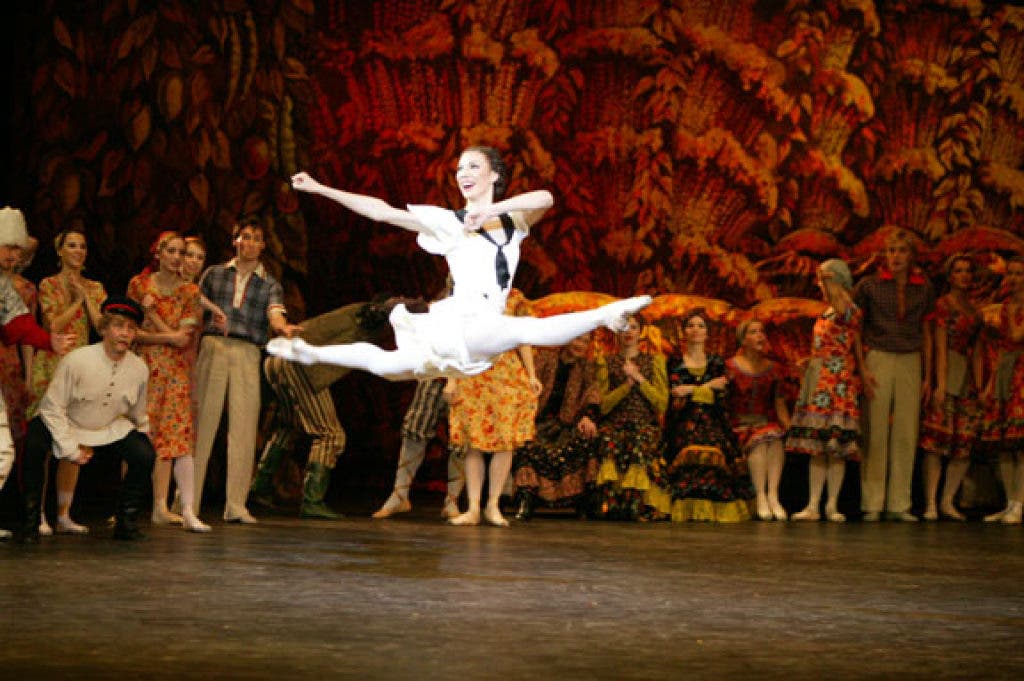
With a libretto by Adrian Piotrovsky, choreography by Fyodor Lopukhov, and music by Dmitry Shostakovich, The Bright Stream premiered in Leningrad in April 1935 and was brought to the Bolshoi stage in Moscow in November 1935. A comical ballet, it tells of what happens when a group of dancers from Moscow visits a rural farm collective in order to take part in a harvest festival. With dancing farmers, anti-elitist music, jokes, and comical scenes, The Bright Stream was an instant success.
However, Joseph Stalin did not share in the enthusiasm. Because The Bright Stream treated life on a farm collective too light-heartedly, Stalin not only banned the ballet. He sent Piotrovsky to a gulag, terminated Lopukhov’s career, and banned all theatrical scores by Shostakovich. The ballet was not seen again until 2003, when the Bolshoi asked choreographer Alexei Ratmansky to revive it. It was a huge success and led to Ratmansky’s appointment as artistic director of the Bolshoi.
New York Times critic Alastair Macaulay said of the ballet, “It’s good to see it once; it’s better—and funnier—to see it twice.” 125 minutes, including one intermission.
Find out what's happening in Southamptonfor free with the latest updates from Patch.