Politics & Government
Shinnecock Building Moratorium, Graves Protection Act Adopted
After months of protest, members of the Shinnecock Nation saw steps taken by Southampton Town to protect sacred ancestral burial grounds.


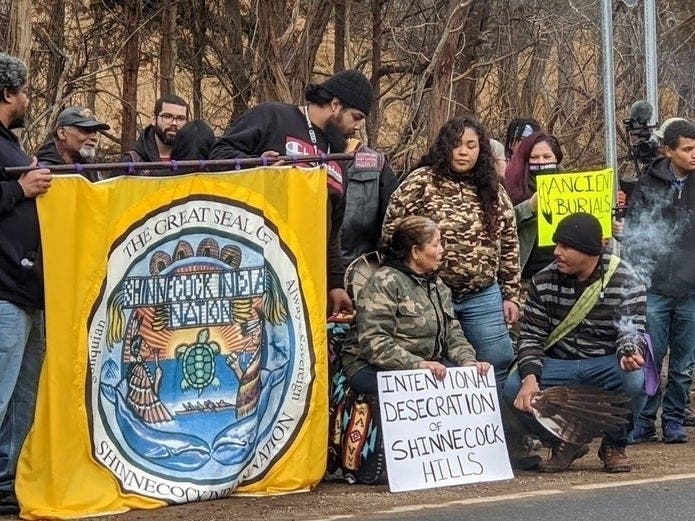
SOUTHAMPTON, NY — After months of protest by members of the Shinnecock Nation, the Southampton Town board acted Tuesday to protect sacred burial grounds from development and desecration.
The Southampton town board voted unanimously to approve the Graves Protection Act and the Shinnecock Hills Building Moratorium to protect areas believed to be ancient burial grounds; members of the Shinnecock Nation have long rallied to stop building in the Fort Hill and Sugar Loaf areas and other locations where they believe their ancestors are buried.
"The purpose of this moratorium is to review the current laws and land use tools available to the town to address the issue of unmarked graves and burial sites, with the goal of adopting local legislation to ensure that human remains and associated funerary artifacts remain undisturbed to the maximum extent practical, and are treated with the utmost respect consistent with the wishes of lineal descendants and culturally-affiliated groups," a release from the town said.
Find out what's happening in Southamptonfor free with the latest updates from Patch.
The Graves Protection Act establishes protocols if human remains are encountered during construction activities — and the six-month moratorium halts new home construction or excavation within areas that include the Fort Hill and the Sugar Loaf areas of Shinnecock Hills and beyond to Peconic Road without first completing an archaeological review.
New York State is one of only four states that lack the Graves Protection Act, town officials said.
Find out what's happening in Southamptonfor free with the latest updates from Patch.
The moratorium area is defined as parcels located north of Montauk Highway, which includes the Shinnecock Indian Contact Period Village Fort region, and parcels located south of Montauk Highway, including the Sugar Loaf Hill Shinnecock Indian burial ground region within the hamlet of Shinnecock Hill, officials said.
The moratorium also affects other large scale excavation projects in the areas, including accessory structures and swimming pools.
The moratorium is meant to allow time for the town to enact safeguards to prevent the inadvertent desecration of graves and archeological resources in the sensitive area.
“The sanctity of human burial sites must be protected,” said Supervisor Jay Schneiderman. “We need to be sure we are not disturbing our cultural heritage and destroying ancestral burial grounds.”
“Since 1640 the relationship between the Town of Southampton and the Shinnecock Nation has been marred with past injustices, land theft, and broken promises, but today marks a new brighter chapter,” said Bryan Polite, chair of the Shinnecock tribal council.
“I would like to recognize the hard work and dedication of the Shinnecock Nation Graves protection warrior society, especially Rebecca Geni, who has been unwavering in her fight to protect the grave sites of our ancestors. I would also like to thank the Southampton community who supported, marched with, and stood side by side with the Shinnecock Nation; your efforts are greatly appreciated," he added.
Polite also thanked the town board, who, he said, worked with the Nation to draft the legislation; the board also provided a forum so all sides could be heard, he said.
“There have been several town boards who promised the Nation action and did not follow through, but this board voted unanimously today to fulfill their commitment to engage with the Shinnecock Nation and tackle an issue that has caused so much hurt and dismay to the Shinnecock Nation. I want to specifically recognize Supervisor Schneiderman’s tireless work to ensure this law made it across the finish line," Police said.
Tela Troge of the Shinnecock Nation, who has also rallied for many months, agreed: "The passage of the Grave Protection Legislation and the Sugar Loaf Hill Building Moratorium have been a long time coming," she said. "Rebecca Genia has made it her life's work to see these laws passed and I am so happy to celebrate this victory with her. This is a great first step towards improving our relationship with Southampton town."
She added that the Shinnecock Grave Protection Society is looking forward to continuing working with Schneiderman and the town board "to preserve and protect what is left of our sacred Shinnecock Hills."
In the days before the vote, those advocating for the legislation organized to "flood the board with comments and calls."
A virtual event was also held to garner support for the legislation.
"This legislation should prevent further desecration after the discovery of remains by requiring penalties for people who do not report findings. Such legislation will help preserve further lands in Southampton, address ongoing historical genocide of Indigenous culture, prevent the desecration of burial sites from occurring, and reduce the complications of post burial discovery," a letter from those demanding the moratorium said.
"The Shinnecock have been on these lands for 10,000 years and remain here today as friends and neighbors, business owners, employees, veterans, teachers and municipal employees. Their history must be honored and respected. The Shinnecock Nation and its people deserve to be recognized and their cemeteries and burial grounds deserve to be protected. To not do so would be to perpetuate the island's history of colonization and dehumanization of the Indigenous peoples of this land," the letter continued.
In January, a crowd of more than 100 stood in solidarity with members of the Shinnecock Indian Nation engaged in the ongoing rally to save their ancestral burial grounds from development in the Hamptons.
According to Troge, a member of the Shinnecock Indian Nation, supporters arrived from sister tribes and also from various groups the Shinnecocks have been networking with; the Mashantucket Peqouts sent a bus of their tribal members and tribal leaders from Connecticut, she said.
"We were able to block a couple of large pieces of excavator equipment from entering the site. No construction work happened today," Troge said at the time.
Earlier in the year, a large electronic billboard erected by the Shinnecock Indian Nation on Sunrise Highway that has sparked outcry from some elected officials and residents was illuminated as a symbol of the tribe's fight to protect its ancient ancestral burial grounds from development.
The sign read: "Stop Desecration of Shinnecock Hills," along with a photo of an ongoing protest that been ongoing for months, with members of the Shinnecock Indian Nation speaking out to halt the desecration of their ancestors' sacred burial site by a development given the green light by Southampton Town.
"We are able to get our message out there in a big way now on our tribal monument sign!" said Shinnecock Nation Vice President Lance Gumbs on Facebook. "Silent no more!"
For years, members of the Shinnecock Nation have cried out against development on their ancestral burial grounds; in 2018, at a site on Hawthorne Road in Shinnecock Hills, tribe members said an ancestor's grave was desecrated when a skull, bones, and 18th century glass bottle were unearthed during the construction of a home just minutes from the reservation.
The protest in January, Gumbs said, was organized to raise awareness about "a new dig in the Hills that we should have been notified about. After the Hawthorne Road desecration there was a verbal commitment made to notify the Nation of any future disturbance in our scared Shinnecock Hills while work was being done to pass legislation that would protect our scared sites that have been listed on the Shinnecock Hills' sensitive site map with the town for years," he said.
After the remains were unearthed in 2018, Southampton Town closed on the purchase of property where the human remains were found last year; the Shinnecock Indian Nation raised an additional $50,000 for the restoration and preservation of the burial site, officials said.
And now, Gumbs said, another sacred ancestral burial ground was facing desecration. "This is one of the properties that was listed and was a priority for us to have the Community Preservation Fund try and buy and preserve," he said. "Obviously, once again, just like throughout our 400-year history, the words of the town leaders are meaningless when it come to keeping their promises to the Shinnecock Nation."
Schneiderman responded: "The Shinnecock people view this area as their ancestral burial grounds. The town has prioritized areas of Shinnecock Hills for preservation. We are working with the land owner and tribal leaders to resolve this matter."
Schneiderman sponsored the bill for the moratorium and for the Graves Protection Act and said last week he expected the board to vote Tuesday on both resolutions.
According to Troge, protests have taken place at Sugar Loaf, located on Montauk Highway in Shinnecock Hills.
"Sugar Loaf is a New York State and Town of Southampton designated critical environmental area," she said. "It is the site of Shinnecock's most sacred burial area in the Shinnecock Hills and the site of the Shinnecock Contact-era fort."
The parcel in question, located on Montauk Highway, Troge said, lays directly in the CEA area. According to the building permit, plans call for a single family two-story residence with an attached three-car garage, porch, deck, fireplace and unfinished basement.
A Town & Country builder, whose sign was posted at the property in past months, could not immediately be reached for comment.
"The developer is planning to build a two-story residential home on this sacred site and burial ground," she said. "The fact that the Town of Southampton authorized a subdivision and issued a building permit without consultation with the Shinnecock Nation shows that they are not respecting our interests in saving what's left of our sacred Shinnecock Hills — and particularly Sugar Loaf Hill," Troje said.
The Nation is working closely with the Southampton Town Attorney and the Community Preservation Fund Director to preserve the site and save what's left, she added.
Others spoke out in protest against the development. "It is in the nature of the Native American to resolve issues of conflict peacefully, from incidents like Wounded Knee to the more recent protests at the Dakota Access Pipeline," said Bryan Downey, who has photographed the Shinnecock tribe in recent years. "I've been working with Indigenous People for over six years now and forever supportive of their voice alone being enough to make an impact on this Nation. The Shinnecock will not change their ways, no more than we will change ours. In a perfect world, a Native development consultant should be involved in every excavation in the Southampton Township area. The consultant will or will not give the green light for that particular project."
The Shinnecock tribe's fight to protect their sacred burial sites was the focus of a recent PBS documentary, "Conscience Point."
Get more local news delivered straight to your inbox. Sign up for free Patch newsletters and alerts.