Politics & Government
Town Buys Shinnecock Burial Ground Where Human Remains Were Found
Human remains were found last year on land that is believed to be an ancient burial ground for the Shinnecock Indian Nation.


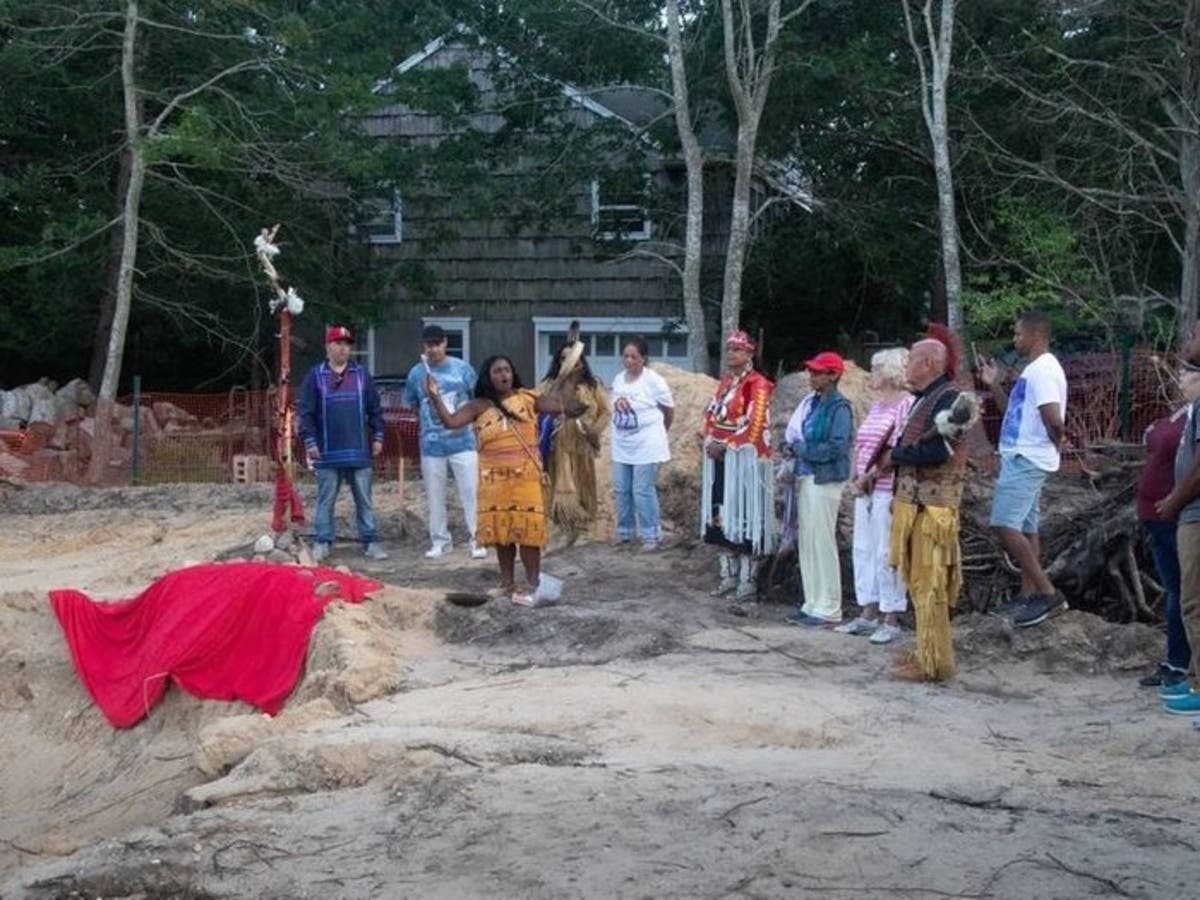
SHINNECOCK HILLS, NY — Southampton Town has just closed on the purchase of property where human remains were found last year on land thought to be an ancient burial ground for the Shinnecock Indian Nation, town officials said Thursday.
The owners of the property, KB Southampton LLC, agreed to sell the Hawthorne Rd. property to the town for $450,000, Southampton Town Supervisor Jay Schneiderman said in a release.
Because the site had already been significantly disturbed, the Shinnecock Indian Nation raised an additional $50,000 for the restoration and preservation of the burial site, officials said.
Find out what's happening in Southamptonfor free with the latest updates from Patch.
The remains were found during excavation of the construction site on Aug. 13, 2018 and the property owners immediately stopped work; the remains were sent to the Suffolk County Medical Examiner’s office to be examined by an anthropologist and to determine their origin, town officials said.
"The Shinnecock Nation is very pleased with the purchase and preservation of this culturally significant site to our people," said Lance Gumbs, a Shinnecock Nation tribal leader. "This was a collaborative effort by the Southampton Town, the Peconic land Trust, the Community Preservation Fund and the Shinnecock Nation to secure this historical parcel of land. It was definitely a step in the right direction by the town and the CPF to help protect the burial site of one of our Shinnecock ancestors."
Find out what's happening in Southamptonfor free with the latest updates from Patch.
An archeological study may also be required on the property to determine whether there are other remains at that location, town officials said.
The findings prompted the creation of a Shinnecock Nation Cultural Heritage Committee in Southampton Town, Schneiderman said. That committee recently held its first meeting and is considering a recommendation that formal procedures be adopted when ancient remains are found at construction sites in the future, the supervisor added.
"We look forward to working with the Town of Southampton, Peconic Land Trust and the CPF on additional sites that have been identified as culturally significant to the Nation in our sacred Shinnecock Hills. With the appointment of three tribal members to the Shinnecock Nation Cultural Heritage Committee, we have been assured our voice will be head as more culturally sensitive sites are identified," Gumbs said.
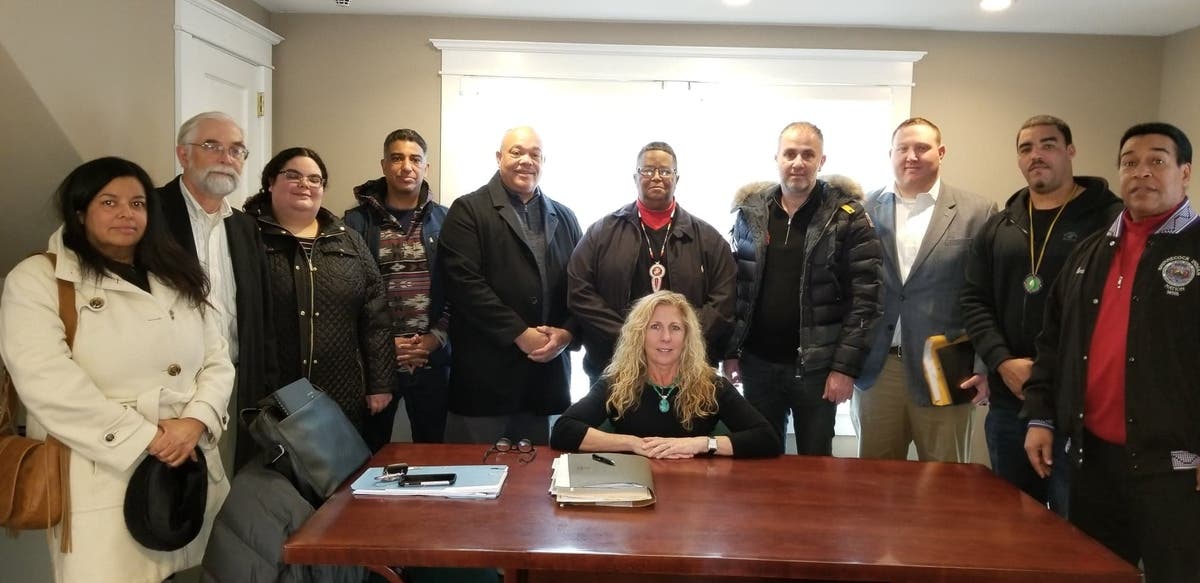
(Photo courtesy Lance Gumbs)
Southampton Town officials stepped forward in September with the plan to purchase property where remains were found in Shinnecock Hills.
The town board held a public hearing in October to decide whether Community Preservation Funds should be used for the purchase.
"I want to thank the owners of the property and the contractor for doing the right thing and stopping work upon discovery," Schneiderman has said.
A GoFundMe page, "Shinnecock Hills Preservation Fund," which helped to raise the $50,000, was created by a group entitled "Shinnecock Graves Protection" with an eye toward protecting and preserving the ancestral grave.
"We witnessed firsthand the desecration of a Shinnecock Indian ancestor's grave, when a skull, bones, and 18th century glass bottle were unearthed during the construction of a home just five minutes from our reservation," the page said.
When the remains were found, the page continued, "We were helpless to stop the digging and raking of bones initially deemed by local law enforcement to be part of a crime scene. This tore at our souls. We could only offer songs, blessings, and prayers to heal our ancestor and ourselves. Yet, we are thankful that the property owner and construction workers contacted Shinnecock tribe members immediately after finding the skull and 18th century glass bottle, which signifies that this ancestor was a leader of our people during colonial times."
Those who authored the page alleged that "in many other instances, when people have dug foundations on land that is on Shinnecock Indian aboriginal territory, the ancestral remains found were thrown away, stored in private collections, or put on display in museums. Homes and businesses were then built on these burial sites, so we could never return our ancestors' remains to their original resting place. There are reports that this is still going on as if we are not even human."
The location of the grave is on private land in the Shinnecock Hills where the Shinnecock people were "forcibly removed" in 1859, the page said. "Our ancestors rest in the Shinnecock Hills — their graves facing west, so they may enter the spirit world through the sunset with ease and join the Creator. Our elders have always asked us to protect our land and protect our ancestors' burial sites. In this way, our next generation may know where we come from and that they walk in the footholds of their ancestors who sacrificed everything for our survival," the page said. "Now, we cannot protect and preserve that which is sacred without your help."
The GoFundMe page explained that the $50,000 would be used to pay for the reburial of the Shinnecock's ancestor's skull, bones, and the glass bottle unearthed in August, as well as well as for site restoration.
"Originally, the Nation was told we would need to pay $185,000 for various costs to stop construction, rebury our ancestor, and preserve this sensitive area. We are so grateful that the property owner and the Town of Southampton have graciously met with us and in good faith agreed to preserve the property as a historic site and limit the Nation's contribution to $50,000 for the purpose of site restoration," the page said.
For decades, organizers of the page said, members of the Shinnecock Nation have "pleaded" with the Town of Southampton, Suffolk County, and State of New York to enact legislation and adopt protocols to prevent the desecration of ancestral graves. New York does not presently have clear individual protections in place for graves found on private land, unlike the policies of 46 other states, organizers added.
"The time is now for us to achieve our elders' directives," the page said.
Photo courtesy GoFundMe.
Get more local news delivered straight to your inbox. Sign up for free Patch newsletters and alerts.


