Politics & Government
Supervisor Speaks On $10.6M Notice Of Claim Over Transient Hotels
"It's really a slap in the face. It's counterproductive." — Jay Schneiderman, of a notice of claim filed by the Hampton Bays board of ed.


SOUTHAMPTON, NY — After learning that the board of education of the Hampton Bays Union Free School district had filed a $10.6 notice of claim against the Town of Southampton, stating that the town had been negligent and failed to enforce its zoning code in allowing "long term residential use of transient motels or motels", Southampton Town Supervisor is speaking out.
"It's really a slap in the face," Schneiderman told Patch. "It's counterproductive."
The notice of claim, filed by the district's BOE on Jan. 23 by Poughkeepsie based attorney Mark C. Rushfield, lists 18 hotels or motels in Hampton Bays, and said the failure to enforce the zoning code has caused, and continues to cause, damages in the form of unrecovered pupil costs of more than $10.682,000 " — "with that sum growing daily" —expended to provide services to the students "illegally living" in the transient hotels or motels who have been registered in the school district.
Find out what's happening in Southamptonfor free with the latest updates from Patch.
The claim arose beginning in the 2012-2013 school year, "and continues to arise on each day" that the town does not enforce its zoning code, the notice of claim said.
According to the notice of claim, unless the sum is paid, the district plans to proceed with legal action.
Find out what's happening in Southamptonfor free with the latest updates from Patch.
When asked for comment, Lars Clemensen, superintendent of the Hampton Bays Union Free School District said, in a message, "We are working through the legal issues with the town and while it's pending litigation, I unfortunately can't offer comment."
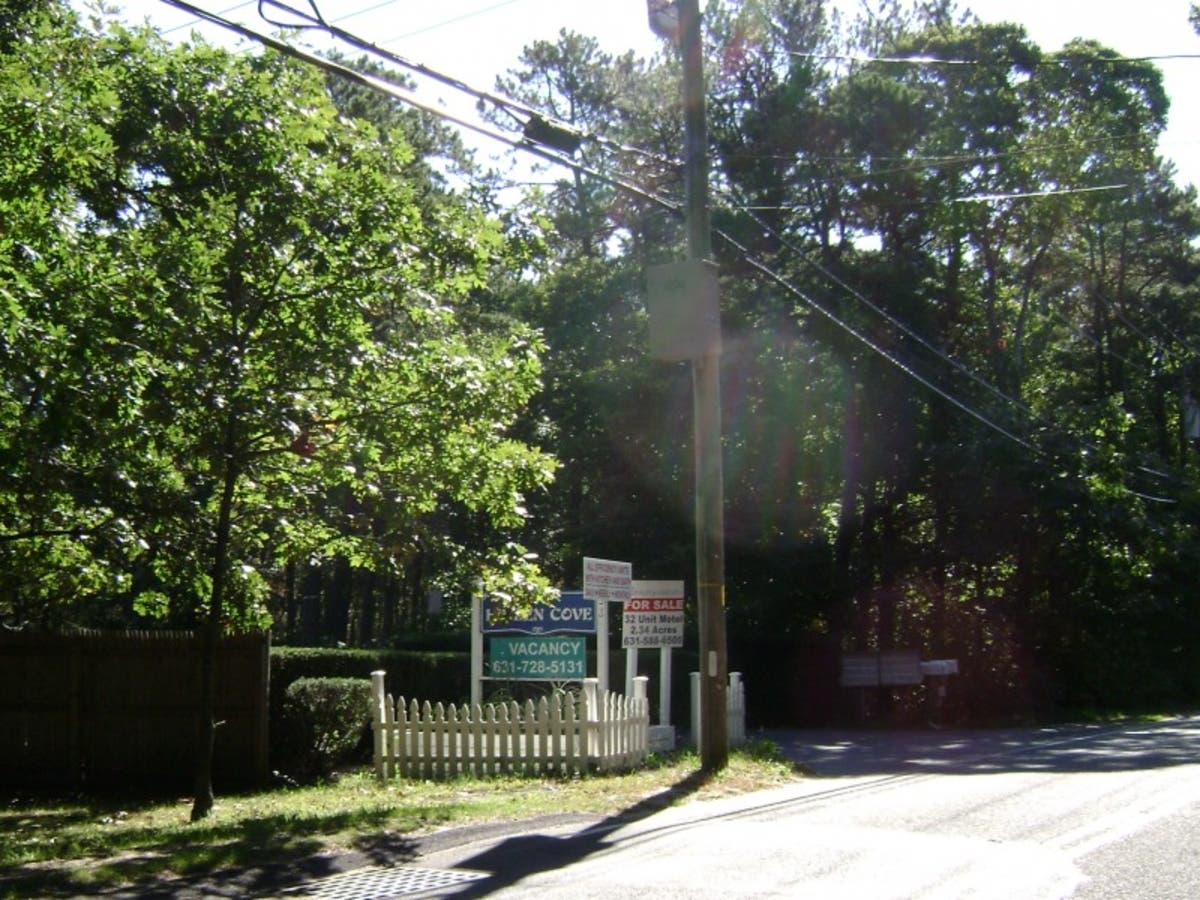
Schneiderman said that the town and the school board had bene working together "for quite some time now" to address the properties. One motel, Hidden Cove, which had been a source of contention for years in Hamptons Bays, closed and was ultimately purchased by Southampton Town, Schneiderman said.
Other motels and hotels, he said, are no longer operating in that capacity. And, the supervisor said, the tow has cited "well over 100 violations" at other such properties.
"We're aggressively pursuing this issue," Schneiderman said.
In past months, Schneiderman reminded that the town has been aggressively enforcing town code. In October, the town engaged in a major code enforcement crackdown, performing a sweep of 42 homes and 3 motels in Hampton Bays and issuing 215 code violations, Schneiderman said.
The effort took place with Town Code Compliance and Emergency Management Administrator Steven Troyd and code enforcement officers inspecting the properties, Schneiderman said.
Schneiderman said the school board had discussed bringing their own lawsuit against the offenders — but instead, the town was served with the notice of claim, he said.
"They chose a different path. Rather than trying to go to court against the properties they decided to then challenge the town. It's a bit of a slap in the face."
Especially because the town has been making "significant progress" in its code enforcement crackdown, Schneiderman said.
Schneiderman also said that it was "significant to note" that for the first time in years, the population has decreased in the Hampton Bays school district, and also, "for the first time in a long time, school taxes went down, as well."
"I am not sure where the claim that taxes will go down comes from," Clemensen said. "Population in Hampton Bays, like other districts, is decreasing because birth rates are decreasing. So, our kindergarten classes are smaller than our Grade 12 classes. As the number of babies being born remains less than the number of children already born, we will see the incoming kindergarten enrollment decrease, making the aggregate enrollment go down."
Perception is critical, Schneiderman said. "The people of Hampton Bays thing things are spiraling out of control. For the first time in a long time, they're tipping in the right direction."
Much of the shift is due to the town board's work to revitalize the downtown Hampton Bays area, with Good Ground Park and other projects, he said.
"I don't really understand why the school board would threaten a lawsuit when everything is moving in a positive direction," Schneiderman said.
Schneiderman also cited a New York Post article that described "illegal deathtraps" and undocumented and poor people living in Hampton Bays motels.
"False allegations about the community hurt our efforts to improve the area — people think it's moving in the wrong direction when it's moving in the right one," the supervisor said.
That type of article, he said, gives pause. "We have people willing to take a chance in Hampton Bays and invest millions of dollars. But we need to work together. The school board seems oblivious to the fact that the town board is working so hard to fix the problems and is making significant progress."
The hotels, Schneiderman said, have a history: Even when they were being used as hotels and motels, there were problems such as sex offenders and drifters.
Also, he said, many of the properties aren't zoned for hotel use but instead, for residential use. "Once it stops being a hotel, it loses its non-conforming status. It gets very complicated in the courts," he said.
While some properties are functioning as hotels they may keep tenants month to month; others have "truly become apartments. They would not be able to survive as hotels economically," Schneiderman said.
The supervisor said he'd like to see the hotel industry born again in Hampton Bays, not with young partiers or drifters, but with families and couples.
"The problem is, to make that viable, you need to support infrastructure in Hampton Bays for tourism," hence the push to create programs at Good Ground Park, upgrade the pavilion at Ponquogue Beach and work on Maritime Park.
"We're creating a place that people will want to visit, and pay enough money that these hotels could go back to being hotels and survive, rather than boarded up buildings or full of drifters."
The town, he said, is enforcing its code. "I want to make that very clear," Schneiderman said. "The basis of the school's claim is false. The town is aggressively enforcing its code, and at the same time, doing much more to revitalize the Hampton Bays area and make it so hotels and motels are viable."
Rather than drifters, the aim is to have visitors who will eat in restaurants and shop, a boon to the local economy, he said.
The three-pronged strategy, Schneiderman said, involves code enforcement, revitalization of Hampton Bays — and creating affordable housing east of the canal. "There is a reason why these people are living in these hotels," he said.
The town board is also working on a motel study, he said.
And, Schneiderman added, with a family hotel business in Montauk and a lifetime spent in the business, "I have many years of expertise in this area. If they want to see some of these properties return to vibrant hotel properties, they have the right person as supervisor. I know what it's going to take to do it."
Patch file photo of the former Hidden Cove Motel in Hampton Bays.
Get more local news delivered straight to your inbox. Sign up for free Patch newsletters and alerts.