Weather
28K+ Customers Without Power In Winter Storm Friday AM
Temperatures are dropping from north to south in the Hudson Valley as a wintry mix falls.


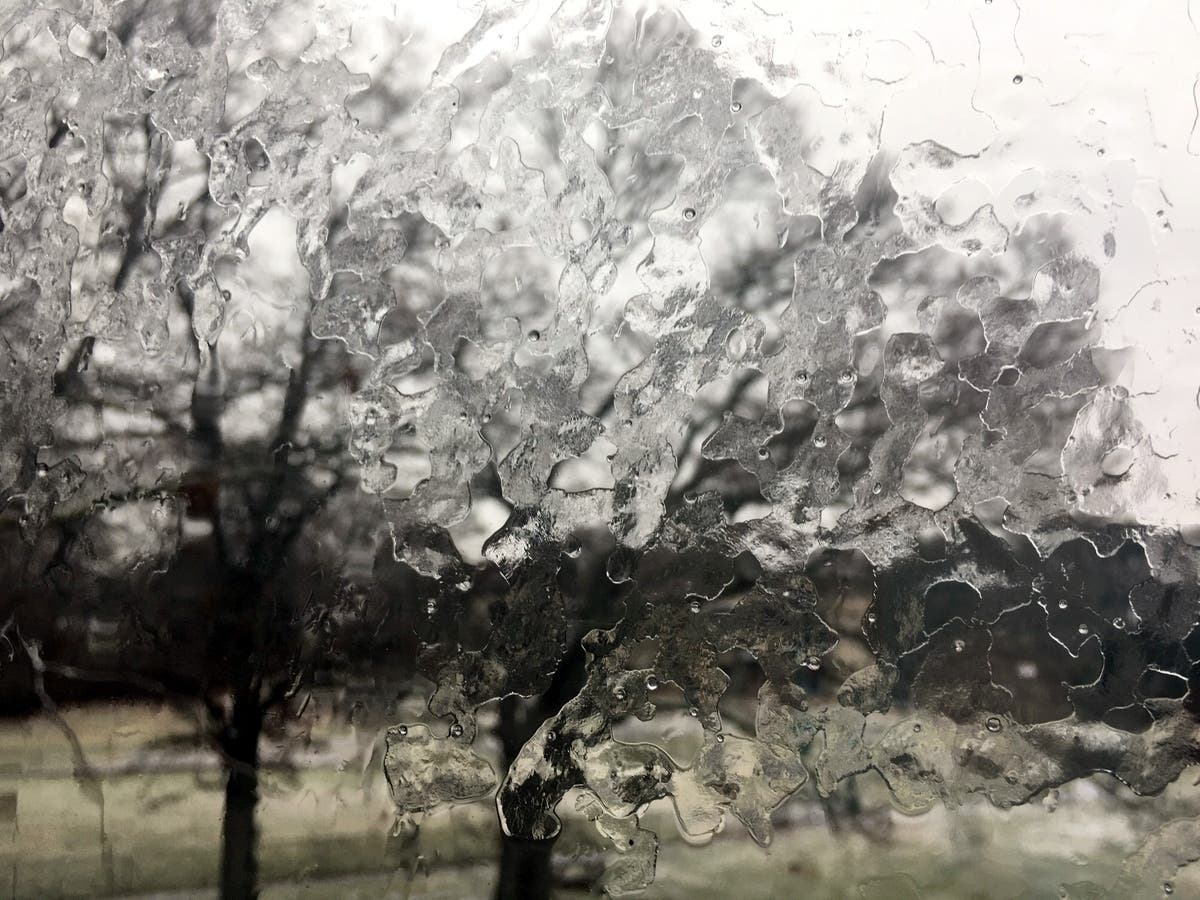
UPDATE, HUDSON VALLEY, NY — Temperatures are dropping and power companies are reporting rising numbers of outages. Hudson Valley Weather reported plummeting temps moving from north to south.
"Flashes of light is arching power lines and blown transformers and not lightning," Alex Marra and Bill Potter of Hudson Valley Weather said on Facebook.
- CenHud as of 6:40 a.m.: 26,474 customers out, including 23,722 in Ulster County, 2,593 in Dutchess, 32 in Orange.
- NYSEG as of 6:35 a.m.: 8,235 customers out, including 1,213 in Ulster; 515 in Orange
The contrast is mind-blowing: News12 Hudson Valley reported temperatures of 52 degrees in Yonkers compared to 31 in Kingston at 6:15 a.m. "It's just incredible to see these temperatures in the south and east," said meteorologist Matt Hammer.
Find out what's happening in Southeast-Brewsterfor free with the latest updates from Patch.
SEE ALSO: UPDATE: Closings, Remote Learning Announced For HV Schools Friday
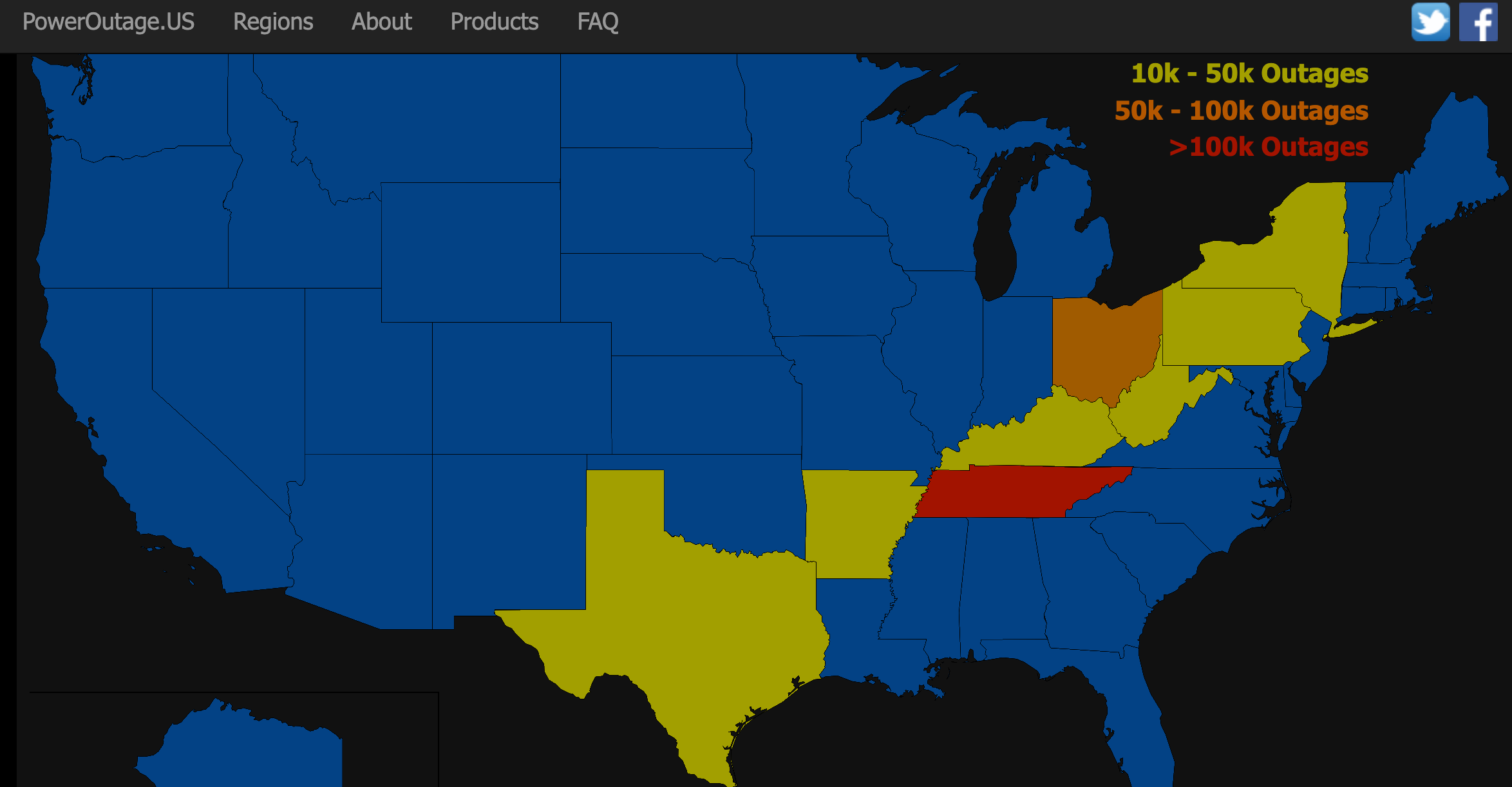
The massive storm system is causing power outages across a large swathe of the United States. Check out this graphic from poweroutage.us as of 6:27 a.m.:
Find out what's happening in Southeast-Brewsterfor free with the latest updates from Patch.
The Red Cross offers tips for power outages.
Before
- Water—one gallon per person, per day
- Cooler
- Food—non-perishable, easy-to prepare items
- Flashlights
- Battery-powered or hand-crank radio (NOAA Weather Radio, if possible)
- Extra batteries
- Multi-purpose tool
- Cell phone with chargers
- Family and emergency contact information
- Extra cash
During
- Keep refrigerator and freezer doors closed as much as possible. First use perishable food from the refrigerator. An unopened refrigerator will keep foods cold for about 4 hours.
- Then use food from the freezer. A full freezer will keep the temperature for about 48 hours (24 hours if it is half full) if the door remains closed.
- Use your non-perishable foods and staples after using food from the refrigerator and freezer.
- If it looks like the power outage will continue beyond a day, prepare a cooler with ice for your freezer items.
- Keep food in a dry, cool spot and keep it covered at all times.
- Turn off and unplug all unnecessary electrical equipment, including sensitive electronics.
- Turn off or disconnect any appliances (like stoves), equipment or electronics you were using when the power went out. When power comes back on, surges or spikes can damage equipment.
- Leave one light turned on so you’ll know when the power comes back on.
- Eliminate unnecessary travel, especially by car. Traffic lights will be out and roads will be congested and possibly blocked by downed lines
- When using a portable generator, connect the equipment you want to power directly to the outlets on the generator. Do not connect a portable generator to a home’s electrical system.
- Never use a generator, grill, camp stove or other gasoline, propane, natural gas or charcoal-burning devices inside a home, garage, basement, crawlspace or any partially enclosed area. Locate unit away from doors, windows and vents that could allow carbon monoxide to come indoors.
- The primary hazards to avoid when using alternate sources for electricity, heating or cooking are carbon monoxide poisoning, electric shock and fire.
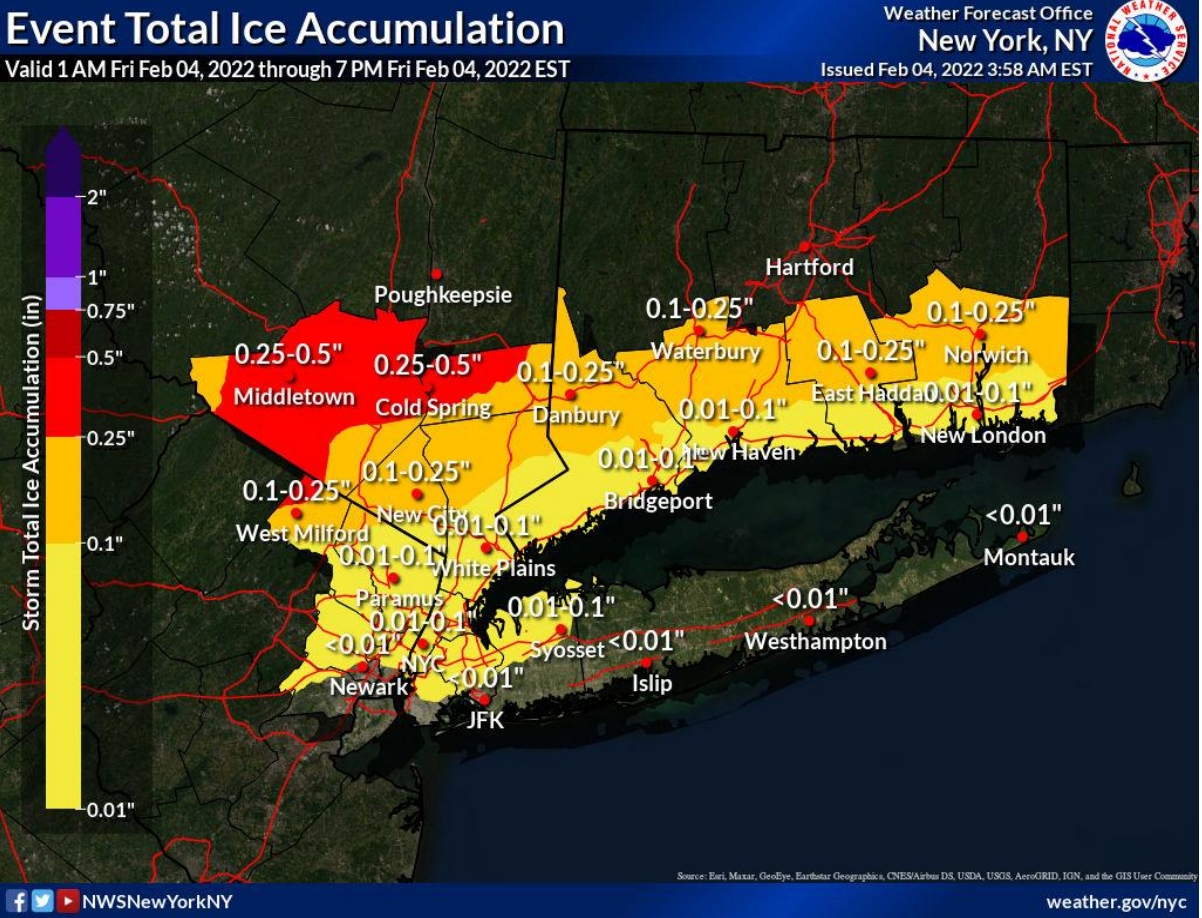
The National Weather Service prediction for total ice accumulation in the Hudson Valley:
This is a developing story; check back with Patch for updates.
Get more local news delivered straight to your inbox. Sign up for free Patch newsletters and alerts.