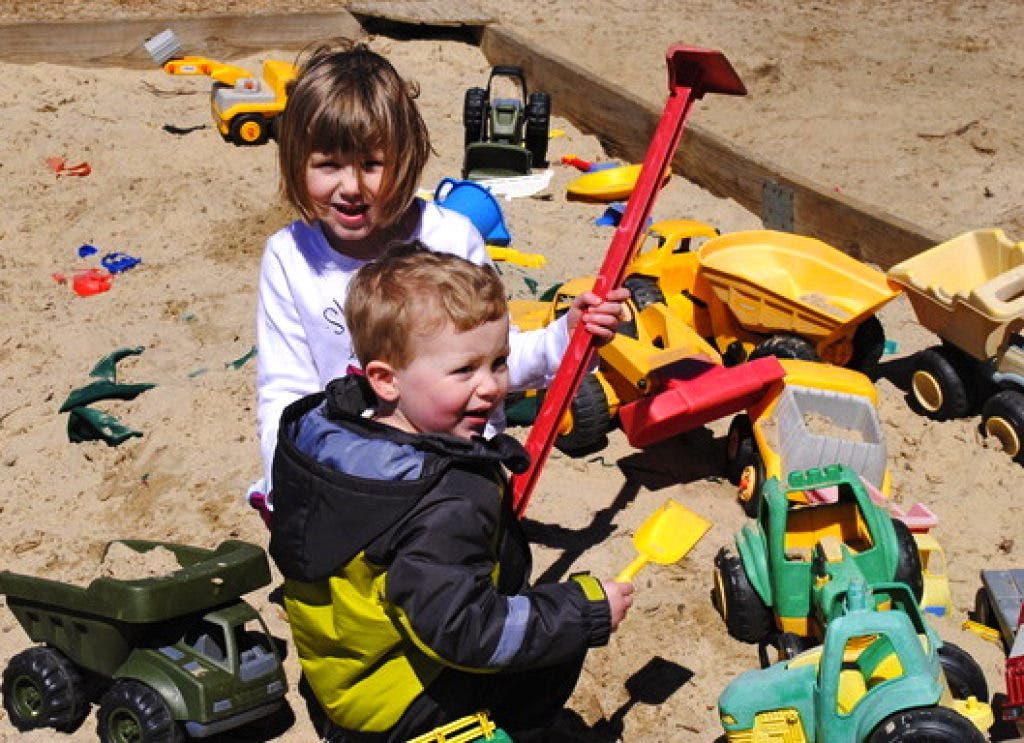
As the summer continues with your children perhaps spending more time together than during the school year, is your household a peaceful place where toys, games and books are graciously shared between siblings who take turns with even their most prized possessions?
Or is it more like this: "I want to play with that! Give it to me! Mom, she won't share!" "But it's mine, Dad, and she never shares with me!" "Oh, yeah, well I hate you!"
We parents can at least take some solace in the fact that the second scenario is completely normal. After all, if someone admired your new iPad or car and then asked to borrow it, how would you feel? Point well taken. But just how are parents supposed to cope with the sharing issue, especially when you can understand both children’s point of view?
Find out what's happening in Syossetfor free with the latest updates from Patch.
Before the age of three, children don't understand ownership and privacy. They operate under the assumption that possession is nine-tenths of the law. With little ones, your best bet is to help older siblings keep their things out of harm's way in a special place so they can have control over them.
You can't really teach the concept of sharing until children begin to want privacy and comprehend that some things simply aren't theirs. At that point, rather than forcing the issue of sharing, have them take turns. Set a timer if you need to and give the sibling who wants to borrow the toy a set amount of time, and then switch back.
Find out what's happening in Syossetfor free with the latest updates from Patch.
However, when it comes to sharing, this is one case when older siblings are often the ones put upon, as in, “Oh, she's just a baby. Give it to her.” This becomes tiresome after a while. It's also not fair and can foster resentment between your children. Just because someone is older, doesn’t mean they always have to be the one to hand over their things, especially if they have legitimate reasons to believe their younger sibling might not take care of them—usually based on past experience.
If it's a case of a toy that is no longer age-appropriate for an older child—and that child also hadn't shown an interest in it until his little brother started playing with it—talk to him about it. You might encourage him to make it a gift for his sibling. At the very least, adopt the turn-taking approach until he loses interest in the toy again. If he doesn't, you'll have to decide how important an issue you want to make of it.
Board games, puppet theaters, dress-up clothes, art supplies, swing sets and most big items should be treated as community property within your household. But some toys—a favorite doll, bike or anything with sentimental value—should never have to be shared.
Liza N. Burby is Publisher of Long Island Parent Magazine and liparentonline.com.