Community Corner
New Drug Therapies Help Brooklyn Man Keep Lung Cancer at Bay
Screening and innovative treatments offer new hope for patients with the deadliest lung cancer, small cell lung cancer
This is a paid post contributed by a Patch Community Partner. The views expressed in this post are the author's own, and the information presented has not been verified by Patch.
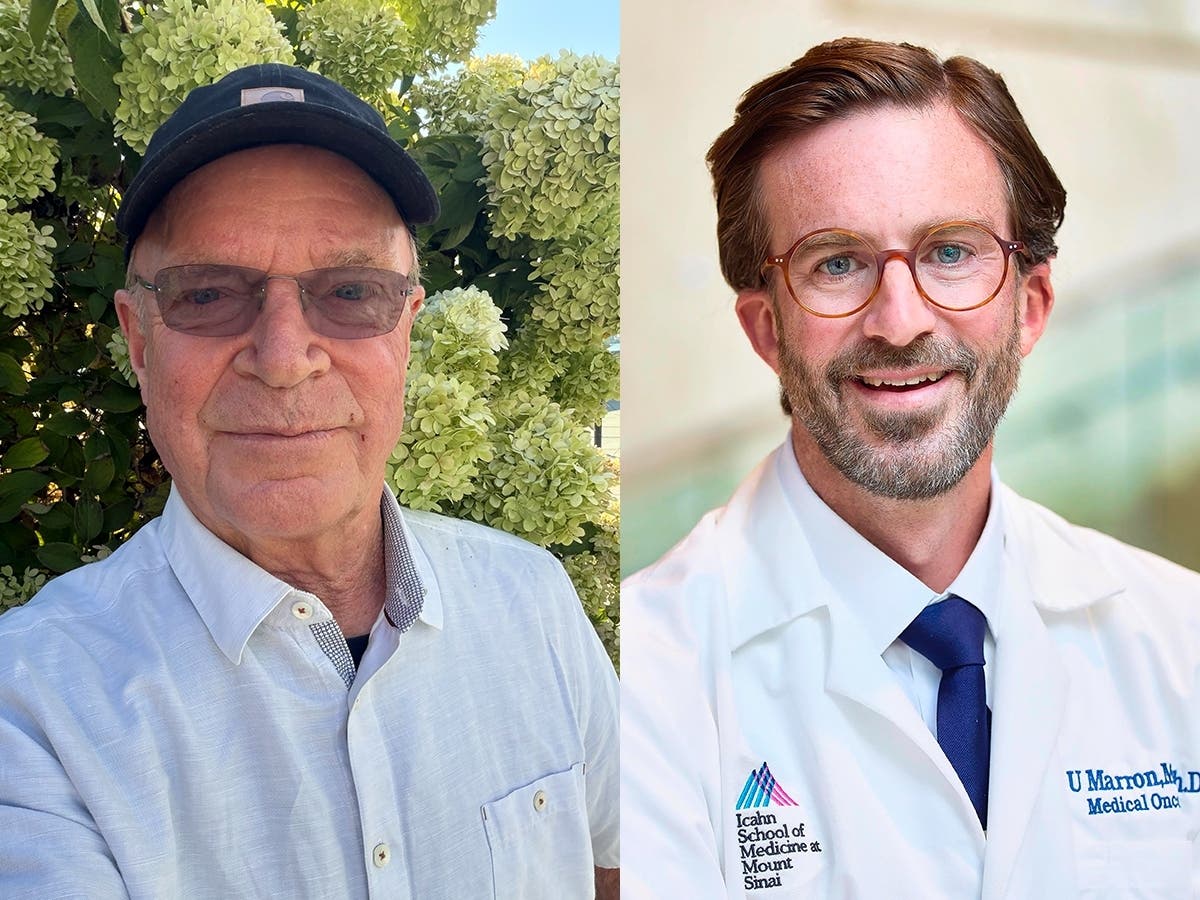
Brooklyn resident Dennis Schroeder had a sore shoulder. He first noticed it in the fall of 2024. By early 2025, it was so persistent that Dennis went to the doctor for tests and X-rays.
“I thought it was maybe a rotator cuff,” he says. “They found a speck of something on my lung. I had lung cancer.”
The 72-year-old says he tries to eat healthy and he works out regularly.
“I was at the gym, oddly enough, when I got the call," says Dennis. “It was Good Friday of all things. And it just kind of hit me really bad, it's a shock.”
There was a time the outlook for a small cell lung cancer diagnosis seemed hopeless.
“We never really talked about survivorship and small cell,” says Dr. Thomas Marron, professor of oncology, immunology and immunotherapy at the Icahn School of Medicine at Mount Sinai. “Because even if you had limited-stage small cell that was detected very early on, everybody died within a few years, if not within a year.”
That's changed. According to the Lung Cancer Foundation of America (LCFA), recent advances in immunotherapy drugs help the body’s own immune system attack cancer cells.
“I never thought you would cure an extensive-stage small cell,” says Dr. Marron. “But we do have patients who have been cured. It's a super exciting time.”
Lung cancer is the deadliest cancer in the United States, causing as many deaths as breast, prostate, and colorectal cancers combined.
“We have all these patients come in, and they Google small cell, and they just see all the gloom out there,” says Dr. Marron. “It's nice to be able to tell them, hey, we have a plan B and a plan C and a plan D after we do the standard stuff.”
The standard stuff is radiation and chemotherapy. Oncologists like Dr. Marron can now prescribe FDA-approved immunotherapy drugs, including T-cell engagers like Tarlatamab.
BiTE therapy, bispecific T-cell engager therapy, involves specific T-cells that grab the tumor cells, grab the immune cells, and bring them together to create that immune response.
“It's really an amazing time for small cell,” says Dr. Marron.
As Dr. Marron’s patient, Dennis completed the standard treatment and now has an immunotherapy infusion once a month.
“I'm feeling surprisingly good,” says Dennis.
Small cell lung cancer is linked to smoking. Still, non-smokers have also been diagnosed with the disease, and LCFA notes no one “deserves” to have lung cancer.
Dennis quit in 2000, after smoking for 25 years.
Dr. Marron says it’s important for those at risk of lung cancer to be diligent about getting screened.
“If you're a smoker, you're supposed to get a screening once a year with a low-dose CAT scan,” Dr. Marron says.
A low-dose CAT scan is safe and easy. It can find something before there are symptoms.
For Dennis, that sore shoulder helped doctors diagnose his small cell lung cancer early.
“A PET scan confirmed that there are no other organs that have cancerous cells right now,” Dennis says. “So, I'm what they might consider cancer-free, for now. That's my current condition.”
Dennis says his shoulder issue resolved itself. “I'm out riding my bike around Brooklyn,” he says. “Trying to stay healthy and eat right, and just stay positive. You know, we're only here for a visit and let's make the most of it.”
For more information, check out the Lung Cancer Foundation of America website. (https://lcfamerica.org/)
This post is an advertorial piece contributed by a Patch Community Partner, a local brand partner. To learn more, click here.