Community Corner
Natural History Museum Gilder Center Plan Approved by Community Board Committee
A joint committee voted in favor of the museum's $325 million Gilder Center application filed with the Landmarks Preservation Commission.


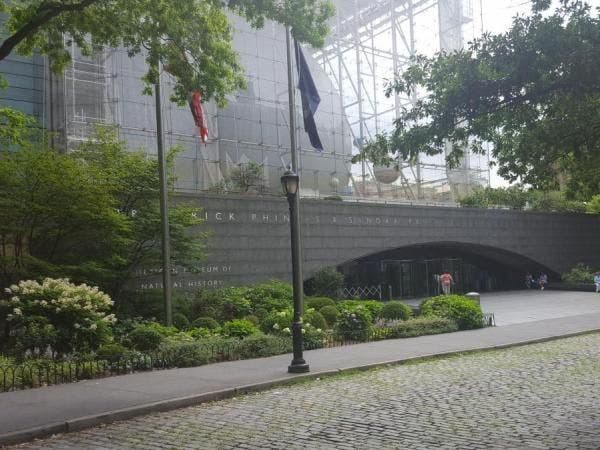
UPPER WEST SIDE, NY — A joint committee composed of members from the Community Board 7 committees on preservation and parks and environment voted to adopt resolutions approving the American Museum of Natural History's $325 million expansion plan Tuesday.
The committee will send two resolutions — to approve a proposed redesign of areas of Theodore Roosevelt Park near the museum's expansion, and to approve the appropriateness of the museum's Gilder Center design — for a full board vote on Oct. 5. The 10-member joint committee voted unanimously on the resolution regarding the park design and nine for and one against for the resolution regarding the design of the Gilder Center expansion.
Committee members praised the museum for addressing community concerns in its building plans. The application filed with the Landmarks Preservation Commission shows the new Gilder Center will take up a quarter-acre of parkland as opposed to a half-acre as originally proposed. In addition, the museum will reduce the size of an underground service area to save two trees it originally had proposed to remove.
Find out what's happening in Upper West Sidefor free with the latest updates from Patch.
Despite those concessions, many Upper West Side residents were left dismayed by the committee's adoption of the expansion plan.
People were specifically worried about the Gilder Center's entrance on Columbus Avenue creating increased congestion and traffic in the park. Ellen Futter, president of the museum, said that the current entrance on Columbus Avenue accounts for about 10 percent of traffic into the museum and after the expansion should only rise to about 20 percent.
Find out what's happening in Upper West Sidefor free with the latest updates from Patch.
"I think it's delusional to think that by making an entrance on Columbus Avenue it will only get 20 percent of people," said neighborhood resident Claude Beller. "And those extra people what they're going to do is line up and take away from the private space that you say you want to keep. ... It's going to destroy a part of the park that has been relief and repose."
In addition to being called delusional, museum representatives were asked if they had ever heard of climate change or if they understood the concept of a landmark. Community Board members were not able to escape the ire of those opposed to the expansion either. Board members were called "stooges," were accused of poor taste and were asked non-rhetorically if they even represent the community.
But some people, mainly science teachers, who showed up to Tuesday night's meeting voiced their support for the museum's expansion — which includes dedicated teaching space for classes on field trips. Representatives from organizations such as New Yorkers for Parks and the Columbus Avenue Business Improvement District also voiced support for the expansion.
"We strongly support the newest plan for the landscape of the center and are very pleased with the work the museum has done with the community," said Tupper Thomas, executive director of New Yorkers for Parks.
In the end, the Community Board showed strong support for the expansion project. While some board members expressed concerns over the expansion into the park and the volume and height of the proposed new buildings, they also applauded the museum's design.
"I think this is an incredibly exciting design both inside and out," said Gabrielle Palitz, co-chair of the Community Board's preservation committee. "I feel like it's the next step in the museum's evolution, each of the architectural phases speaks to a different time ... every one of them speaks about this beautiful evolution and not staying in place."
Photo Credit: Patch
Get more local news delivered straight to your inbox. Sign up for free Patch newsletters and alerts.