Politics & Government
Election Q&A: Meet NY-12 Candidate Nina Schwalbe
Patch posed several questions to candidate Nina Schwalbe ahead of the NY-12 election this June. Here are her replies.


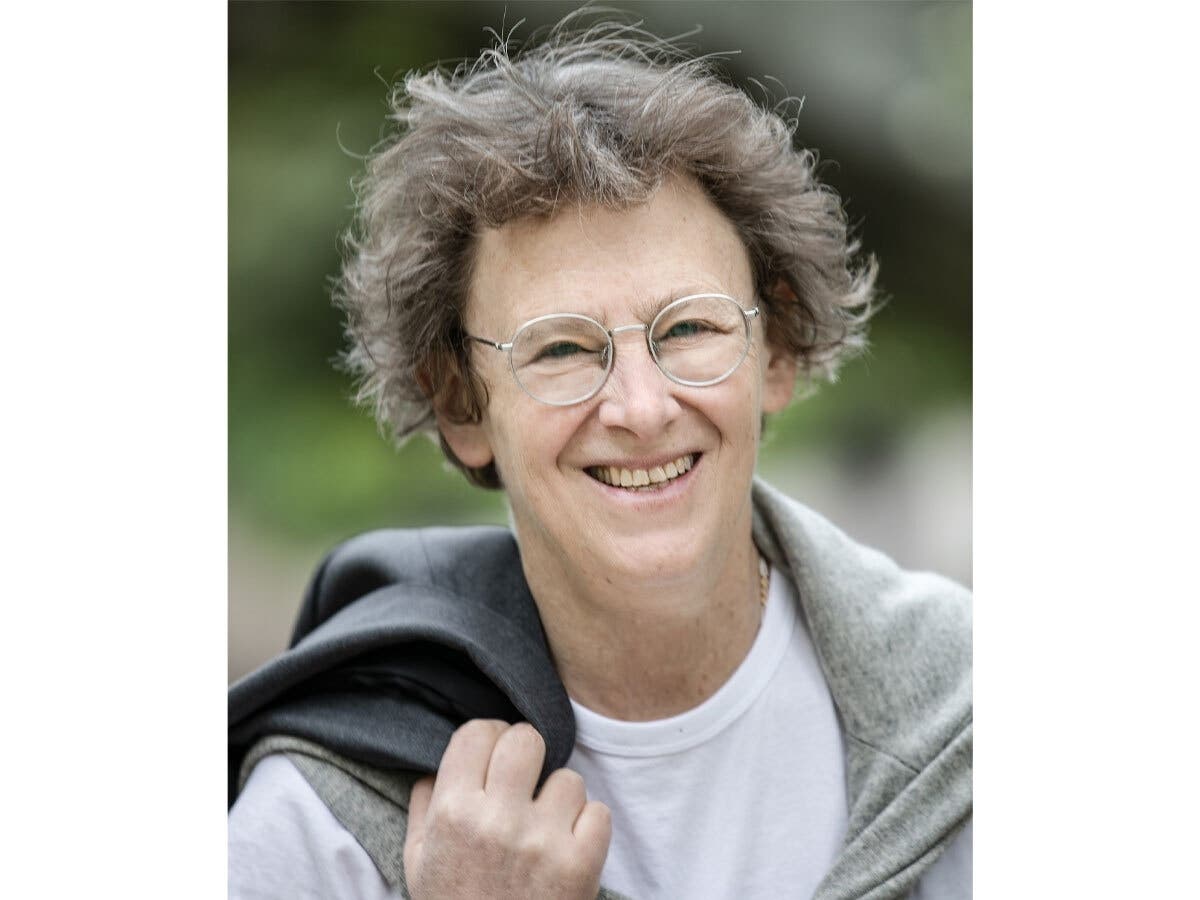
UPPER WEST SIDE, NY — Democratic candidate Nina Schwalbe is running for Congress in District 12 in New York City's primary election on Tuesday, June 23.
Schwalbe will face off against fellow Democratic candidates for Jerry Nadler's seat, including Assemblymember Alex Bores, Assemblymember Micah Lasher, Jack Schlossberg, George Conway, Laura Dunn and Chris Diep.
NY-12 includes the Upper East Side, Upper West Side, Midtown, Hell’s Kitchen, Central Park, Union Square, Chelsea and Stuyvesant Town.
Find out what's happening in Upper West Sidefor free with the latest updates from Patch.
Ahead of the election, Patch posed several questions to Schwalbe about her platform, priorities, experience, and district. See her replies below.
EDITOR'S NOTE: The following article contains information about one of several candidates who have announced their campaigns for NY-12 in the 2026 primary election. Patch has contacted the other candidates with the same questions and will post replies as they are received. None of what Schwalbe said during this interview has been fact-checked.
Find out what's happening in Upper West Sidefor free with the latest updates from Patch.
PATCH: What neighborhood are you from?
SCHWALBE: The Upper West Side.
PATCH: What languages do you speak?
SCHWALBE: I’m a native English speaker who’s proficient in French, Russian, and basic Portuguese.
PATCH: What’s your professional and educational background?
SCHWALBE: I'm a global public health expert. I have led large scale health programs for the United Nations, private foundations and USAID. I am currently a senior scholar at Georgetown and lead a think tank and advisory service focused on health policy. I have a bachelor's from Harvard in Russian and Soviet Studies, an MPH from Columbia and a PhD from the University of Witwatersrand in South Africa.
PATCH: Renter or owner?
SCHWALBE: Owner.
PATCH: The cost of living in NYC is going up. What’s your plan to make New York City more affordable?
SCHWALBE: Health care, housing and paid family leave.
Medical debt is a leading cause of bankruptcy. Nearly one-third of the people in the district rely on federally subsidized health coverage and many risk losing their benefits. My Day-One bill, the "Healthy People, Healthy Democracy Act," will: lower drug costs by expanding Medicare negotiation authority and conditioning federal research dollars on affordable pricing; expand Federally Qualified Health Centers (FQHCs or community health centers) so that quality primary care is available in every neighborhood, regardless of insurance status, and make sure that safety-net hospitals are funded; and protect and expand Medicare, Medicaid, and the ACA subsidies, while gradually lowering the Medicare eligibility age to achieve a universal single-payer system. The result will be an improved Medicare for All program that every American deserves. And, because nutrition is inseparable from health, the bill will fully restore SNAP benefits.
The other affordability crisis here is housing. Congress must fully fund NYCHA repairs, increase housing vouchers and enforce the rules so landlords can't refuse them. We have too many empty apartments in this city with landlords 'warehousing' units, purposely avoiding renting them out with the hope that state law will change and allow them to charge higher rents to new tenants. We need to discourage the practice through taxation. We also need a federal public housing authority to bring back Mitchell-Lama-type buildings so that working people can afford to live in NY again.
For working families, I'll fight for a higher minimum wage and a guaranteed national paid family leave program.
PATCH: What is your position on bike lane expansion and street redesigns?
SCHWALBE: New York City has roughly three million on-street parking spaces. A significant share of traffic on city streets is drivers circling for an open one. Free and underpriced parking generates congestion — it doesn't solve it.
A bus lane moves thousands of people an hour; a parking lane stores a few dozen cars that sit unused most of the day. Reallocating that space to protected bike lanes and busways is straightforward math on public benefit.
And design matters. In a dense district like NY-12, protected bike lanes need dedicated drop-off zones, loading areas, and accessible pull-ins for people who depend on door-to-door transport. As a member of Congress, I'll condition federal transportation dollars on Complete Streets design standards and strengthen ADA enforcement so that accessible curb access is never an afterthought.
PATCH: List two ways you plan to make New York safer.
SCHWALBE: Safe streets are the lifeblood of Ny 12. First, we need to invest in people. That means funding community-based mental health outreach, getting people care before a crisis hits, and directing federal funding, including for operations, to increased MTA staffing, station lighting, and data-driven safety patrols — conditioned on community oversight.
Second, we need to redesign our streets. They were designed to move vehicles quickly, not people safely. I'll push for investment in proven safety infrastructure: protected bike lanes, safer intersections, and accessible pedestrian improvements. Traffic calming measures — speed humps, raised crosswalks, narrower lanes, and curb extensions — slow cars down without removing them from the road. And establishing federal safety regulations for e-bikes will protect both riders and pedestrians.
But a safer New York also means safety from ICE, safety from medical debt, and the need for housing and food security. Abolishing ICE, providing humane pathways to immigration, ensuring access to quality affordable health care, and fully funding SNAP and public housing must all be part of the overall conversation on safety.
PATCH: What are your thoughts on the buffer zone bills sparked by protests in the district?
SCHWALBE: I'm a strong advocate for free speech and the right to protest. We can maintain those rights while providing safety and security for people in their houses of worship and schools. In my work fighting for women's reproductive health and choice, we've used a 15-foot buffer zone to protect workers and patients at abortion clinics, an approach the courts have upheld. The evidence suggests that a 15-foot buffer would be equally effective here, without restricting the ability of New Yorkers to protest injustice where they see it.
PATCH: What type of relationship will you have with the Trump administration?
SCHWALBE: Trump is blatantly stealing money from the American people and abusing his power. New York State is owed billions in appropriated funds being illegally withheld, starting with housing, transit, and healthcare. The Impoundment Control Act is clear: Congress holds the power of the purse, not the White House. My priority is forcing Congress to act like it. I will stand up to Trump and fight to impeach him. That means following the dollars.
First, I'll restore the power of the purse — using oversight hearings, withholding confirmations, and pursuing legal remedies to compel the executive to spend what Congress has appropriated. Second, I'll target specific violations, pushing those cases through appropriate legal and congressional channels. And third, I will lead the impeachment of RFK Jr. and use oversight hearings and legislation to restore funding and independence to the scientific and public health agencies he has gutted.
I will also build real transparency, including government performance indicators, community scorecards, and expanded constituent services with real-time tracking, so New Yorkers can see where every federal dollar goes and demand accountability when it doesn't arrive.
PATCH: It’s a large field: what sets you apart from the other candidates?
SCHWALBE: I have spent my career delivering real services for real people. I am not a celebrity, a legacy democrat, or backed by a billionaire's checkbook. I bring deep expertise and a lifetime of public service. I am the only candidate who has run a $7 billion federal program, worked with more than 100 countries, negotiated with Russia, North Korea, and India. I took on Big Pharma and secured lower prices for life-saving medicines. I faced death threats for this work and I did it anyway.
I have worked in refugee camps and war zones, delivered more than 1 billion vaccines around the world. During COVID-19, I fought Albany to get ventilators to NYC, worked with the city to keep our schools open, and got low-income older New Yorkers vaccines first. I am a scientist, a fighter and a mom. And I know how to fix broken systems because I have built them.
PATCH: What local experience most shaped your politics?
SCHWALBE: Throughout high school, I volunteered at a meal program for homeless New Yorkers at Madison Avenue Presbyterian Church on the Upper East Side. Homelessness was surging across the city, and the gap between wealth and poverty within a few blocks, and the injustice of it, drove my civic engagement. I also tutored with the East Harlem Tutorial Program. That work showed me that communities can and do make a difference.
For questions, email Miranda.Levingston@Patch.com.
Get more local news delivered straight to your inbox. Sign up for free Patch newsletters and alerts.