Community Corner
Hope Plays A Major Role For Upper West Side Ovarian Cancer Hero
Andrea Herzberg, a retired NYPD sergeant, is a 24-year survivor of a disease that impacts women she now helps to support in her life's work.


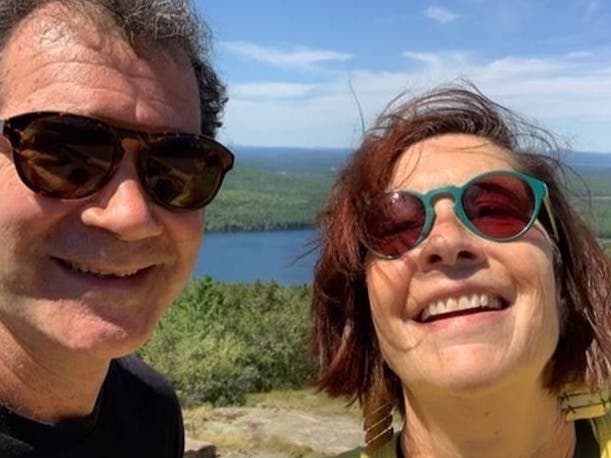
UPPER WEST SIDE, NY — Andrea Herzberg has always chosen to be optimistic, which, given the career paths she has followed and the late-stage ovarian cancer diagnosis she received when she was 39, hasn’t always been the easiest way of thinking to maintain.
But as a 24-year survivor of the disease, the former journalist and retired New York City Police Department sergeant devotes her time attempting to provide positivity to other women who are diagnosed with late-stage ovarian cancer. As the supervisor of SHARE Cancer Support’s ovarian cancer helpline, Herzberg is part of a support network that helps women find the information and help they need in dealing with their diagnosis.
The Upper West Side resident who retired from NYPD following a 26-year police career in 2011 as the department’s detective squad supervisor, is one of three people from across the country being recognized as a 2020 Ovarian Cancer Hero by Cure Media Group. Herzberg will be honored later this week as part of a virtual celebration honoring recipients of the award.
Find out what's happening in Upper West Sidefor free with the latest updates from Patch.
The designation, however, comes years after Herzberg — a former news reporter for United Press International — knew that she wanted other women find answers. While late-stage ovarian cancer is often detected in women in their 60s, Herzberg was much younger when she received the news that she says impacts every woman differently.
Initially, focusing on anything beyond how a woman will deal with ovarian cancer can be difficult, Herzberg said. Although the importance of getting a second medical opinion confirming the diagnosis of what is a challenging, tricky disease is important for all women, how each individual deals with the diagnosis varies.
Find out what's happening in Upper West Sidefor free with the latest updates from Patch.
“Every woman is different and whoever you were when the diagnosis hits, that’s who you’re going to be,” Herzberg told Patch on Tuesday.
Herzberg, whose father suffered from colon cancer and whose husband’s family was made up of a long line of doctors, dealt with her diagnosis in her own way. While physicians 40 years ago rarely used the word “cure” with late-stage ovarian cancer because of its often-reoccurring nature, Herzberg chose to attempt to remain optimistic. She acknowledges that is not often the same path other women choose to follow . But at a time when research and how the disease is treated has changed dramatically since her diagnosis , Herzberg believes hope and support can go a long way in how women approach the disease that the American Cancer Society estimates more than 21,000 women will be diagnosed with in 2020.
Like Herzberg, the women who now work as volunteers with her on the SHARE hotline are late-stage ovarian cancer survivors, which provides a level of empathy. For Herzberg, her initial support came as a member of Gilda’s Club, which was formed for the late comedian and Saturday Night Live Gilda Radner, who herself was diagnosed with ovarian cancer and later died from the disease at age 42 in 1989.
In training hotline volunteers, Herzberg instructs her staff to listen first and to ensure that the conversation is about the women who call rather than those who answer the phone.
“What you have to say about your own experience may not be what (callers) need to hear at the time,” Herzberg said.
After becoming healthy enough to continue with her career, Herzberg remained on the peer grid with SHARE, grateful for the support she received as she was in the early stages of dealing with her diagnosis and illness. Now decades later, she wants to be part of the support system for women that are dealing with ovarian cancer at a time when more women are being diagnosed at much earlier ages.
She said there isn’t a day that doesn’t go by when she doesn’t feel greatly appreciated by the women that she helps to cope. Although she will gladly accept the recognition that she will receive later this week as part of designation as an ovarian cancer hero, Herzberg said the true satisfaction comes from knowing she is helping women struggle with a disease she has experienced first-hand.
“(Ovarian cancer) is not a one size fits all thing by any means,” Herzberg said. “But you really need to go with the facts as they occur, do the best that you can to make informed medical decisions and you have to have confidence.
“It’s hard for me to say, ‘be hopeful, be optimistic’ because that is so much up to the personality of the individual woman and the encounters she has had thus far. … but you always want to give hope. ... it's hard to tell someone who is feeling doomed or not optimistic that there is reason for hope. But I really believe there is reason for hope."
Get more local news delivered straight to your inbox. Sign up for free Patch newsletters and alerts.