Community Corner
How NYC's Fashion Industry Is Joining The Coronavirus Frontlines
From local craft groups to international production companies, New York City's fashion industry is answering the call for medical supplies.


NEW YORK, NY — SoHo fashion company Shades of Grey Production would typically have spent the last week preparing for a dozen or so giant photoshoots, runway shows and other "fashion experiences" for its list of luxury, international clients.
Instead, they've been arranging truckloads of fabric deliveries to out-of-work Broadway tailors so that they can be transformed into 1,000 surgical-style masks.
"Our business was essentially put on pause — and the wheels started turning," said Principal Nick Ponton, whose company is one of four businesses that switched to mask-making and now call themselves "Fashion to the Frontline."
Find out what's happening in Washington Heights-Inwoodfor free with the latest updates from Patch.
"We thought, 'Well, if the world is paused and we know how to do these things, we can help get the world off pause and help the people on the frontlines."
(To keep up to date with coronavirus developments in NYC, sign up for Patch's news alerts and newsletter.)
Find out what's happening in Washington Heights-Inwoodfor free with the latest updates from Patch.
Fashion to the Frontline — which will eventually make 700 masks a day — is perhaps one of the largest-scale ways New York City's massive costume and fashion industry has pivoted its now-stalled workers to fight against the coronavirus pandemic.
From a Washington Heights sash company to local craft groups mobilizing sewers on Facebook and celebrity designers like Christian Siriano, the Big Apple's fashion world is swooping in with supplies healthcare workers say they are quickly running out of as coronavirus cases fill up city hospitals.
The pivot comes as most companies face a "state of paralysis" given a stay-at-home order that has put their usual shows, events and even fashion brand clients on pause.
"My regular annual orders for graduation stoles, parade sashes, pageant sashes and birthday party sashes stopped instantly," said Chantelle Ripley, who runs Custom Sashes in Washington Heights.
The same was true for companies with Fashion on the Frontline. The collective includes SBI, which makes fashion show sets and other event equipment, Mitchell's NY Logistics and Lizet Rubinos Tailoring, whose tailors were suddenly without work when Broadway shows shut down.
"The work of our tailors will directly reduce the spread of this virus and we’re ready to start sewing," Rubinos said. "I see it as nothing short of a civic obligation to help.”
Fashion on the Frontline will now use SBI production company's large New Jersey warehouse to bring in huge fabric shipments, Mitchell's NY Logistics fleet of trucks to move the fabric across the city and Lizet Rubinos Tailoring's workers to sew it up into masks.
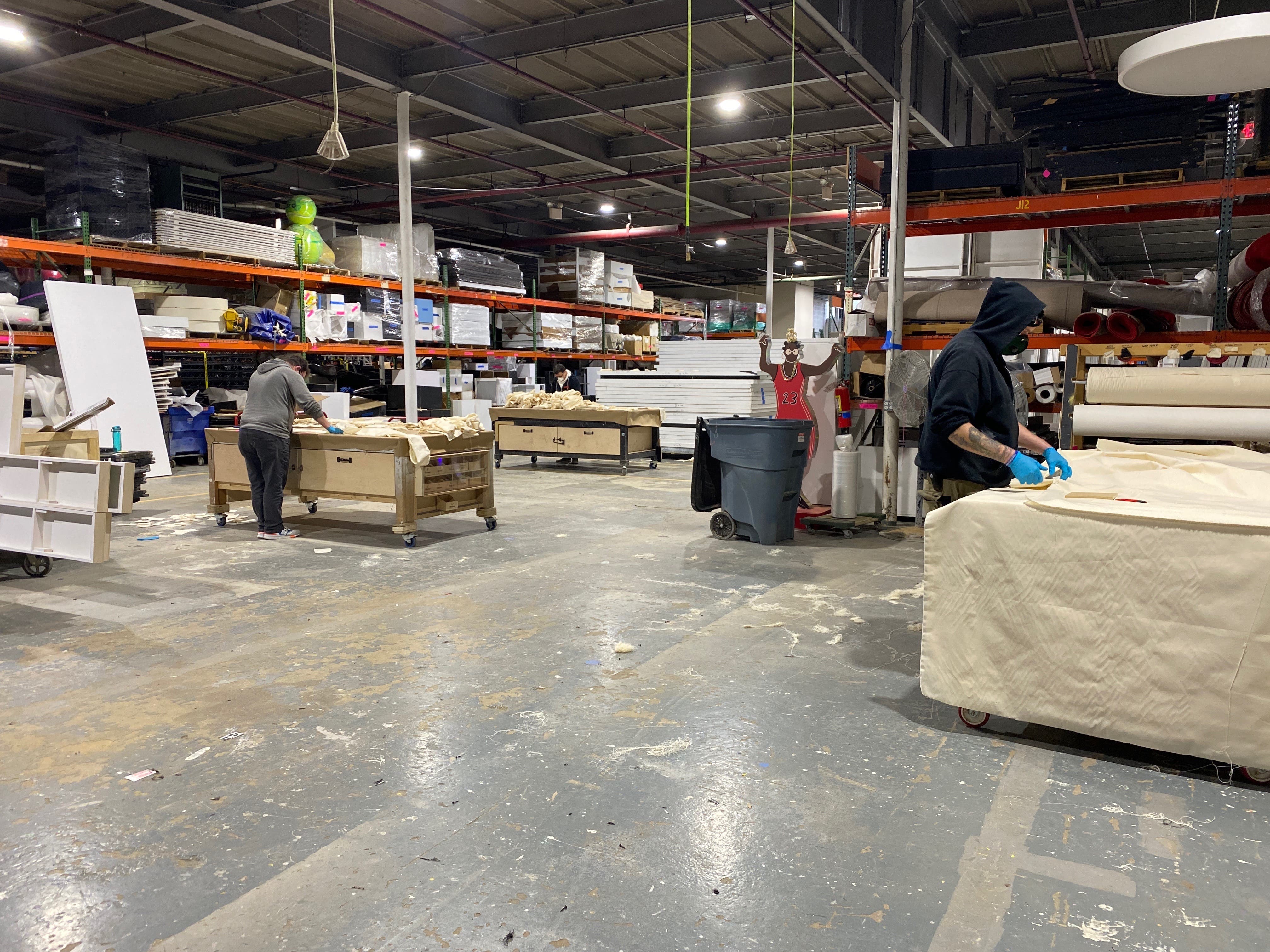
(Fashion to the Frontline) SBI's warehouse in Secaucus, NJ has shifted to preparing fabric for mask-making.
The masks, Ponton said, are not meant to replace official surgical or respirator masks, but can be used as an emergency supply once those undoubtedly run out.
Healthcare workers have told Ponton that they are likely to run out of supplies in days, let alone the months it would take to get Fashion on the Frontline's mask design certified. The emergency masks can hold hospitals over while official protective gear is in the pipeline, he said.
"We think this is better in an emergency than putting a scarf or blanket around your head," he said. "This is the 'break glass in case of emergency' boxes."
The masks, made from cotton and muslin, are washable, reusable and will eventually include a filter layer should they be able to find non-woven fabric donations to do so.
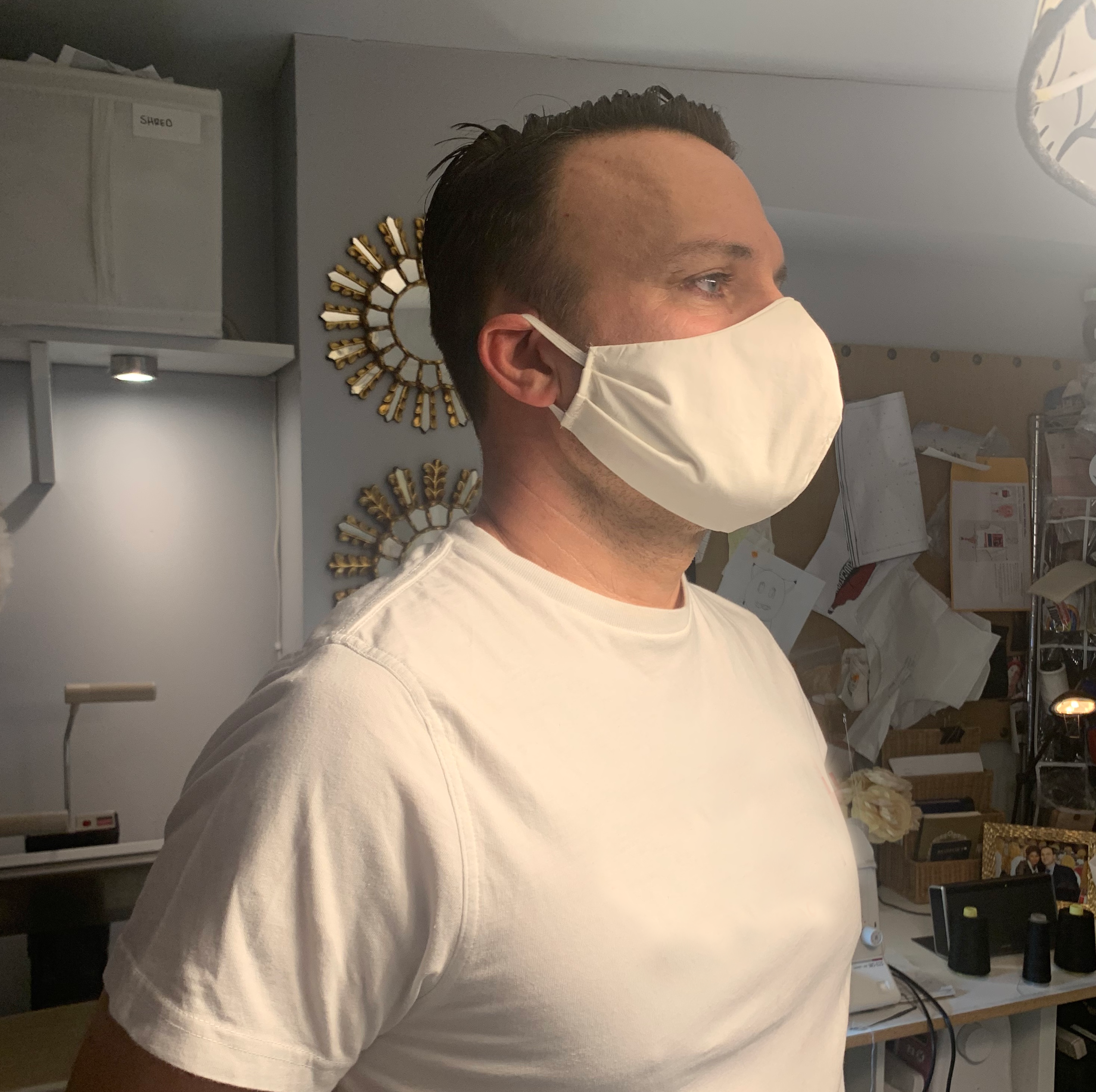
(Fashion to the Frontline).
The first 1,000 were made over the weekend, Ponton said, but the ability to continue at that speed will depend on donations, both in funding and supplies like fabric, elastic cord and thread.
A shortage of supplies, particularly in elastic to make the over-the-ear bands, also slowed down Ripley's production, though the sash maker has said she's getting creative while waiting for a resupply.
"The elastic shortage caused quite a delay," Ripley said. "In the meantime my daughter found elastic headbands that I was able to cut up and use for the masks I have made so far."
Even the city's most well-known designers are in need of donations to keep their production wheels turning. Celebrity designer Christian Siriano, whose sewers made 1,000 masks in three days, has set up a donation page on his website.
This is life for a little while I guess. But we made 1,000 masks in 3 days and they will be shipped tomorrow! Thank you to everyone who donated on https://t.co/ZfvbZbPFKH we can’t thank you enough. https://t.co/sqD9J6NmFs pic.twitter.com/BReWWvqDyh
— Christian Siriano (@CSiriano) March 26, 2020
Making masks, Ponton said, is a way the companies can do their part in stopping the spread of the virus, which had infected more than 38,000 and killed 914 in New York City as of Tuesday.
The effort means that the thousands put out of work by the pandemic can get their jobs back sooner, but, even more so, that the healthcare workers and first responders can stay safe in the meantime, Ponton said.
"We are here to protect the city that made us,” he said.
Coronavirus In NYC: What's Happened And What You Need To Know
Get more local news delivered straight to your inbox. Sign up for free Patch newsletters and alerts.