Politics & Government
Southampton Notebook: Cyclical Reassessment on the Table
Trending analysis and reassessment every four years could replace yearly reassessment.
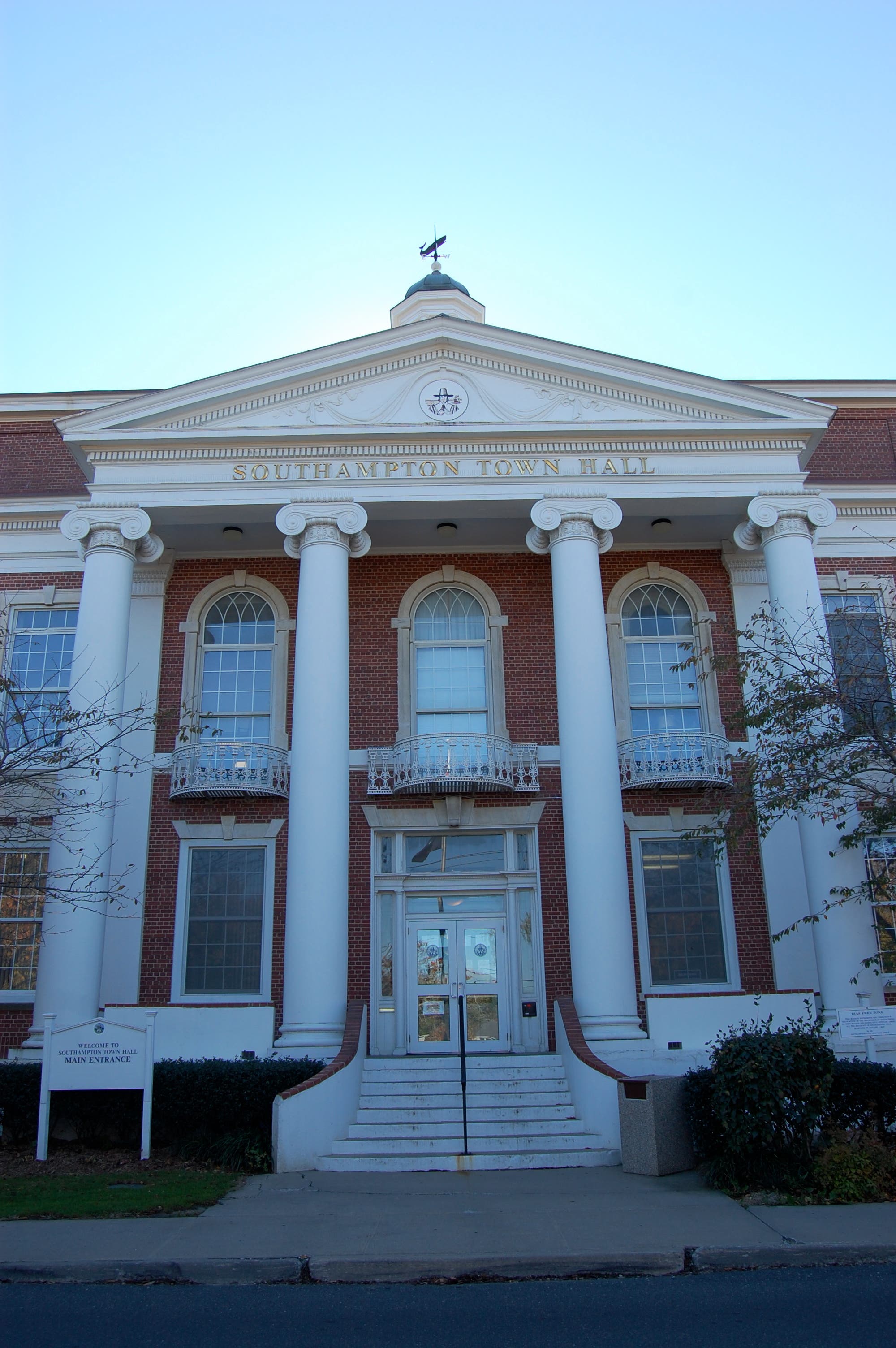
Members of the Southampton Town assessor's office say that even though the office probably doesn't have enough staff to do it, it is best to do a town-wide reassessment every year.
“It benefits the taxpayer,” Maureen Berglin, the deputy town assessor, told members of the Southampton Town Board at its Aug. 5 work session.
The topic was on the table because the board is considering switching to cyclical reassessment, a state program that pays municipalities $5 per parcel in years a full assessment is done and $2 per year in off years, up to $500,000, with the requirement that a full assessment be done at least every four years.
Find out what's happening in Westhampton-Hampton Baysfor free with the latest updates from Patch.
As it stands, New York State does not require municipalities to assess; this program is designed to encourage more frequent assessment, which can help the town garner more revenue, but also prevent a dramatic increase in assessed value of a property and sticker shock.
Residents of Southampton Town know this well. In 2006 a full reassessment was done on the town’s 55,000 properties.
Find out what's happening in Westhampton-Hampton Baysfor free with the latest updates from Patch.
“And we saw untenable spikes up or down in tax bills,” town Supervisor Anna Throne-Holst said.
This was especially evident in differing school districts, as some Southampton Town residents live in the Riverhead School District and Riverhead has not reassessed since 1980.
The pushback was so forceful the town backed off from its plan to reassess yearly and did not do so in 2007.
In March, the supervisor expressed interest in switching to cyclical reassessments. On Friday the board had John Wolham from the state’s Office of Real Property Tax Services on hand to pick his brain and attempt to get their heads around what’s best for the community.
Wolham agreed regular reassessments are best, because in the interim all the town has to work with is the equalization rate, which he called a blunt instrument.
However beneficial yearly assessment might be, Lisa Goree, the acting town assessor, said she doubts her office has the manpower to complete such a labor-intensive job.
“We have 10 full-time staff and two consultants,” she said. Three years ago the office had 15 full-time workers.
Councilman Jim Malone agreed with Councilwoman Bridget Fleming that the state money should not be the sole criterion for deciding whether to switch to cyclical reassessment.
“In a $8 million budget,” he said. “It’s not that much money.”
But it is money and Throne-Holst said a decision must be made before the board starts writing the budget.
“We are fortunate to have the technology to capture what’s going on behind hedges,” she said, adding that raising assessment due to home improvements lays outside the 2-percent tax cap recently signed into law by Governor Andrew Cuomo. “So it behooves us to stay on top of that,” she said. “That may have greater value to us than yearly reassessment.”