Neighbor News
Celebrating Afro-Brazilian Culture in Mount Vernon
What to Expect from ArtsWestchester's Upcoming Roots Event
By Nora Searles
Brazilian culture has a visible presence across Westchester, from restaurants and cafes to communities shaped by immigration, cultural exchange and local business. In Mount Vernon, that connection became official in 2005, when the city became a sister city of Poços de Caldas following a surge of Brazilian immigration to Mount Vernon from 2000-2006.
Restaurants and cafes are not the only presence of Brazilian culture, however. Even over 4,000 miles away from home, Afro-Brazilian music, dance and martial arts have a vibrant and active community within Westchester.
Find out what's happening in White Plainsfor free with the latest updates from Patch.
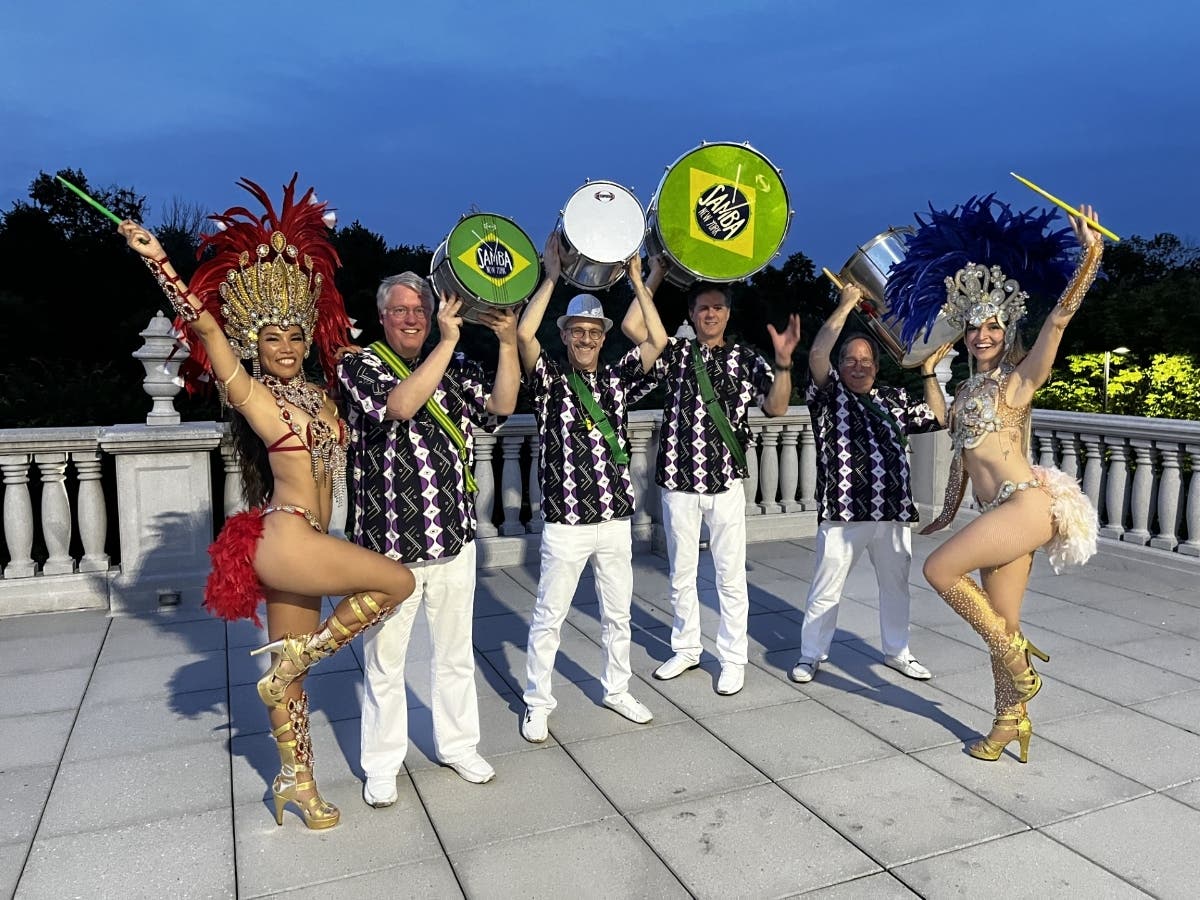
Dr. Philip and Valerie Galinsky run Samba New York!, teaching percussion, conducting performances and planning trips to both Brazil and Portugal. Rafael and Sarah Texeira run Cai Na Capoeira, a school for the Afro-Brazilian combination of music, dance and martial arts. On August 11, in collaboration with ArtsWestchester and the City of Mount Vernon, these two groups invite guests to watch and participate in samba, capoeira and maculelê during Axé Brasil!: The Living Legacy of Afro-Brazilian Culture.
“I would say the rhythm really pulled me in, but it’s really a combination of everything—the rhythm, the harmonies, the melodies. But beyond that, it’s the joy and the community of it that really captivated me,” says Dr. Philip Galinsky.
Find out what's happening in White Plainsfor free with the latest updates from Patch.
Community and collaboration are central themes in samba, capoeira and maculelê’s historical and contemporary practice. Each has roots in the struggle for freedom, persecution and community endurance. “We’re a team. We’re helping each other. [Capoeira] was not invented for one particular person to get themselves somewhere. They were trying to get there together,” says Sarah Texeira.

Context Matters
While community is an important aspect of samba and capoeira, the history behind these art forms is part of what makes it so significant.
In the early 1900s, samba schools—places where people came together to play samba—became sites of resistance and community. “You can take [samba] and learn it, but I think it’s essential to understand where it comes from and to respect that,” says Dr. Philip Galinsky, whose background is in ethnomusicology.
“Samba is a way of life,” he explains. “It’s a culture, not just a music and a dance. It has tremendous meaning for the people who play it, sing it and partake in it. It provides joy, relief, therapy, community, connection. It can also connect people of different cultures.”
Like samba, capoeira faced discrimination in Brazil during the early 1900s. Sarah Texeira points out the connection between capoeira and Quilombos, which were communities formed by enslaved Africans and their descendants who fled slavery in Brazil, sometimes alongside Indigenous South Americans. These communities became places of refuge, training, care and collective survival. “One of the pieces of history that I’ve been trying to delve into more is the concept of Quilombos as care centers. Soldiers need to train, but they also need to tend to themselves, tend to their wellness and take care of one another. People need to be there to feed the soldier,” says Texiera.
Capoeira was banned in the late 1800s, and nicknames became a tool to avoid persecution. Now, some artists like Sarah and Rafael Texeira believe that continuing the practice of nicknames respects and brings awareness to capoeira’s history. Sarah and Rafael Texeira go by Professora Areia and Contra Mestre Cabeção, respectively.

What to Expect
Before attending the event, it may be beneficial to hear the advice of the performers on what to expect and what to keep in mind. “We hope that people at the event can appreciate the wider context that this is a part of, that they can feel free to partake in the culture, to enjoy it, to have a lot of fun and to get just a window into the amazing culture that is samba,” says Dr. Galinsky.
Cai Na Capoeira will showcase the arts of capoeira and maculelê, two distinct Afro-Brazilian traditions that blend elements of combat, dance, music, and rhythm. Guests will be invited to practice with them, whether that is participating in movement demonstrations or clapping along with the percussion section. Guests will have the opportunity to see and participate in Samba New York!’s roda de samba, a samba circle during which musicians and dancers gather for communal celebratory performance.
Texeira shares her hopes for audience participation: “We’re always hoping that people will engage with us long enough to get to the substance in the history behind it all.”
Together, the performances offer guests a chance to experience the collective energy of these traditions and leave with new or refreshed knowledge about Afro-Brazilian history, art and life.
You May Also Enjoy
- ArtsNews Guide: Free Outdoor Summer Concert Series in Westchester
- A Summer of Renewal at The Pocantico Center
- Outdoor Arts Destinations in Westchester
- From Riverfront to Uptown, Art Lights the Way in Peekskill
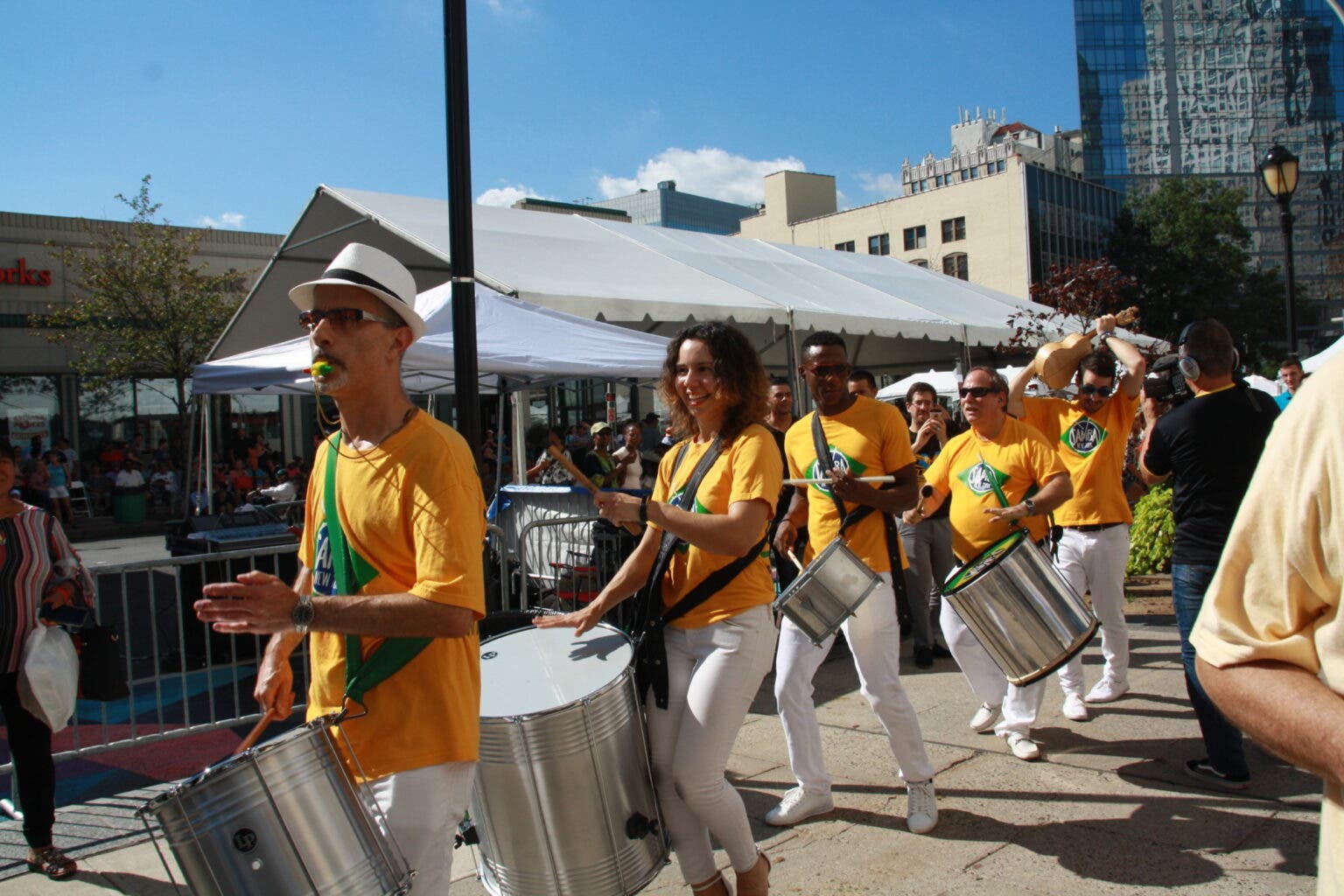
Photos (top to bottom): Samba New York! (photo courtesy of the group); Cai Na Capoeira (both photos courtesy of the group); Samba New York! performing at 2018 JazzFest White Plains (photo credit: Mary Alice Franklin)
This article was previously published in ArtsNews. For more must-read arts articles, visit ArtsWestchester's online news source, ArtsNews.