Community Corner
In Your Garden: Claim Your Stake
Hate to stake? Me too! Here are some tips on how to plan ahead and avoid (or at least reduce) this dreaded garden chore.


As far as gardening chores go, staking is, without question, my least favorite. No matter how careful I am, or how “artfully” I try, it always winds up looking - well, like a bunch of stakes. Never mind the amount of work and effort involved, the end result is almost always unattractive and takes away from the overall look of the garden. So this season I decided to eliminate—or at least drastically reduce—staking in the garden.
So how does one get around having to stake?
Know your site. This is obviously important for many reasons, but particularly if you’re looking to reduce staking. For example, a sun-loving perennial planted in partial shade will tend to lean and reach towards the light. As a result, you will most likely have to stake the plant to prevent it from flopping over. It’s best to eliminate that plant from your garden or plant it in a sunnier spot. The same is true for soil conditions. A plant that likes it dry will never be happy in a rich, moist soil, and will wind up looking spindly and leggy – and needing to be staked.
Find out what's happening in Yorktown-Somersfor free with the latest updates from Patch.
Cut back – early and often. I’ve always cut back late-bloomers such as Goldenrod (Solidago) and Joe-pye weed (Eupatorium), to create shorter, bushier plants that produce more profuse blooms. But guess what? This same technique can be applied to almost any perennial. Echinacea, for example, can be cut back in late May/early June. The plants will be shorter and bloom later but the stems will be much sturdier and not need any staking.
Get shorty (plants). You can now find many cultivars of plants that are dwarf, or compact varieties. This is an excellent option for creating a garden with plants that will keep their size in check, without any cutting back or staking required. Some examples are “Little Joe” Joe-pye weed, “Little Spire” Russian Sage, and “Kobold” Liatris.
Find out what's happening in Yorktown-Somersfor free with the latest updates from Patch.
Okay, stake. If you have to stake, here are some tips:
Get grow-through grids. I’ve always used these for my Peonies, but this year installed them in my large clumps of Echinacea. As with the Peonies, getting them into the ground early on is crucial. You want the stems to grow through the grid openings, and for the grids themselves to “disappear” as the plants mature throughout the season. This worked beautifully and I plan to use them next year in my ornamental grasses, which are a tangled, floppy mess by mid-summer. You can find them here.
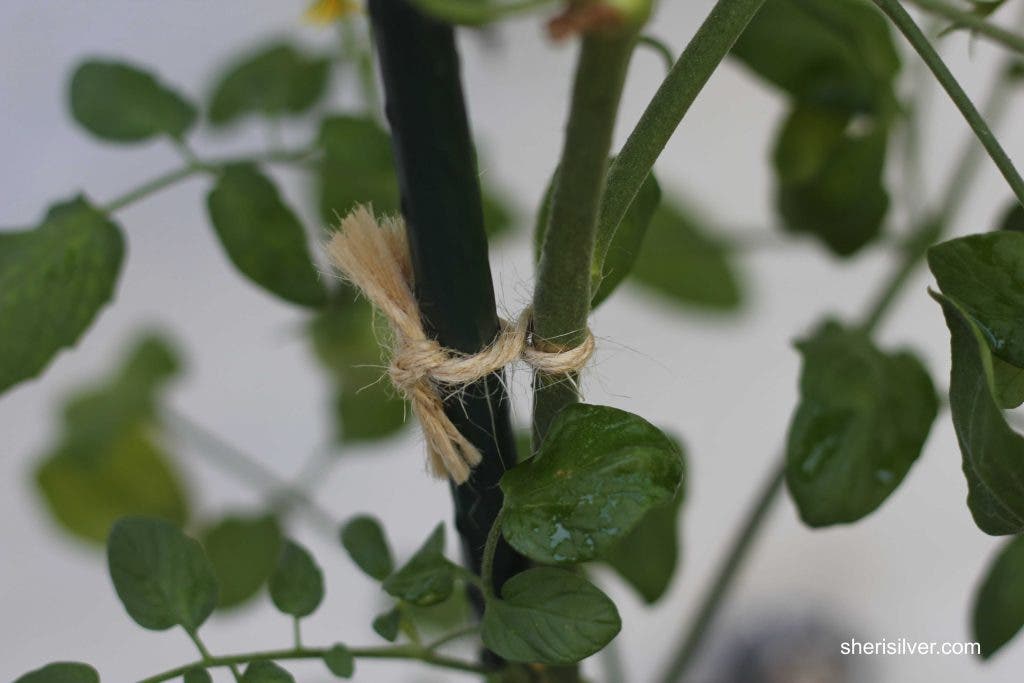
Twist the twine. The proper way to stake is to loop the twine around the stem and twist it before tying it to the stake. This keeps the stem from rubbing against the stake.
Go “au naturel”. Using fallen twigs and branches from around your yard lend a more natural look than bamboo stakes. When placed around your emerging perennials, the foliage gradually grows around the branches, so that they blend in with the rest of the garden. Here’s a link that shows a great example of this technique (thank you Martha…).
Do any of you loathe staking as much as I do? How do you get around this task? Any great tricks or tips you’ve acquired?
Happy planting!
Sheri Silver owns fiori garden design (www.fiorigarden.com). She also writes the blog Donuts, Dresses and Dirt (www.sherisilver.com).