Sports
O'Sullivan Teaches Valuable Lesson to Yorktown Students
Former Jet cautions student-athletes about the effects of alcohol and drugs at Mildred E. Strang.
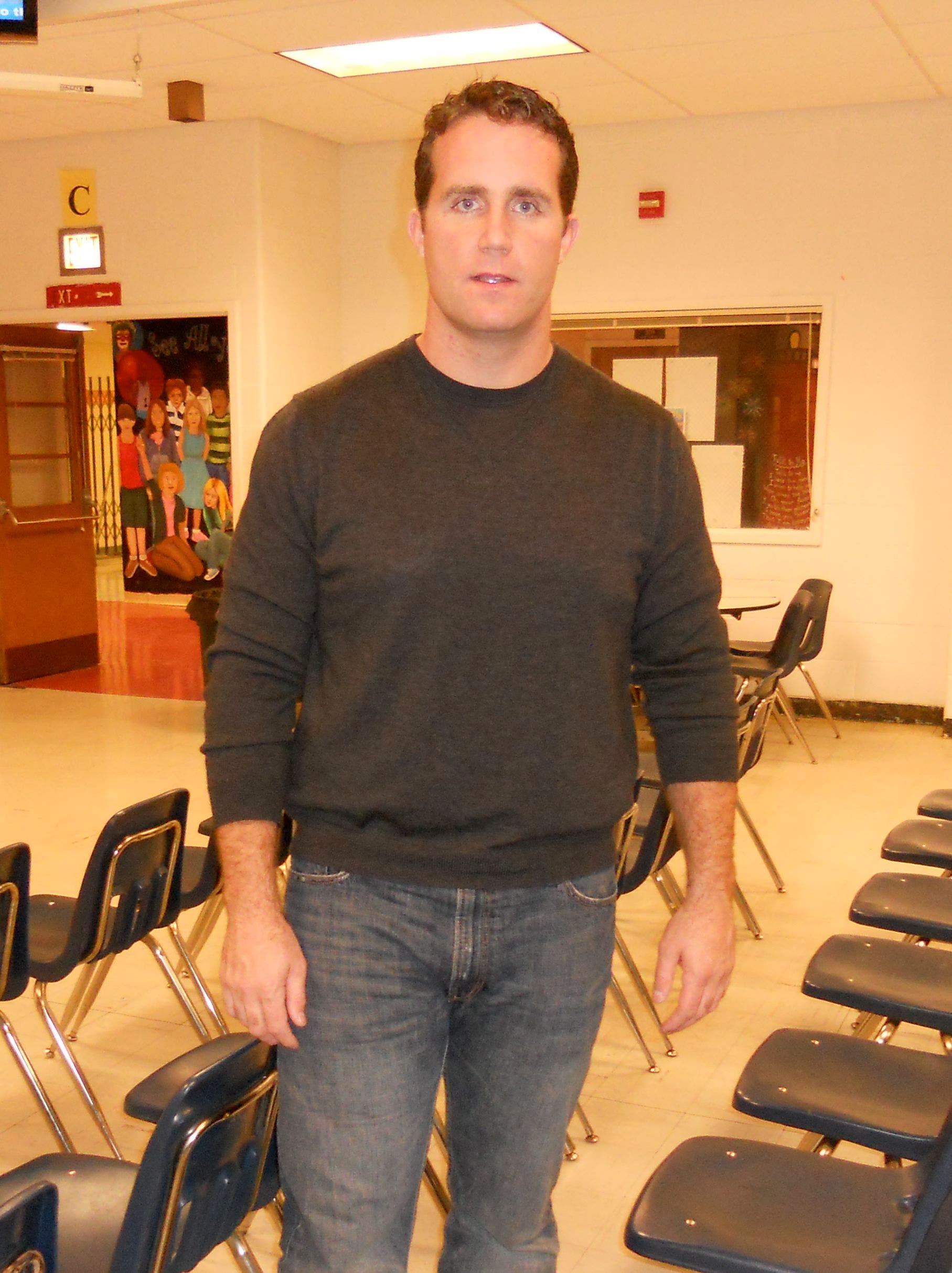
Dennis O'Sullivan, a 1994 North Rockland graduate, was fortunate enough to get a taste of the National Football League, playing for five years in the NFL, the majority of his time with the New York Jets, starting in 1999.
O'Sullivan, an offensive and defensive lineman, saw his first game action in the NFL with the Jets against the visiting New England Patriots on the kick-return team in 2002.
"I had been a practice-squad guy, so just to participate in a regular-season game was probably the highlight," said O'Sullivan, who lives in Stony Point. "It took years just to get to that point, so all of sudden I felt that one goal was fulfilled at that moment."
Find out what's happening in Yorktown-Somersfor free with the latest updates from Patch.
What O'Sullivan does now is, in many ways, just as fulfilling. As the executive director of the American Athletic Institute, he talks to young people and athletes about the dangers of alcohol and drug use and the damage it can do to an athlete's performance.
O'Sullivan, who has been director of the organization for four years, spoke to students on Dec. 16 at Mildred E. Strang Middle School in Yorktown, a presentation made possible by the Yorktown Athletic Club.
Find out what's happening in Yorktown-Somersfor free with the latest updates from Patch.
"I travel all over the country," O'Sullivan said. "We work with high school, college, professional sports teams, teams in the NBA and NFL. We work with major college programs, Michigan, Alabama, Clemson, Michigan State, Ohio State."
Baker brings O'Sullivan in
Tommy Baker -- a YAC board member and the Athletic Director at Hendrick Hudson High School -- suggested that O'Sullivan speak at the school.
"He had done a couple of seminars for Tommy," Yorktown Athletic Club President Rich Campanaro said. "He came to us discussing what they did at Hen Hud, we thought it was a great idea to share it with the YAC. We also brought it to Fio's [Yorktown Athletic Director Fio Nardone] attention to bring the Huskers down too being that [many of] the student athletes from YAC wound up with the Huskers club."
Campanaro said having someone like O'Sullivan speak is invaluable to the youth.
"The more you hear and the more you see the statistics about kids at a young age, how many student-athletes, the percentage of them, start drinking in seventh and eighth grades is alarming," Campanaro said. "So for us, an education for these kids is to make them realize and open their eyes to the dangers of drinking and that it's not the cool thing to do. We want to teach them what the right thing to do is and hope we can step in at an early age and stop them from even starting."
Baker suggested O'Sullivan to Campanaro because of the positive experience the students at Hen Hud had in hearing his message.
"Dennis has been at Hendrick Hudson two times now in the past four years and both times the reaction was quite positive," Baker said. "It was just an eye-opening experience, eye-opener in what information he gives you. The kids, they connected to him and he sends a good message about making the right choices in athletics."
Plenty of facts
In a presentation that lasted over an hour, O'Sullivan was chock full of information on the effects alcohol and drugs can have on an athlete's performance.
Here is just some of the information that O'Sullivan shared with the kids and their parents:
* 60 athletes on the Olympic level were tested and with alcohol their performance went down 11.4 percent. O'Sullivan said it was estimated that taking alcohol brings a college athletes' performance down between 15-20 percent and a high-school athlete 20-30 percent.
* The athlete that doesn't go out and party the night before a game improves their chances between four to five percent of being successful when they go against an athlete that was out partying the night before.
* O'Sullivan talked about a high-school friend that was a sectional champion wrestler at the age of 15 but never came close to reaching those heights again. "After his sophomore year is when he first smoked pot," O'Sullivan said.
* Parenting is the most under-utilized tool against under-age drinking. "If your parents are being annoying, then that's a good thing," O'Sullivan told the student-athletes in the audience.
* Energy drinks with alcohol in them are dangerous. "You have energy drinks but you also have energy drinks that have alcohol in them," O'Sullivan said. "They are sold as alcoholic beverages but it's that combination of alcohol in it and caffeine that make it so dangerous."
O'Sullivan said that most stores do a pretty good job making sure underage kids aren't buying them but just like any other alcoholic beverages, "people know where to get it."
* Marijuana makes it harder for the brain to process information.
* THC can affect performance for two months. "The THC is what gets you high but the residuals of THC stays in your system for such a ...long period of time," O'Sullivan said. "Most drugs come and go out in your system for hours or days but we found THC can stay in your system for weeks on end."
* Sixteen seniors were suspended from an undefeated Illinois high-school football team after getting caught drinking. Only four regular starters played in a humiliating 63-0 loss.
Message is loud and clear
Nick Delbene, 14, who plays lacrosse, basketball and football, said O'Sullivan's message should have a positive affect on him and his peers.
"The guys that are here, they are great guys, I know they make good decisions all the time," Delbene said. "I am confident that in those kind of situations they will do the right thing and say no."
For Delbene, O'Sullivan's message was a personal one.
"The effects on the brain stood out to me because I have had two concussions in the past so I know that injuries to the brain are very serious things to worry about," Delbene said. "I can't worry about injuring my brain again."
Small turnout a concern
While both teens and adults at O'Sullivan's presentation were very attentitive, members of the audience noted that only a small number of people showed up.
Bringing this subject up to the group was 54-year-old Joe Bisaccia, who was willing to talk about his concerns afterwards.
"It's disappointing that such an important topic of drugs and alcohol and the student athlete and to come into a place and see 15-20-25 people in a community so large," Bisaccia said. "It's an important topic, it's something that is very valuable. It's very disappointing and a bit embarrassing, that you come here and there is no turnout whatsoever. I give all the credit in the world to the people that are here with their children to listen to such a valuable message."
A message Bisaccia said needs to get out more.
"I think the most valuable point I got out of it was that we need to bring together all of our community leaders, our town boards, our police department, our athletic groups, our school boards," Bisaccia said. "They are all the ones that would help to get the word out about to speak about this. Quite often this is a topic that people don't want to speak about but it's very real."
Campanaro agreed with Bisaccia on the importance of getting the message of staying away from alcohol and drugs to as many student-athletes as possible.
"One thing we want to do is that if we can keep the kids away from it, from this age on and we can give them the education that they need, along with the high school, the athletic directors and teachers and substance abuse counselors, we can all work together, maybe we can stop it at an early age," Campanaro said.