Neighbor News
The Right to be Tobacco Free
Children follow the examples set by the adults in their lives. The more they see tobacco, the more likely they are to begin smoking.

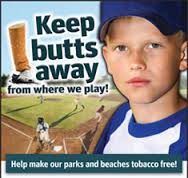

Throughout New York State, children are being exposed to the harmful effects of secondhand smoke in parks and recreational areas. While some communities have restricted the use of tobacco products in parks, beach and athletic fields; there is still progress to be made. In areas without smokefree laws, patrons are subjected to the carcinogenic chemicals found in secondhand smoke.
The average age of a new smoker in the United States is thirteen. Children follow the examples set by the adults in their lives. The more they see tobacco, the more likely they are to begin smoking. When children see the adults around them such as parents and coaches smoke, they model their behavior after them.
Research shows that secondhand smoke can cause the onset of asthma and respiratory and ear infections in children. Exposure to secondhand smoke for adults can lead to adverse effects to the cardiovascular systems, coronary heart diseases and lung cancer. According to the Surgeon General there is no safe level of exposure to secondhand smoke; proving why indoor smokefree air laws are ubiquitous across the United States ensuring restaurants, businesses and workplaces are smokefree. While many understand that smokefree laws are needed, there are still misconceptions that due to the dispersion of air, the level of chemical exposure and harm found in indoor areas does not exist in outdoor areas. This belief contradicts extensive research that proves tobacco exposure in outdoor areas creates social, environmental and health risks.
Find out what's happening in Yorktown-Somersfor free with the latest updates from Patch.
Despite some common misconceptions, Stanford University has found that breathing in air from someone smoking outdoors can match that of indoor spacecome close to that of indoor spaces depending on the proximity to the smoker. This exposure has immediate effects on one’s health such as increased risk of heart disease and cancer long-term. For non-smokers inhaling smoke is often a burden due to its odor and ability to cause coughing and difficulty. Breathing.
While cigarettes pose a danger through the air, the physical remains of them are both a health and environmental concern. Cigarette butts are not biodegradable and could take decades to decompose. In parks and other public areas, children and wildlife could mistake cigarette butts for food, ingesting bacteria from not only the smoker, but hundreds of toxic chemicals that remain on the cigarette. Rain can also allow for chemicals to escape the cigarette and make its way to animals miles away from the cigarette butts.
Find out what's happening in Yorktown-Somersfor free with the latest updates from Patch.
Establishing non-smoking policies in public, recreational areas relieve everyone of the health and social burdens that result from inhaling secondhand smoke. In the United States, smoking is not a legally protected activity. Community members should be able to enjoy recreational areas for exercise and leisure. It is up to state leaders to protect residents from the risks of secondhand smoke. Local legislators should create tobacco-free laws and educate the public on the importance of cooperation with these laws. For more information please visit http://www.powragainsttobacco.org/
Lauren Raue intern at POW’R Against Tobacco. (Lauren Raue is entering her junior year at Rochester University where she is studying Public Health.)