Health & Fitness
Future EMS Leaders Find Invaluable Lessons In Wake County Emergency Operations Center
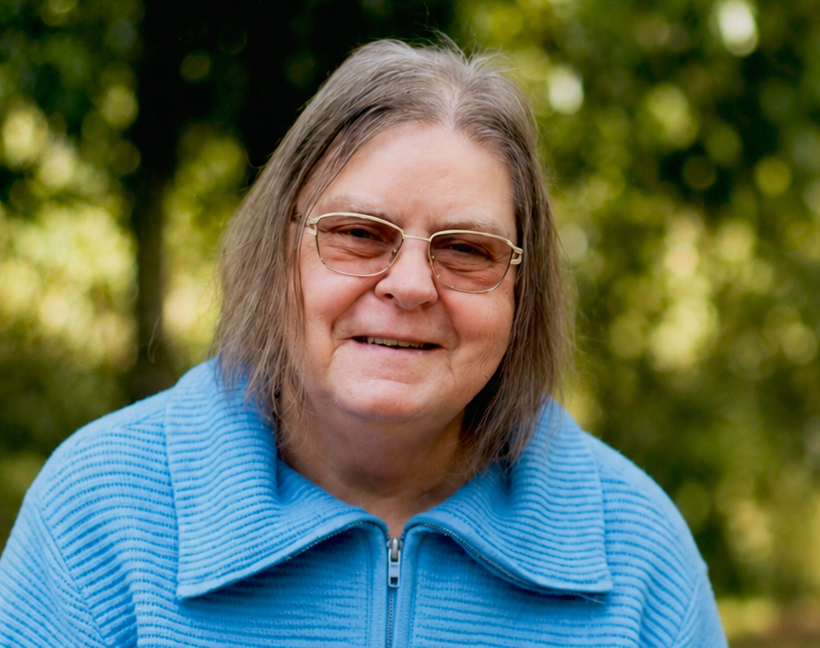
Aside from the thrill of the job, Dr. Merrill said she appreciates being the first physician to see a patient after an emergency.

June 9, 2020
For two medical fellows, the EOC is as much a classroom as a jobsite.
Find out what's happening in Raleighfor free with the latest updates from Patch.
This spring’s sudden outbreak of COVID-19 has upended lives. Gatherings have been canceled, weddings postponed, businesses shuttered, families separated and, tragically, lives have been lost.
Yet, for some, this time of trial is an opportunity to grow and learn.
Find out what's happening in Raleighfor free with the latest updates from Patch.
During the pandemic, the Wake County Emergency Operations Center is helping forge two future leaders of emergency medicine. The young doctors were wrapping up EMS fellowships at the UNC-Chapel Hill School of Medicine when the crisis hit, and since then, Dr. Johannah Merrill and Dr. Mariecely Luciano-Feijoo have served in equal measure alongside Wake County’s full-time emergency medicine staff in the EOC – learning firsthand more they ever could about public health response from a text book.
“This is a horrible thing to have happened, but I’m glad it happened at this point in my training and not next year, when I wouldn’t have had the experience that I have now,” said Dr. Johannah Merrill, who will move to Massachusetts next month to become an EMS medical director.
For Dr. Mariecely Luciano-Feijoo, who was born and raised in San Juan, Puerto Rico, the eventual goal is to take what she’s learned stateside back home to improve her island’s EMS system.
“I could not have asked for better teaching than to be actively learning like this,” Dr. Luciano-Feijoo said. “It is easy to read and try to understand certain things, but they’re not easy to apply unless you’ve lived through them.”
A Passion for Emergency Medicine
It takes a certain personality to thrive in EMS.
Where most grow flustered when a day’s plans go awry, these women thrive on the chaos of a day spent running from crisis to crisis. Sit them down for an interview, and they exude that powerful, calm sense of energy that comes with competence, and they look ready to leap into action at any moment.
Dr. Merrill, who graduated in 2016 from the University of Virginia School of Medicine in her hometown of Charlottesville, said the fast-paced, ever-changing nature of EMS work drew her to the field. In 2019, she completed a residency in emergency medicine at the University of Rochester Medical Center in New York.
Aside from the thrill of the job, Dr. Merrill said she appreciates being the first physician to see a patient after an emergency.
“Some of a patient’s most critical moments occur in the pre-hospital environment,” she said. “That’s when we have a really big ability to make a difference.”
For Dr. Luciano-Feijoo, COVID-19 is the second disaster to have shaped her career. She completed medical school in 2016 at the University of Puerto Rico and, the following year, Hurricane Maria hit during her residency in emergency medicine at a local hospital. In the days and weeks that followed, Dr. Luciano-Feijoo found her home’s emergency medical infrastructure to be underfunded and out of date.
“Our EMS system has a lot of limitations, and that did not help the Puerto Rican population in that kind of disaster,” she said. “That brought me to the states to get a better sense of a proper EMS system, and a better understanding of how I could bring that knowledge back to Puerto Rico.”
The program at UNC-Chapel Hill caught her eye, because fellows split their time between Wake County and neighboring Orange County. Working with Wake County has allowed her to see what’s possible in a large EMS system, Dr. Luciano-Feijoo said, and Orange County, which has about 1/7th of Wake’s population, has taught her how to operate on a scale closer to what she’ll see back in Puerto Rico.
Although she didn’t set out for a career in EMS, Dr. Luciano-Feijoo has a heritage of running toward disasters. Her mother, Celia Feijoo-Nieves, was one of the first two women to become firefighters in Puerto Rico in 1989. It was later that year, during a routine physical following her first big fire, an examiner told her she was pregnant.
“So I’ve been going into emergencies since before I was born,” Dr. Luciano-Feijoo joked. “And throughout my childhood, I sometimes went with my mother to emergencies on the fire truck when she was able to take me.”
Responsibilities in the EOC
The fellows will tell you they’re learning a lot in the EOC, and most of that comes as a byproduct of hard work. Each takes turns rotating into the role of EMS medical director, which is a position with defined duties in the EOC command structure.
The days vary widely – just how the doctors like it – although their time is spent planning and directing others rather than rendering aid. Wake County activated its EOC in response to COVID-19 on March 5 and, as the county moved to combat a never-before-seen virus, the fellows helped create new workflows and protocols for public health and EMS staff.
These days, Drs. Luciano-Feijoo and Merrill are working closely with facilities that have reported outbreaks, making sure there’s follow-up on positive tests results and coordinating strike teams, along with any other tasks that arise throughout the day.
The EOC brings together staff from across disciplines to coordinate quick and decisive action. While Dr. Merrill has years of experience in EMS, she said her time in the EOC has helped her see how various departments fit together into the bigger picture of emergency management.
“The thing that’s been the most beneficial has been learning how to coordinate between a bunch of different services, such as fire and law enforcement,” she said. “They all have different priorities, because they have different things to worry about, and it’s been beneficial to see how that all fits together.”
In addition to their long hours in the Wake County EOC, each doctor works shifts as attending physicians in the emergency department at UNC Hospitals in Chapel Hill and Hillsborough, and they provide telemedicine for troopers at the N.C. State Highway Patrol.
Next Steps for the Doctors
At the end of the month, Drs. Merrill and Luciano-Feijoo will complete their yearlong fellowships and begin the next chapter of their careers.
Dr. Merrill will head up to Lawrence, Mass., a city of about 80,000 near the border with New Hampshire, where she’s slated to become the next EMS medical director at Lawrence General Hospital. She will have a few months as an attending physician to work alongside the current director before taking over.
While she’s eager to get home to friends, family and tropical weather, Dr. Luciano-Feijoo will join the faculty at UNC-Chapel Hill and spend another year working as an attending physician in the university’s hospitals. She plans to keep soaking up the best practices of how EMS operates in the states, and then she’ll work to understand how things can change back home.
“I am not well-versed on the pre-hospital system in Puerto Rico yet,” she said. “That’s one of my next projects.”
Staying Updated on COVID-19
Wake County has made it easy for you to stay updated on the latest information about COVID-19.
You can visit our COVID-19 webpage, which has a set of frequently asked questions to educate residents in English and in Spanish, a list of COVID-19-related closures and service changes, as well as an email address and phone number that people can use to ask personal health-related questions about COVID-19.
The county is also sharing important information on its Facebook, Twitter and Instagram accounts.
This press release was produced by the Wake County Government. The views expressed here are the author’s own.