Politics & Government
Oil Train Safety Rule Rolled Back That Targeted Fiery Derailments
The rule was meant to help prevent fiery train wrecks, such as the derailment in Mosier, Oregon last year.

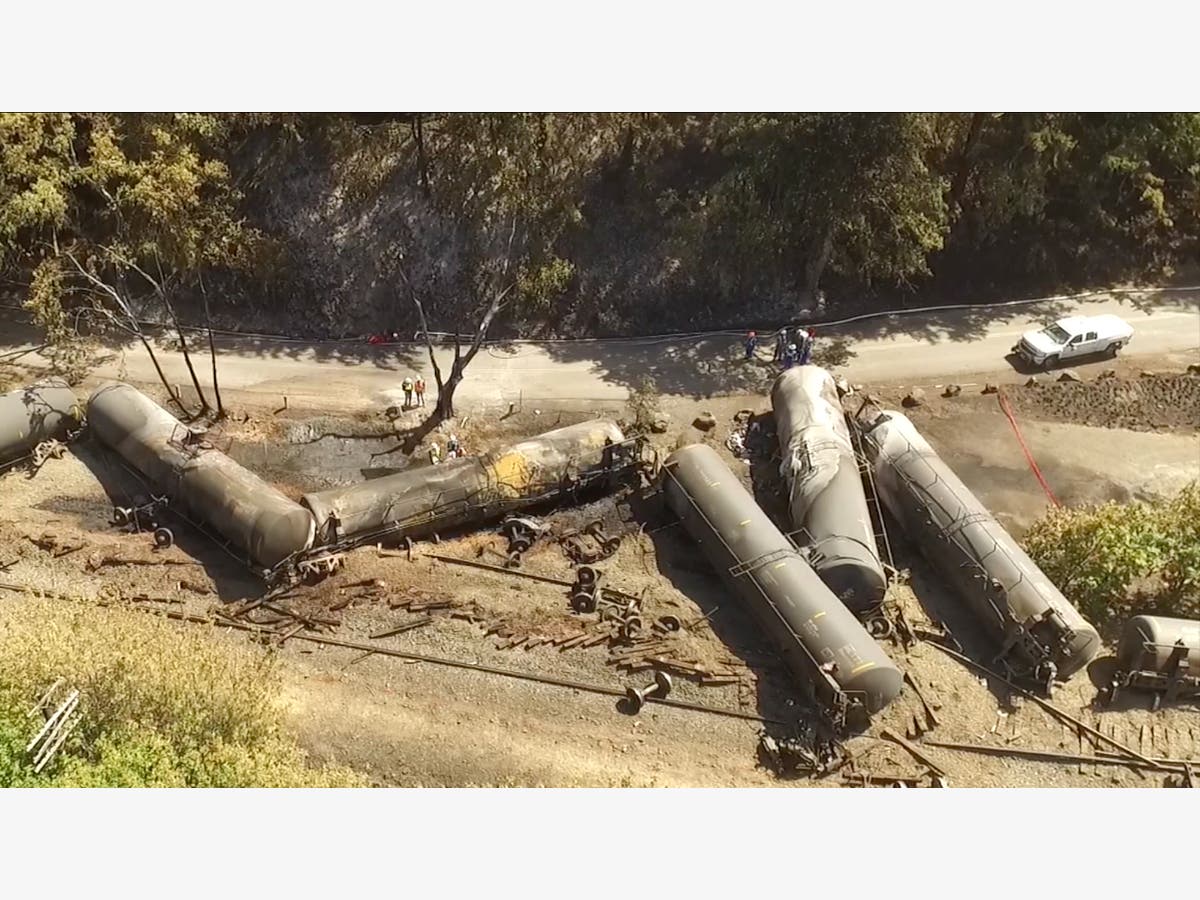
MOSIER, OR — Last year, a Union Pacific train derailed in the small Columbia River town of Mosier, spilling 42,000 gallons of crude oil and igniting a massive fire that burned for 14 hours. The Obama administration responded by requiring trains that haul highly explosive liquids to have electronically controlled pneumatic brakes installed within five years. The systems are designed to help prevent fiery oil train wrecks.
But the U.S. Department of Transportation under the Trump administration now says the rule change is too expensive and is rolling it back, Oregon Public Broadcasting reported. The change would cost three times the benefit it would produce, the station reported.
Electronically controlled pneumatic brakes are supposed to be faster than the current industry standard — air-controlled brakes — because they simultaneously signal to the entire train.
Find out what's happening in Across Oregonfor free with the latest updates from Patch.
Industry officials reacted positively to the news. Chet Thompson, of the American Fuel & Petrochemical Manufacturers, said in a statement that the rollback a "rational decision."
But environmental groups and residents of the Columbia River Gorge feel quite differently. Conservation groups and lawmakers in the Northwest said the rollback was frustrating, but unsurprising.
Find out what's happening in Across Oregonfor free with the latest updates from Patch.
"We're definitely frustrated that the Trump administration is weakening standards that are not strong enough to begin with," said Dan Serres, conservation director with Columbia Riverkeeper. "We saw that with the Mosier derailment, potentially if there was a better braking system in place, we wouldn't have seen so many cars come off the tracks."
U.S. Sen. Jeff Merkley, an Oregon Democrat, also slammed the move.
"Oil trains are rolling explosion hazards, and as we've seen all too many times_and all too recently in Mosier_it's not a question of 'if' but 'when' oil train derailments will occur. Degrading oil train safety requirements is a huge step backward and one that puts our land, homes, and lives at risk," he said in a statement.
Photo credit: Brent Foster via AP