Politics & Government
PA Lifts Drought Watch In 16 Counties
Multiple storms have alleviated severe conditions in much of the state, but officials warn that risk remains.


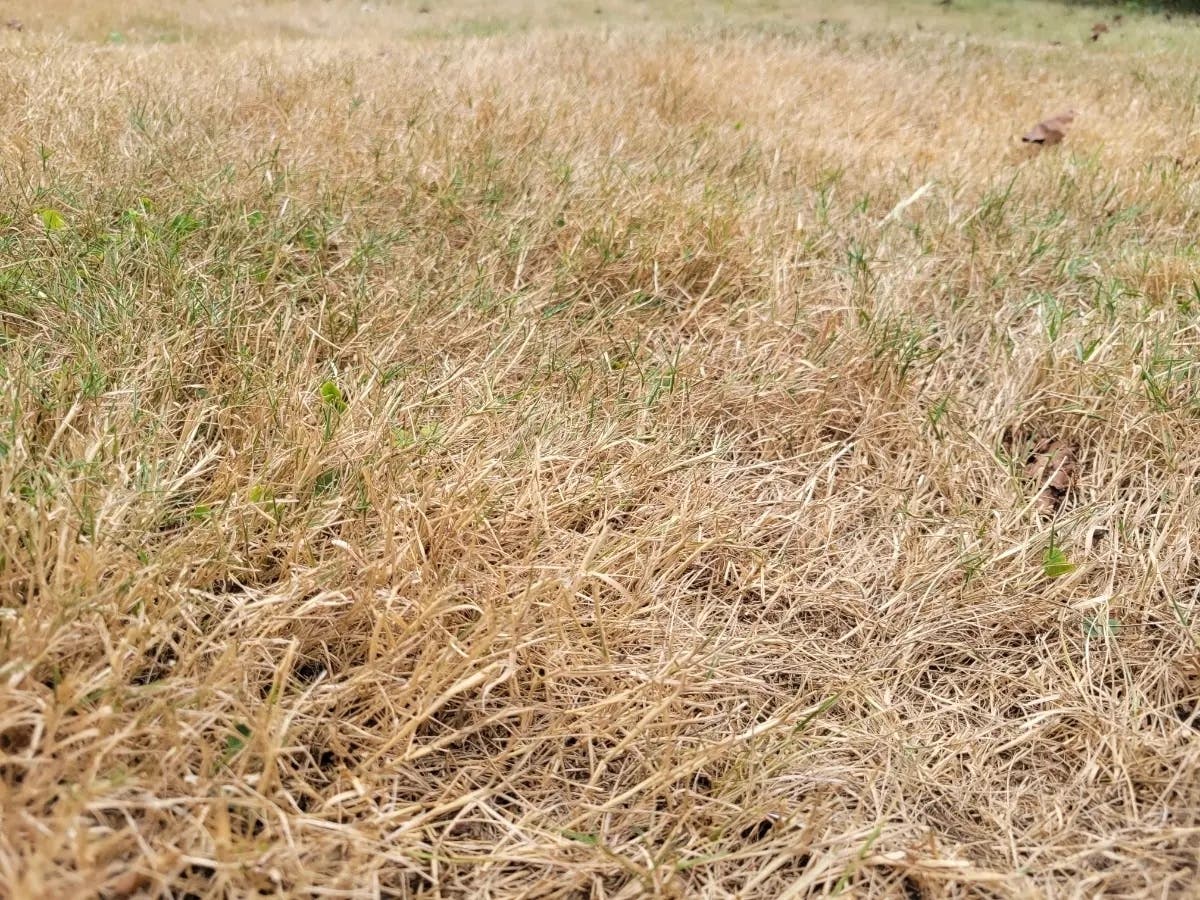
PENNSYLVANIA — Drought conditions have improved enough in Pennsylvania for the state to lift the drought watch in 16 counties, the Department of Environmental Protection announced this week.
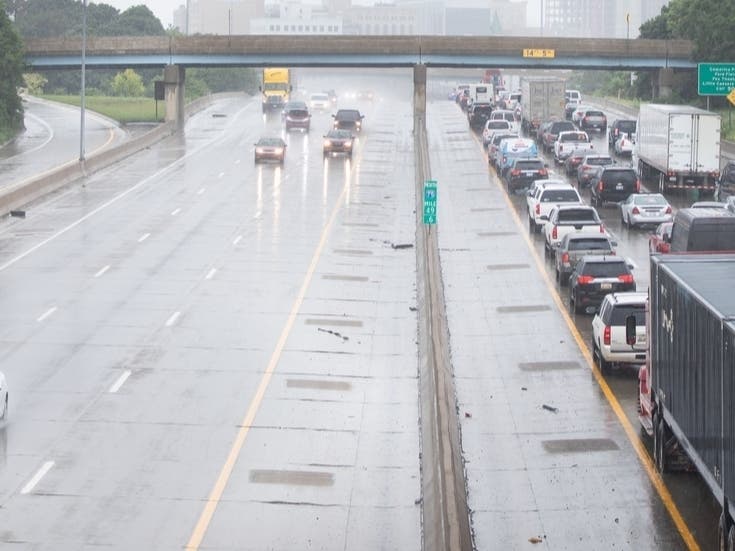
It comes after multiple rainstorms have hit the state, especially the eastern region, alleviating what had been historic dryness.
"While significant recent rainfall has helped, groundwater and some public water supply levels remain lower than normal ranges in some counties," DEP Acting Secretary Ramez Ziadeh said in a statement. "We ask Pennsylvanians in these and adjacent counties to continue to use water wisely and follow simple water conservation tips to ease the demand for water."
Find out what's happening in Across Pennsylvaniafor free with the latest updates from Patch.
The drought watch remains in place for 20 counties. Nearly all of those counties are in a block in central Pennsylvania. All of far eastern Pennsylvania, with the exception of Northampton County, has seen the watch lifted.
The DEP map below, showing counties still under the drought watch, is nearly identical to the one kept by the U.S. Geological Survey measuring groundwater levels.
Find out what's happening in Across Pennsylvaniafor free with the latest updates from Patch.
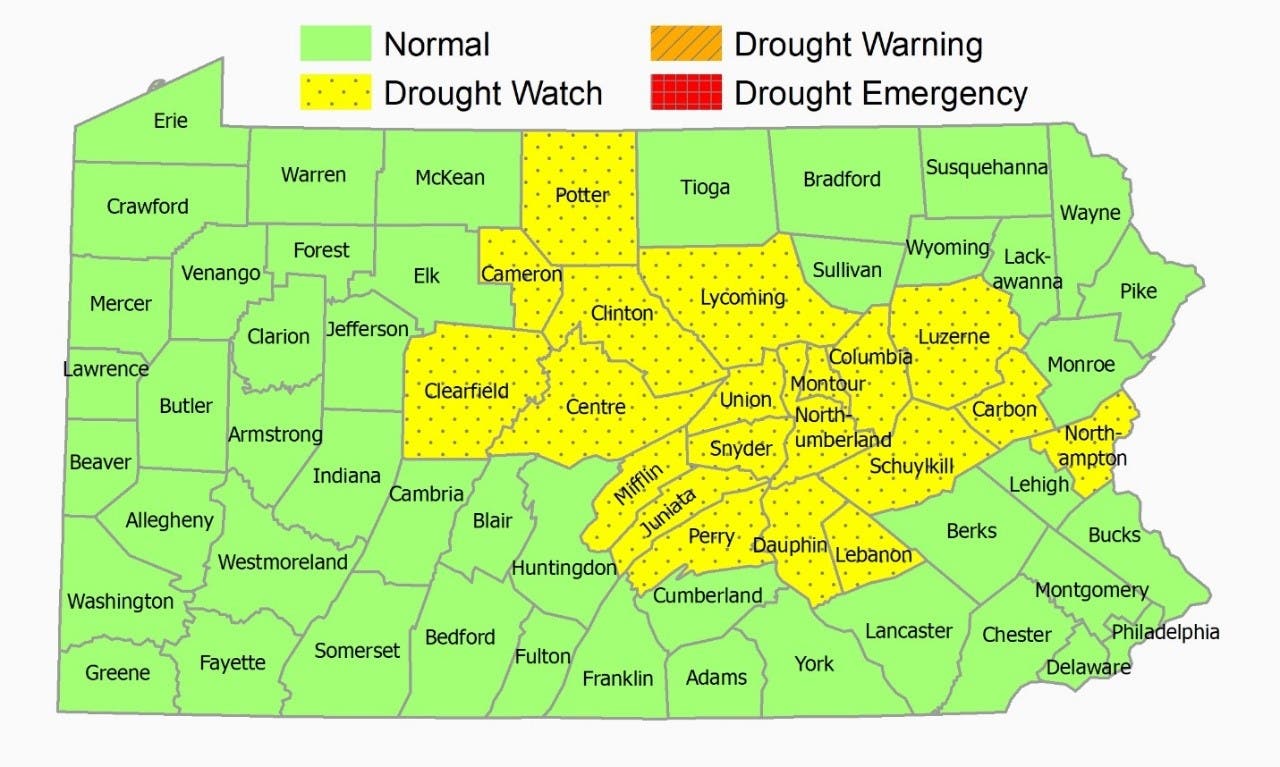
The watch remains in the following counties: Cameron, Carbon, Centre, Clearfield, Clinton, Columbia, Dauphin, Juniata, Lebanon, Luzerne, Lycoming, Mifflin, Montour, Northampton, Northumberland, Perry, Potter, Schuylkill, Snyder, and Union. Residents in these counties are still asked to voluntarily reduce their water use by 5 to 10 percent, or three to six gallons per day.
It was lifted in Berks, Bradford, Bucks, Delaware, Lackawanna, Lehigh, McKean, Monroe, Montgomery, Philadelphia, Pike, Sullivan, Susquehanna, Tioga, Wayne, and Wyoming.
Drought watches and related declarations are based on four factors: stream flow, groundwater level, precipitation, and soil moisture. They take into account weeks and months of patterns, and a bout or two of severe rainfall — particularly when it is concentrated in short bursts — is not sufficient to alleviate the lingering effects of a system that is behaving with increasing irregularity.
Periods of drought interspersed with the severe and devastating storms that have hit the Delaware Valley are likely to be the norm heading into the future, as the impacts of climate change continue to make themselves felt. Climate change creates conditions that exacerbate both severe weather and drought: when things are dry, lingering heat and increased evaporation rates are likely to make them even drier. And when storms hit, they draw more moisture from a warmer ocean.
For droughts specifically, water evaporates more quickly when it's warmer. Hotter soils are drier. Drought conditions mean less greenery is growing, which means that plants are absorbing less CO2, creating a feedback loop that contributes to warming.
Get more local news delivered straight to your inbox. Sign up for free Patch newsletters and alerts.