Politics & Government
PA's Approach To Joining The AI Race Must Put People First, Shapiro Said In Budget Address
"We need to be selective about the projects that get built here," Shapiro said.

February 4, 2026
Pennsylvania’s status as a leading energy producer and hub for technological innovation positions it to play a leading role in the AI race, but it must do so in a way that puts its people first, Gov. Josh Shapiro said in his budget address Tuesday.
Find out what's happening in Across Pennsylvaniafor free with the latest updates from Patch.
Shapiro, who is running for reelection, touted Amazon’s selection last summer of sites in Luzerne and Bucks counties to invest $20 billion — the largest private investment in the commonwealth’s history — to build two data center campuses.
Dozens of similar projects are proposed across the state as the United States and China race for artificial intelligence supremacy, promising jobs and new tax revenue.
Find out what's happening in Across Pennsylvaniafor free with the latest updates from Patch.

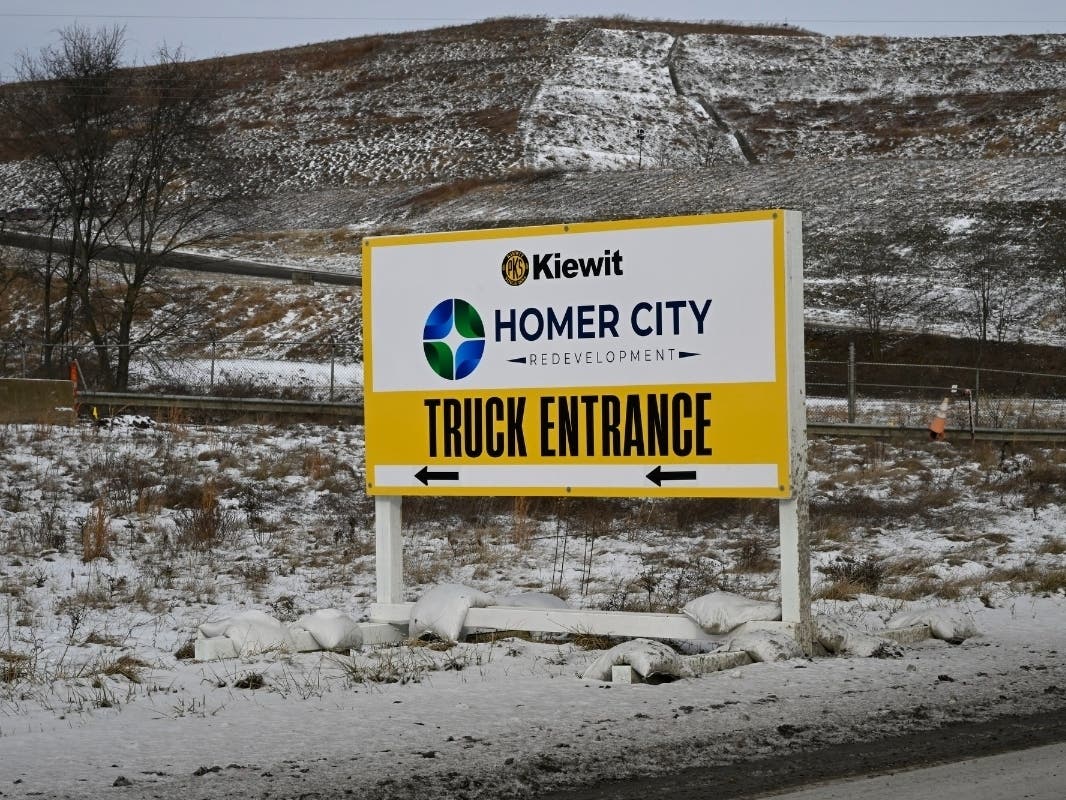
The site of the former Homer City Generating Station on Jan. 21, 2026. It is being transformed into the Homer City Energy Campus, a natural gas powered data center. (Photo by John Beale for the Pennsylvania Capital-Star)
But the hyperscale data centers would also consume electricity at unprecedented rates demanding the construction of new plants and transmission lines. And they could dwarf communities, placing new demands on resources, critics warn.
“We need to be selective about the projects that get built here,” Shapiro said. “I know Pennsylvanians have real concerns about these data centers and the impact they could have on our communities, our utility bills, and our environment. And so do I.”
Delivering his fourth budget address before a joint session of the General Assembly, Shapiro outlined strategies to cut energy costs and reduce red tape, while ensuring Pennsylvania communities have a say in what gets built in their backyards.
He also called on utility companies to work with lawmakers and regulators to eliminate fees on utility bills that can make up 20% of the costs.
“Our utility companies in Pennsylvania make billions of dollars every year — while at the same time they’ve increased the cost for consumers with too little public accountability or transparency, Shapiro said. “That has to change.”
Environmental and climate action groups panned Shapiro’s proposals for doubling down on his “all of the above” energy policy, which they said failed to provide solutions to the dual energy and climate crises.
“This new budget feels like a continuation of short-sited offerings that continue to miss the mark on climate and energy issues,” environmental advocacy group PennFuture said in a statement.
Megan McDonough, state director of Food and Water Watch, said to discuss data centers and affordability in the same breath is “outlandishly paradoxical.”
“Make no mistake: the governor’s data center embrace will not help Pennsylvanians as Shapiro claims,” she said. “If affordability is truly a priority for the governor and the legislature, data centers cannot be a part of the conversation.”
The American Petroleum Institute, meanwhile, said energy access and infrastructure must remain a top priority for Shapiro and lawmakers.
“Embracing pragmatic solutions that include permit reform and prioritize reliability and affordability over ideology will help secure Pennsylvania’s energy future,” Executive Director Stephanie Catarino Wissman said in a statement.
Chris D’Agostino of the Data Center Coalition said he was pleased to hear Shapiro’s focus on affordability and competitiveness.
“The governor has named all of the right problems and the commonwealth has to follow through on solutions,” he said.
The PA Clean Power Coalition, a group of 40 organizations committed to clean energy for economic growth, said Shapiro proposed common sense solutions to the state’s energy needs, while holding data centers and energy companies accountable. But chairperson Katie Blume said Shapiro’s call to lawmakers “to stop ignoring our energy challenges” was critically important.
“We urge all our lawmakers to get to work right away,” Blume said.
The commonwealth’s climate and energy policies are in flux after Shapiro and GOP lawmakers agreed late last year to scrap Pennsylvania’s participation in the Regional Greenhouse Gas Initiative (RGGI) to end a 135-day state budget impasse. The multi-state carbon credit program, designed to phase out fossil fuels, had been mired in legal challenges since the state adopted it in 2022.
Consumers across the nation are facing skyrocketing energy prices at the same time the region’s electricity grid operator, PJM Interconnection, predicts the demand for electricity will soar to levels never seen before, raising questions about who will pay for new power plants and transmission lines.
Pennsylvania communities are finding themselves ill-prepared to address planning challenges presented by data center development, which places new demands on resources.
“For the last several years I’ve heard people on the other side of this building making excuses for why they couldn’t talk about energy,” Shapiro said, noting those reasons centered on RGGI.
He called on the legislature to pass his 2025 energy and climate proposal, dubbed the Lightning Plan. It includes a Pennsylvania-only version of a carbon credit program that would benefit consumers across the commonwealth through rebates on their utility bills.
It also promises to streamline permitting for energy projects, create tax credits for adding reliable energy sources to the grid, developing renewable energy sources and for producing sustainable aviation fuel.
And the plan includes the Pennsylvania Reliable Energy Sustainability Standard, which would modernize the commonwealth’s renewable energy standards, incentivizing innovation in nuclear and renewable energy, including battery storage.
He claimed it would save consumers $664 million and create 15,000 energy-sector jobs and has support from labor leaders, environmentalists, consumer advocates, and energy producers.
“Look, this is my plan,” Shapiro said. “If you don’t like it — stop making excuses, put your proposal on the table, and let’s get to work. Because Pennsylvanians can’t afford another delay from Harrisburg.”
Shapiro also announced the Governor’s Responsible Infrastructure Development Standards to hold data center developers accountable if they want to “unlock” support from the state including speedy permitting and tax credits.
Data center developers would be required to provide their own power generation or pay for the generating capacity their projects will need to prevent households and small businesses being burdened with the cost.
They’d also be held to strict transparency and community engagement standards, required to train and hire local workers and expected to commit to stringent environmental requirements, especially regarding water quality.
“I know everyone in this room wants to see our economy grow and create more jobs and more opportunity,” Shapiro said. “But I also know this is uncharted territory — so let’s come together, codify these principles, and take advantage of this opportunity,” Shapiro said.
The Pennsylvania Capital-Star, a nonpartisan, nonprofit news site, delivers honest and aggressive coverage of state government, politics and policy. Since launching in February 2019, the Capital-Star has emerged as a go-to source for in-depth original reporting, explainers on complex topics, features that ground policy debates, and progressive commentary on a range of issues. The Capital-Star is part of States Newsroom, a national 501(c)(3) nonprofit supported by grants and a coalition of donors and readers.