

Most of today's digital cameras come equipped at purchase with a zoom lens. The benefit of the zoom lens is the ability to include or exclude details in the composition before taking the shot.
When using a fixed focal length lens (non-zoom) the content of the composition has to adjusted by moving in closer to or farther away from the subject.
Many years ago, before there were professional caliber zoom lenses, pros did their zooming in the darkroom. That process is called cropping, the exclusion of parts of the composition for visual effect.
Find out what's happening in Narberth-Bala Cynwydfor free with the latest updates from Patch.
If you spoke to pros who precede the era of good zoom lenses, they would tell you that they often worked with wider angle lenses because by cropping it gave them more compositional options when making the final photograph. It was like having a zoom lens—the original shot was wide angle and by cropping one could achieve a desired look by cropping away details. That technique is some thing every serious photographer should keep in mind.
Have you ever been in a situation where you were not sure what zoom setting would make the best shot? Of course you have been. The technique you need to employ in that situation is to shoot at the widest zoom setting to get the most in the frame. By cropping you can then take the time later to decide what looks best, and you will have the option of experimenting to get it right.
Find out what's happening in Narberth-Bala Cynwydfor free with the latest updates from Patch.
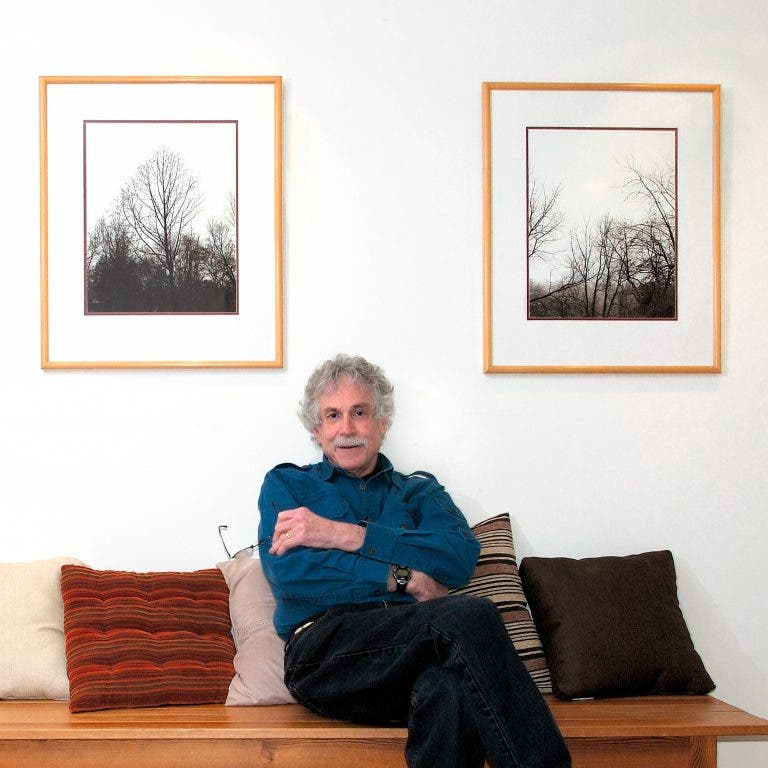
The photos in this blog entry's gallery demonstrate how that works. While all the photographs are different, they all are derived from one photograph, which is the first one in the series. It is a shot of Tom McKean, a professional colleague of mine. He and I decided to swap portraits: we photographed each other in our homes.
I selected an area in Tom's home where some of his photographs were displayed. I picked the spot because the horizontal line of photos and horizontal bench complimented each other and helped set up framing of the subject.
The first photo in the gallery is the originally taken photograph. All the other photos are cropped versions of the original photograph. You will note that I have turned the original wide horizontal photo into a vertical, a square, and a less wide shot. The different compositions could have been done in camera at the time of the original sitting, but that would have taken an inordinate amount of time, and catching the best expression over an over again was unlikely. The solution was to shoot wide for the best expression and crop into different compositions.
This cropping technique does have its own demands. In the world of digital cameras we are confronted by the megapixel count of the cameras sensor. More megapixels means more detail captured in the image. A 3 megapixel camera could produce more than enough data quality for any photograph you see on Patch.com. So why do I shoot with cameras that have 16 megapixel sensors? The answer is simple. I can crop away more than half the original composition and still have more than enough megapixels for a quality result on websites like those of Patch.com. My high megapixel cameras allow me to achieve the results for which I would have needed to use longer focal length lenses to do otherwise.
Cropping is a feature of even the most basic of digital photograph processing software programs. It is a feature you should become acquainted with.