Politics & Government
Dormont Council Votes Against Pitcher Park
Council voted Monday not to move forward with an ordinance that would have approved a previous motion in favor of the park.


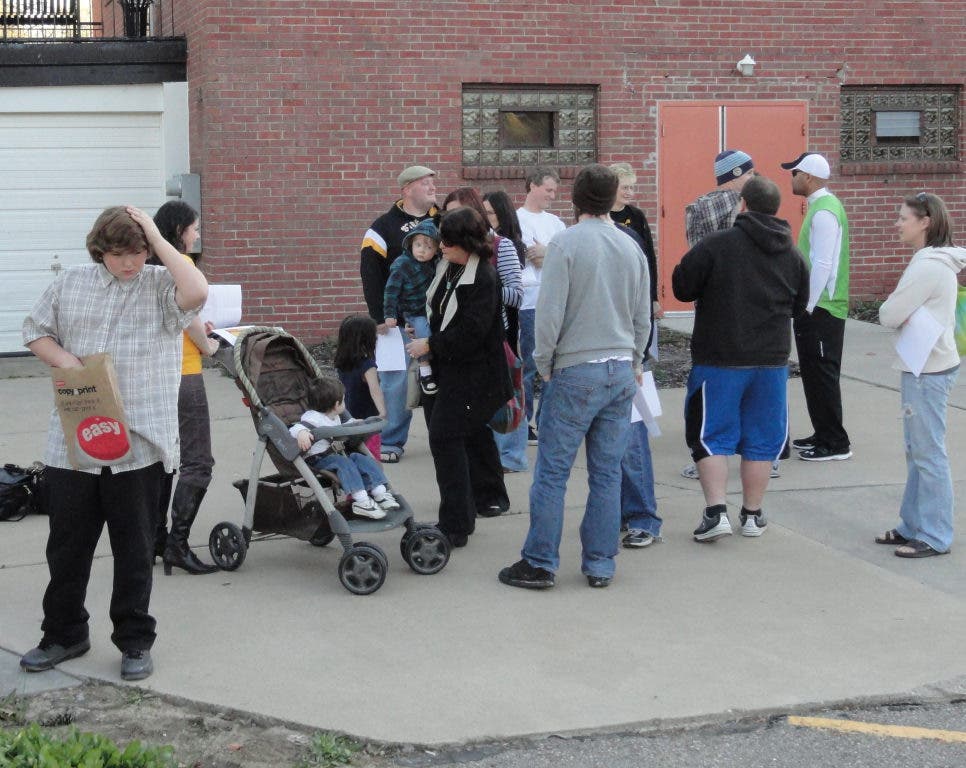
voted Monday not to move forward with the project.
Monday’s agenda included an item to advertise an ordinance that would have approved the April 5, 2010 motion the previous council passed in favor of the park. The 2010 motion resulted in a .
However, borough solicitor John Rushford said the former council did not follow proper procedure, voiding both the 2010 motion and the MOU.
Find out what's happening in Dormont-Brooklinefor free with the latest updates from Patch.
During the public comment session at the beginning of the meeting, Pitcher Park Foundation President Mary Pitcher said her understanding after speaking to Rushford was that the borough—not the Pitcher Park Foundation—had made a mistake in the process.
“We just don’t understand how the borough of Dormont can go back two years to when this motion was approved and fix a mistake that was obviously made,” Pitcher said. “We came to donate the skate park to Dormont in good faith because of these children.”
Find out what's happening in Dormont-Brooklinefor free with the latest updates from Patch.
Rushford explained why both the April 2010 motion and the MOU are considered void.
The April 5, 2010 motion read: To approve the site at Banksville Road tennis courts for a Multi-Use Park (for skating, skateboarding and biking), with memorial wall to be built and gifted to the Borough by The Pitcher Park Foundation on the condition that all monies needed to build same be raised and the reconstruction of the existing tennis courts on Memorial Drive to be performed before ground breaking on Banksville Road may begin. Additionally, extra funds to be raised by The Pitcher Park Foundation to be held in maintenance fund for the maintenance of the Multi-Use Park. All ownership of said property shall at all times be retained by the Borough of Dormont.
Rushford said borough code requires council to make such legislative actions by ordinance so the public is aware of the terms of the pending law. Such an ordinance would contain legal language for how it would be adopted, and whether it would conflict with other borough ordinances.
Routine administrative transactions, such as salary approvals, can be made by motion, but Rushford said in this case, the motion required an ordinance because it involved both a governmental function and a legislative act.
He said that because that wasn’t done, the motion, as well as the MOU, are unenforceable.
“(The MOU) was never acted upon, in spite of the fact that it’s a pretty sophisticated three or four page document,” Rushford said. “Based upon the fact that it has not been adopted even by motion, although it should have been done by ordinance, it is void upon its face because of that.”
Essentially, the transaction is not complete, Rushford said. He compared it to closing on a house, but not recording the deed. He said there were other liability and legal issues in the matter that could have been addressed, but his focus was whether the motion would be binding on the borough—and he concluded that it is not.
“These niceties are important and have meaning legally,” he said. “While results may not be what one might have wanted, they are what must be followed.”
Because the item regarding advertisement of the ordinance had been tabled, council first voted unanimously to untable the item. Council then voted 6-1 against the motion. Councilwoman Laurie Malka was the only council member to vote in favor of advertising the ordinance.
Follow Dormont-Brookline Patch on Facebook and Twitter. For more news, sign up for our email Newsletter.
Get more local news delivered straight to your inbox. Sign up for free Patch newsletters and alerts.