Schools
Central Bucks School Board To Vote On Neutrality Policy
The policy has become a lightning rod in the district, especially among LGBTQ+ students who have argued against banning the Pride flag.


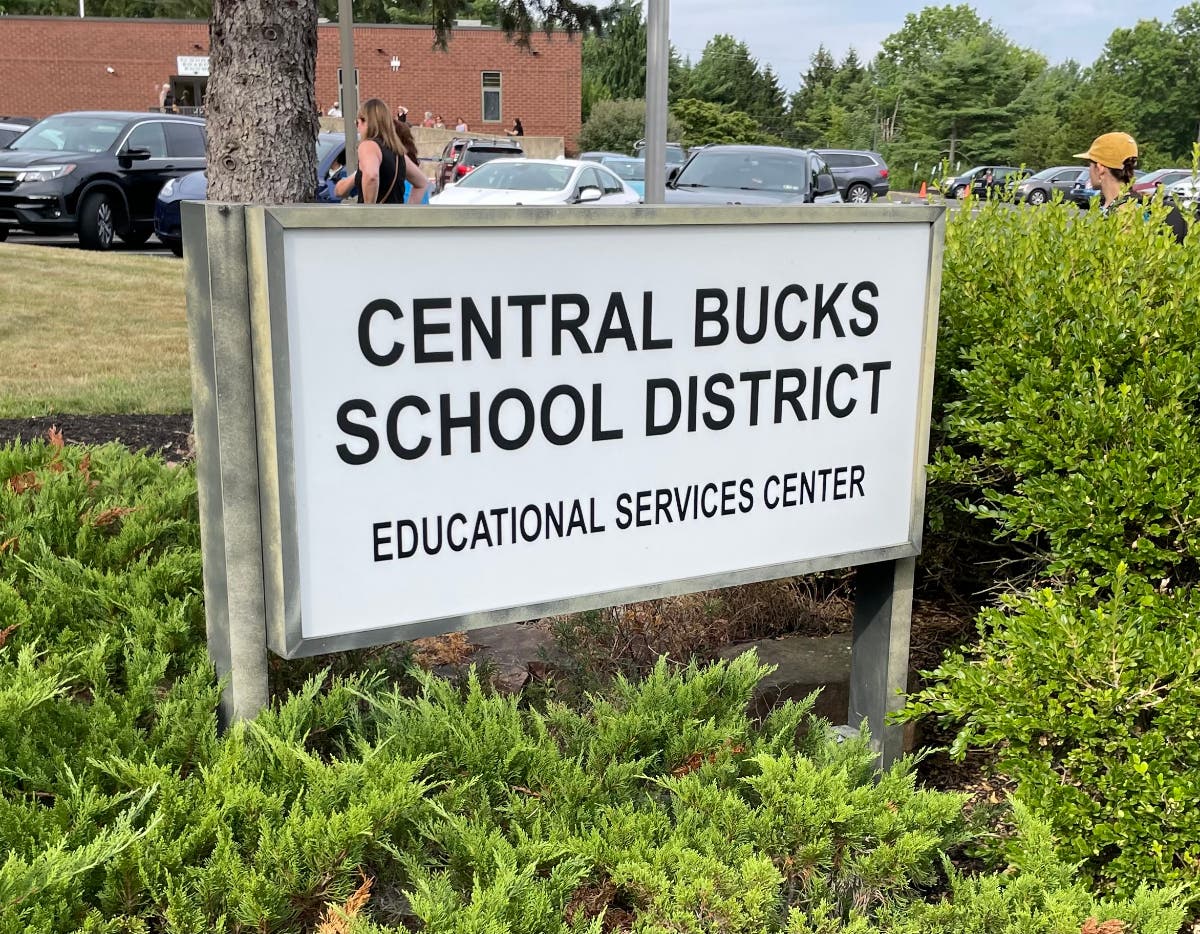
DOYLESTOWN, PA — The Central Bucks School Board will vote Tuesday on a controversial policy that board leaders say is about bringing neutrality and balance to the classroom.
Policy 321 - governing partisan, political, or social policy advocacy activities in the classroom - has become a lightning rod in the district, especially among LGBTQ+ students who have argued against banning the Pride flag, which they see as a symbol of acceptance and safe harbor.
Many of them have spoken out at recent board meetings raising issue with the policy and calling for the school board to withdraw it from consideration.
Find out what's happening in Doylestownfor free with the latest updates from Patch.
Despite the vocal opposition, the updated policy is expected to win the approval of the board and be implemented as district policy.
According to the district’s policy manual, the purpose of Policy 321 is to “maintain neutrality in curriculum, classroom décor, and classroom instruction in an effort to establish an educational environment in which all students feel supported.”
Find out what's happening in Doylestownfor free with the latest updates from Patch.
The policy is aimed at creating an “optimal learning environment and atmosphere of inclusiveness, where all students are welcome.
“Because views and beliefs about partisan, political, or social policy matters are often deeply personal, employees should not, during assigned work hours, advocate to students concerning their views or beliefs on these matters,” reads the policy. “Such advocacy does not contribute to a
positive learning climate and may be disruptive, divisive, and distracting. Rather, classroom instruction should relate to approved curriculum.
“The district’s role is to teach students how to think, not what to think, thereby keeping classrooms as places of education, not indoctrination,” the policy states.
The policy sets guidelines on which activities are inappropriate during assigned work hours and on district-owned or leased property, within all school buildings, and at all district-sponsored activities.
According to policy guidelines:
- Employees shall not advocate to students concerning any partisan, political, or social policy issue nor engage in partisan politics, social policy, electioneering or campaigning unrelated to employee representative elections.
- Employees shall not display any flag, banner, poster, sign, sticker, pin, button, insignia, paraphernalia, photograph, or other similar material that advocates concerning any partisan, political, or social policy issue.
- Employees shall not distribute, circulate, or display circulars, leaflets, petitions, or similar material that advocates concerning any partisan, political, or social policy issue.
- Employees shall not collect or solicit funds or volunteer for any partisan, political, or social policy campaign or activity.
- Employees shall not direct or encourage students to write, address, or distribute advocacy materials related to any partisan, political, or social policy issue.
- And any district employee who holds elective, appointive, or partisan office is not entitled to time off from district duties for reasons related to such office, except as such time may qualify under the leave policies of the board or the pertinent collective bargaining agreement.
The policy makes the following exceptions:
- Instruction and study concerning partisan, political, or social policy issues when directly relevant to the curriculum and appropriate to classroom studies given the students’ age, class year, and course of study; provided, however, that such instruction or study is not for the purpose of advocating concerning a partisan, political, or social policy issue.
- The display of flags of the United States of America and the Commonwealth of Pennsylvania or of any military branch or unit of the United States or the Commonwealth; and flags of foreign countries or other U.S. States or territories when directly relevant to a course of study in a social studies or foreign language class.
- Wearing small pieces of jewelry, consistent with the professional dress code, that symbolically represent an individual’s personal beliefs.
“This policy is not a prohibition on topics of speech,” reads the policy manual. “Rather, it is designed to promote education instead of indoctrination or endorsement of partisan, political or social policy matters. In an analogous context, the district has long educated students about world religions but cannot endorse a particular religion. When implementing and enforcing Policy 321, District employees, the superintendent and principals may be guided by that existing and familiar non-endorsement principle.”
Get more local news delivered straight to your inbox. Sign up for free Patch newsletters and alerts.