Schools
Doylestown Middle Schooler Has Out-Of-This-World Summer Experience
During internship with George Mason University, a rising Lenape ninth grader worked to identify an exoplanet during summer break.


DOYLESTOWN, PA — When Ryan Holton returns to school in September and his teacher asks how he spent his summer break, the rising Lenape Middle School ninth grader will have an out-of-this-world experience to share.
While others were spending time at the beach or in the mountains, Ryan was exploring the outermost edges of the solar system looking for exoplanets capable of sustaining life.
Holton interned this summer with George Mason University where he performed research, both online and on location, at the university’s observatory to locate and identify planets outside this solar system known as exoplanets.
Find out what's happening in Doylestownfor free with the latest updates from Patch.
The Young Scholars NASA Data Science Analysis and Research Paper Program offers students an engaging and authentic professional, cutting-edge research experience in NASA space data science and statistical analysis. The dynamic and immersive virtual summer initiative is tailored for ambitious high school students seeking exciting and challenging opportunities in STEM.
Participants engage in a comprehensive program delving into astronomy and space sciences through a combination of research projects and lectures. Working collaboratively on current NASA mission research, students receive guidance on crafting professional-quality scholarly papers to enhance their research and communication skills.
Find out what's happening in Doylestownfor free with the latest updates from Patch.
This year's research projects first encompassed analysis of a subset of the 6000+ current NASA TESS mission exoplanet candidates and second James Webb Space Telescope data analysis. The TESS candidates had been manually vetted after being identified by the NASA TESS mission
automated search algorithms. However, they still required follow-up observations, detailed analysis, and data synthesis to evaluate the statistical probability that they are genuine exoplanets, not false positives such as nearby eclipsing binary star systems.
Peering through the second largest light reflection telescope on the East Coast located at George Mason, Ryan focused in on star HD182937 located 232 parsecs away from Earth and on whether he could provide a positive identification, which would be a first for the star.
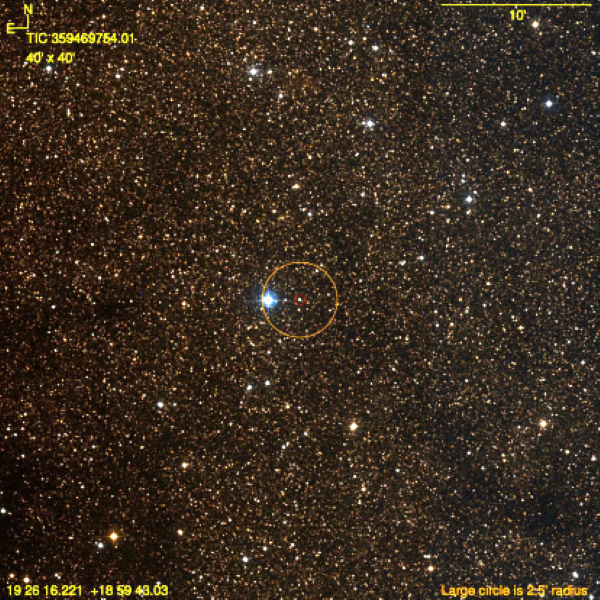
The star cluster as seen through the George Mason telescope.
His time at the observatory was spent collecting data, including photographic images, which he later used back at home as he conducted detailed analysis and data synthesis to evaluate the statistical probability that it was a genuine exoplanet.
He spent four to five hours every day working on the project, applying professional tools and statistical techniques to perform professional and cutting-edge follow-up analysis. He also interacted with scientists in the field and took part in lectures.
“We can learn so much with a single photo. It’s more than I ever thought that we could, like how much data we can analyze from a single image. You just have to learn where to look.”
The outcome of his analysis will aid the NASA TESS mission in determining which of its candidates are the result of genuine orbiting exoplanets.
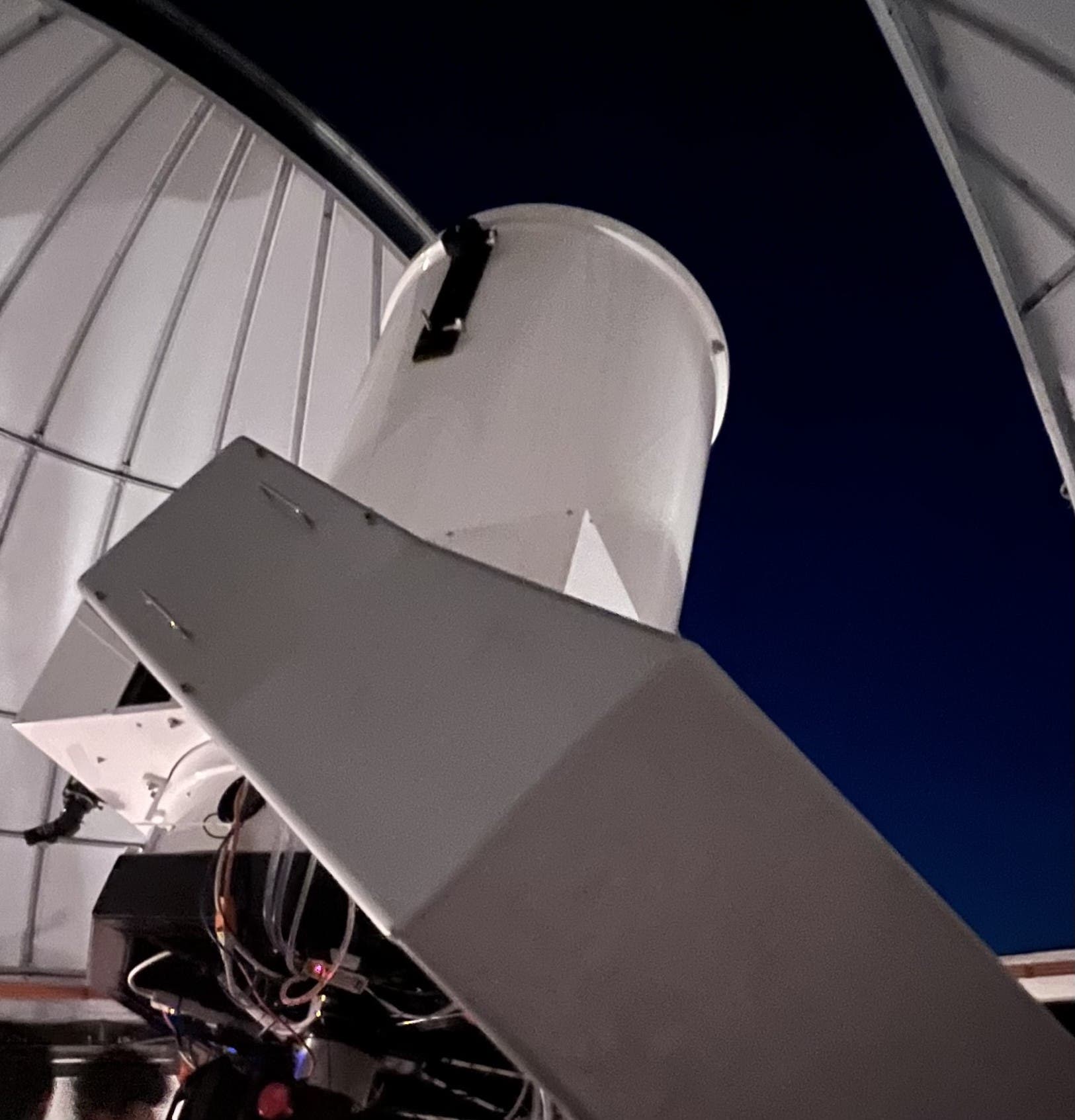
The George Mason University telescope. (Contributed)
While the work was exciting, Ryan did admit to some level of frustration when analyzing photographs and trying to identify an exoplanet among the vastness of space and limited by the extent current technologies can reach telescopically.
“There’s a lot more than we know about,” he said of the number of exoplanets out there in space. “We currently have 5,000 discovered but that’s only what we can see. There are so many out there. There’s millions upon millions of exoplanets out there. We just have to find them.”
They can be found, he said, with better telescopes and more space-based telescopes. “Ground based observations are getting harder and harder because of light pollution and satellites,” he said.
On his “wish list” is to someday identify an exoplanet capable of sustaining life. “That would be a huge discovery,” he said.
When he’s not focusing on aerospace, he enjoys pole vaulting.
“He’s excited because he’ll be able to pole vault for Central Bucks West as a ninth grader,” said his mom, adding that he is being coached by his grandfather.
Ryan is the son of Michael and Carla Holton. Michael is an epidemiologist, conducting risk assessments for companies and asbestos exposure. His mom does data analytics.
“He’s incredibly driven and he has a thirst for knowledge,” said Carla of her son. “He wants to know about everything and how everything works. He’s really drawn to the technologies so he’s big into computer programming. And in aerospace in general he can bring all of his passions together.
“We’re very, very proud of what he has accomplished so far,” said his mom noting that he was the youngest of the interns. The others were all seniors in high school, she said. “But he’s able to keep up with the older kids.”
"This wasn’t even on my radar,” said his mom. “Exoplanets were not on my radar either. He didn’t have the coursework to get into the program so he had to teach himself, like statistics. He got a book and taught himself statistics. And he got into the program."
Get more local news delivered straight to your inbox. Sign up for free Patch newsletters and alerts.