Politics & Government
Medical Marijuana Becomes Law In Pa.: 10 Common Questions And Answers
Medical marijuana became law in Pennsylvania today, Sunday, April 17. Here are 10 common questions and answers about the new law.


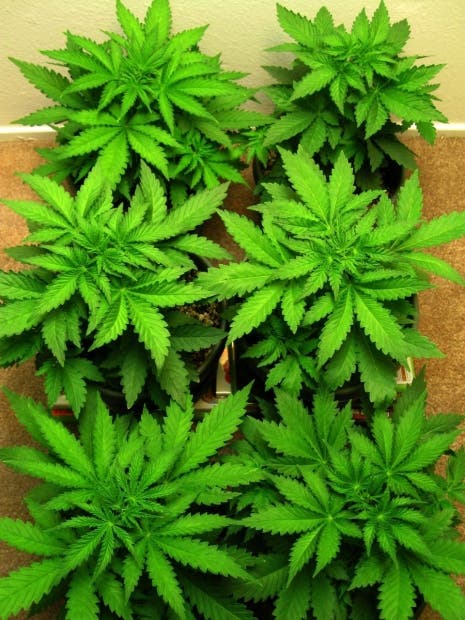
Medical marijuana became law in Pennsylvania today, Sunday, April 17.
Governor Tom Wolf signed the bill legalizing medical marijuana at a 1 p.m. ceremony in Harrisburg.
The bill, which makes Pennsylvania the 24th state to legalize marijuana for medical use, passed both houses of government and was sent to the governor's desk this week.
Find out what's happening in Doylestownfor free with the latest updates from Patch.
But what exactly does it mean for residents? Here are 10 common questions about medical marijuana. Answers provided by the governor's office.
How can Pennsylvania make medical marijuana legal when it is not approved by the federal government?
Find out what's happening in Doylestownfor free with the latest updates from Patch.
The federal government cannot force states to criminalize conduct that is illegal under federal law, nor can the federal government force state and local police to enforce federal laws. There are no known cases in any of the 23 states that have authorized the use of medical marijuana of the federal government prosecuting an individual for a small amount of marijuana.
When will the Medical Marijuana Program be implemented in Pennsylvania?
The Pennsylvania Department of Health will begin implementing the state’s Medical Marijuana Program when Wolf signs the bill into law on April 17. The implementation of the program is expected to take between 18 and 24 months. When completed, the program will offer medical marijuana to patients who are under a physician’s care for the treatment of a serious medical condition.
Who will be able to access medical marijuana?
Patients with serious medical conditions will be able to access medical marijuana with a physician’s certification at designated state dispensaries.
What will be considered a serious medical condition?
- Amyotrophic Lateral Sclerosis
- Autism
- Cancer
- Crohn’s Disease
- Damage to the nervous tissue of the spinal cord with objective neurological indication of intractable spasticity
- Epilepsy
- Glaucoma
- HIV (Human Immunodeficiency Virus) / AIDS (Acquired Immune Deficiency Syndrome)
- Huntington’s Disease
- Inflammatory Bowel Syndrome
- Intractable Seizures
- Multiple Sclerosis
- Neuropathies
- Parkinson’s Disease
- Post-traumatic Stress Disorder
- Severe chronic or intractable pain of neuropathic origin or severe chronic or intractable pain in which conventional therapeutic intervention and opiate therapy is contraindicated or ineffective
- Sickle Cell Anemia
What is the process for patients to qualify for medical marijuana?
To purchase medical marijuana, a patient will need to be under the continuing care of a physician who is registered with the Department of Health. The physician may then provide a signed certification to the patient stating that the patient has a serious medical condition. The patient must then apply to the department for an identification card. Once the patient receives an identification card, he or she can purchase medical marijuana at an authorized dispensary.
Can a patient with a serious medical condition receive medical marijuana if they are under 18?
A patient under the age of 18 must have a caregiver who is approved by the department in order to obtain medical marijuana. A caregiver can be a parent, guardian or an individual approved by the department.
Can someone else obtain medical marijuana on behalf of a patient?
Yes. When a patient applies to the department for an identification card, he or she can designate up to two caregivers. A caregiver can assist up to five patients. Before obtaining medical marijuana for a patient, a caregiver must also apply for a medical marijuana identification card.
Where will patients obtain medical marijuana?
Medical marijuana can be purchased at an authorized dispensary. The department will authorize up to 150 dispensaries across the state.
Will there be enough medical marijuana for all approved patients and caregivers?
The department will be reviewing a number of factors to determine the placement of dispensaries across the state in order to ensure that medical marijuana is available for patients with serious medical conditions. The department will be conducting a full population study during the next six months that will include the location and number of patients suffering from serious medical conditions and their ability to access public transportation to get to a dispensary.
What else will the medical marijuana program do for Pennsylvania?
The Medical Marijuana Program also includes funding for research institutions to study the use of medical marijuana to treat other serious conditions. In addition, the act establishes an advisory committee that will review these research findings and make recommendations to the legislature for changes to the act. The act also provides revenue to the Department of Drug and Alcohol Programs for drug abuse prevention, counseling and treatment services, as well as to the Pennsylvania Commission on Crime and Delinquency for distribution to local police departments.
Get more local news delivered straight to your inbox. Sign up for free Patch newsletters and alerts.