Politics & Government
Spotted Lanternfly Could Cost PA $325M, Thousands Of Jobs: Study
If the devastating bug continues to spread statewide, it could cost 2,800 jobs a year and a $325M loss to the economy, a new study finds.


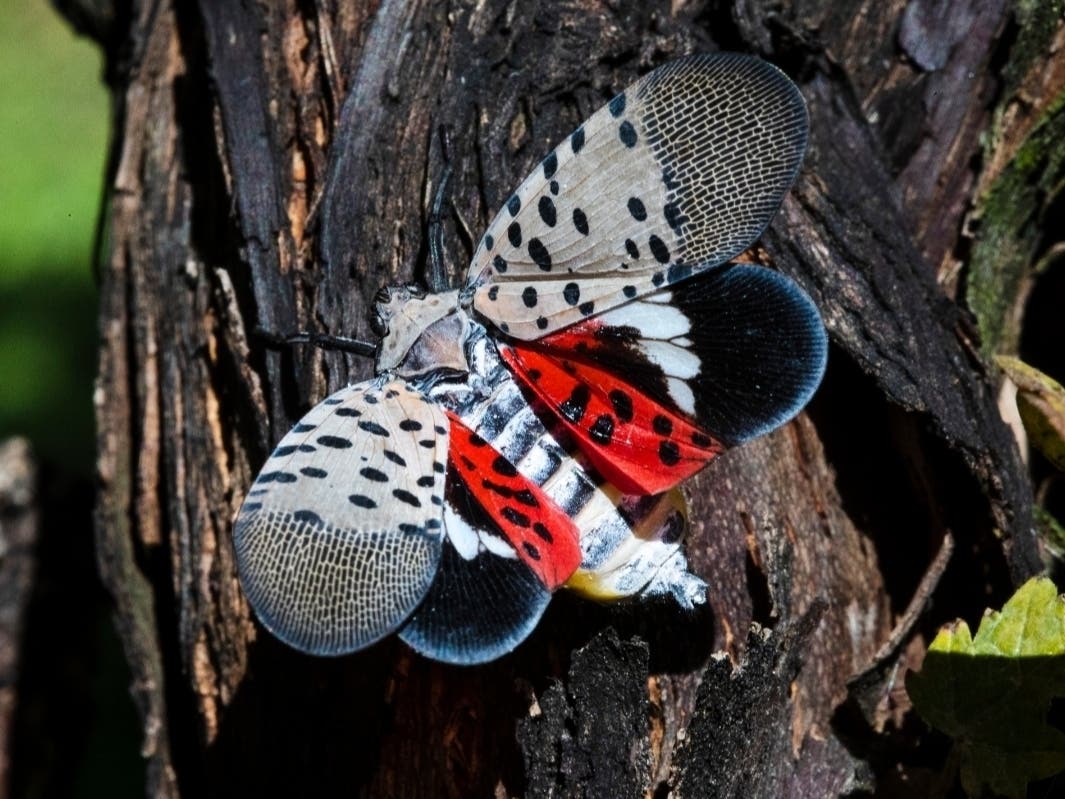
PENNSYLVANIA — New research on the impact of the destructive and invasive spotted lanternfly paints a grim picture for the Commonwealth if it continues to expand.
If the insect, which kills a wide variety of trees and plants when it feeds, spreads into counties adjacent to where it is already established and across the state, the worst-case scenario is startling: a $324.9 million hit per year to the Pennsylvania economy and the loss of 2,810 jobs.
That's according to estimates from Penn State researchers with the Center for Rural Pennsylvania, a bipartisan legislative agency that released an 84-page analysis of the bug's economic impact. Scientists said a "vigorous" response by the state and U.S. Department of Agriculture is needed to prevent the "potentially devastating" impacts on the state economy.
Find out what's happening in Montgomeryville-Lansdalefor free with the latest updates from Patch.
Currently, the spotted lanternfly is costing the state's forestry industry $152 million annually and the agriculture industry $42.6 million annually, researchers estimated.
For years now, 14 counties — most of eastern Pennsylvania — have had a large enough population of the bug that they've been placed in a "quarantine," which restricts the movement of materials that could spread the pest.
Find out what's happening in Montgomeryville-Lansdalefor free with the latest updates from Patch.
Local governments have warned residents about the threat, with one Eastern Pennsylvania town going so far as to host a "smash-a-thon" to help eradicate the insect from their community. RELATED: Willistown Hosting Spotted Lanternfly 'Smash-A-Thon'
The roughly inch-long plant hopper is a native to China, India and Vietnam. It feeds off at least 25 species of plants found in Pennsylvania, and it threatens some of the state's highly valuable products including grapes, apples, stone fruit and hardwood.
However, the impact of the spotted lanternfly cannot be judged solely on the plants that it eats and destroys, as its destructive activity causes harmful ripple effects that impact the entire ecosystem.
The new study also analyzed the costs of fighting the bug. Those range from relatively cheaper initiatives, such as education and increased monitoring, to more-complex measures such as inspection and the eradication of the tree of heaven (Ailanthus altissima), an invasive Chinese tree that spotted lanternflies seem to prefer to use for reproduction.
Warmer and wetter conditions brought about by climate change allow invasives such as the tree of heaven to spend more of the year growing out, thus likely providing more habitat for the spotted lanternfly.
The advanced techniques to battle the bug, should it expand across the state, would cost $106.4 million for agricultural methods and $219.6 million for timber methods, the study found.
Of Pennsylvania's 67 counties, 14 are currently in the quarantine zone, and these counties are adjacent to 12 more counties that are directly threatened.
Since it was first discovered in the United States in Berks County in 2014, the spotted lanternfly has spread to New Jersey, Delaware, Virginia and Maryland.
Get more local news delivered straight to your inbox. Sign up for free Patch newsletters and alerts.