Health & Fitness
Disaster on the Rails
Brief overview of railroad safety of the past and some of the local disasters we have experienced locally.
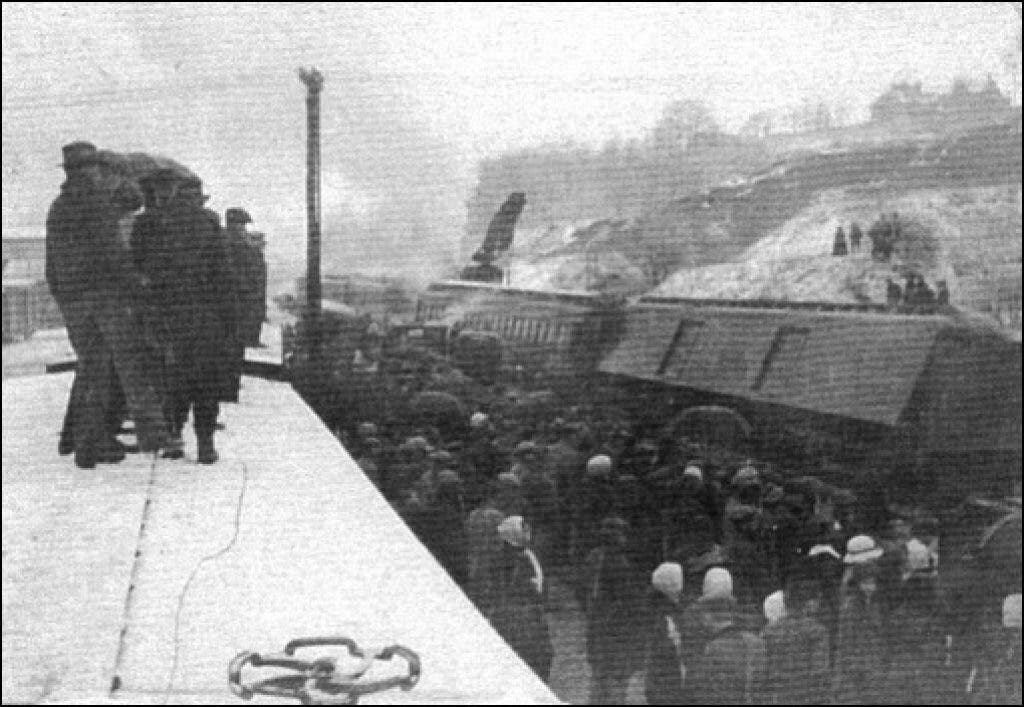


Railroad disasters were not uncommon in the late 1800s and early 1900s as railroad safety records indicate. There were numerous accidents and wrecks in Spring City and Royersford. Many of those local accidents have been documented by Joe Forrest Jr. and are contained in two volumes of news clippings (covering 1860 through 1945). They are available to view in the Spring-Ford Area Historical Society's library.
The decriptive language used is shocking and it seems there was little censorship or restraint employed when it came to describing the blood and gore.
Railroad accidents, large and small, annually killed or maimed tens of thousands of workers, passengers, pedestrians, and assorted "trespassers," especially during the nineteenth and early twentieth centuries.
Find out what's happening in Limerick-Royersford-Spring Cityfor free with the latest updates from Patch.
We have come a long way since 1839 when that first Philadelphia & Reading Railroad train, pulled by a Gowan & Marx steam engine passed through town. It was 80 cars long and carried 1,635 barrels of flour, 23 ton of pig iron, 6 ton of coal, two hogheads of whiskey, and 60 passengers in the two cars at the rear of the train.
One of the more notible local wrecks occurred in Royersford back in 1914. It was the famous "Wreck of the Buffalo Express".
Find out what's happening in Limerick-Royersford-Spring Cityfor free with the latest updates from Patch.
"TWO DEAD, TWO INJURED AS TRAINS COLLIDE AT ROYERSFORD"
This was the headline that appeared in the Philadelphia newspapers. It was a Wednesday morning in December when the coal train side swiped the Buffalo express just after 5:40 a.m. Both engineers were killed and both fireman from each train suffered severe injuries . Many passengers were thrown about but none sustained serious injuries. The train wreckage was strewn across four sets of track. The injured were transported to Phoenixville hospital.
News spread quickly around town and one Spring City resident, Lawrence Shaner, a boy of seven, remembered waiting for his dad to come home from work so they could walk over to the station and survey the wreckage.
Lawrence's memories of this local disaster and the story he had to tell was one of the factors I considered when inviting Professor Dennis P. McIlnay to come and speak to us on the "Wreck of the Red Arrow". Mc Ilnay in his recently released book tells the story of one of the worst railroad accidents in the history of the Pennsylvania Railroad.
Professor Dennis P. McIlnay is no stranger to our society as he visited us last November and gave a program on "Sabatoge at the Horseshoe Curve." It was presented to a full house at the VFW.
The Wreck of the Red Arrow tells the true story of one of America’s worst train wrecks ten miles west of Altoona at 3:22 a.m. on Feb. 18, 1947. In this crash of a Pennsylvania Railroad express passenger train, twenty-four people were killed and one hundred forty were injured, many critically. The Wreck of the Red Arrow was released in September 2010.
The program will take place at the in Royersford, located at 730 S. 4th Ave. The presentation starts at 7:30 p.m. and is free to the public. We expect a large turn out and hope to see you there.