Community Corner
The Mystery of Mason's Mill Along Pennypack Creek
Families and individuals of all ages enjoyed a walk along Pennypack Creek as part of the Willow Grove Tri-Centennial Celebration.
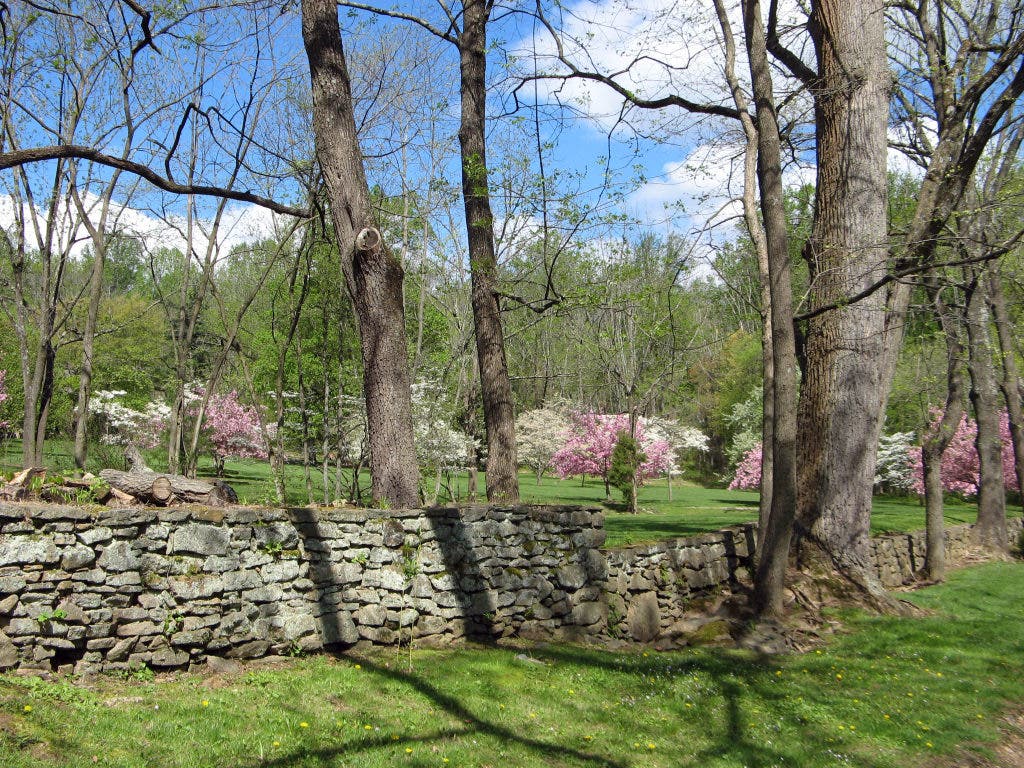


More than 30 walkers of all ages enjoyed the spring sunshine and rippling sound of the Pennypack Creek as they walked an easy four miles along the Pennypack Preserve's trails with tour guide, David Robertson, executive director of Pennypack Ecological Restoration Trust.
Walkers enjoyed hearing the history and geology of the area. They saw a northern water snake resting on a rock in the creek and a flock of wild turkeys that live on the property. Saturday was a beautiful day for families to hike together and for those who just wanted to enjoy the beautiful spring weather out in the woods.
The 800-acre preserve features 10 miles of woodland, meadow and creekside trails. To enhance your hike through the ever-changing scenery, consider taking a guided tour. You'll learn about the birds, plants and geology of the area on a walk led by one of the Trust's many knowledgeable tour guides.
Find out what's happening in Lower Morelandfor free with the latest updates from Patch.
The youngest "hiker" Saturday seemed to enjoy being carried by her father in her baby carrier. The 7-month-old baby didn't cry or fuss during the two-hour walk, her first hike with her parents, the Eliasons. "We enjoy getting out and walking together and learning about the history of this beautiful preserve," said mother Maria. The Eliason family from Willow Grove has been enjoying the Tri-Centennial events and hopes to be back for Saturday's walk at the preserve.
During the event titled, "Mystery of Mason's Mill," walkers learned about a geological mystery along the Pennypack Creek valley. Robertson pointed out remnants of dams built to divert the creek's water to power the gristmills and saw mills of early settlers. Ruins of the old Paper Mill complex can be seen at the intersection of Papermill and Creek Roads and the Shelmire Mills complex is visible along the creek at Creek and Huntingdon roads.
Find out what's happening in Lower Morelandfor free with the latest updates from Patch.
While these two mill sites are very close to their corresponding dams, this is not the case at the site of the old Mason's Mill. A raceway parallels the creek for 3,400 feet before it peters out at Mason's Mill Road. Most raceways along the Pennypack averaged a few hundred feet or less. "Why would the Mason family need a flume two-thirds of a mile long to power their mill?" Robertson asked.
Robertson explained the mystery to the crowd at the end of the hike, and illustrated his point by shifting wooden blocks to mimic geological faults in the earth. Mason's Mill Road roughly traces the edge of an ancient depression where rocks cracked, shifted and slipped downward 200 million years ago. After they slipped downward, the rocks were buried by sand and gravel washed off the adjacent landscape. So much material eroded into the depression that the lower sediments were compressed into sedimentary rock by the weight of the material above.
The "mystery" of Mason's Mill is puzzling because the dividing line between soft sedimentary and hard metamorphic rocks is hidden by layers of soil. Although we can't see the rocks, we can see their effects on the landscape, said Robertson. The low, flat, and easily eroded sedimentary watershed above Mason's Mill requires the creek to flow long distances to create the drop needed to power a mill. Further downstream, Pennypack Creek flows over rocks that are much harder to erode, so the valley there is steep and the stream rushes downhill with great force, allowing dams to be located very near the mills they powered.
Mason's Mill was located at the edge of this major geological division in North America. The mill was situated at the edge of "soft" rock where the creek is slow and shallow. This explains the extraordinary length of the flume that the Mason family used to power their mill.
On Saturday, Mildred Wintz of the Upper Moreland Historical Commission will lead a free tour of historic old mills and houses in the Pennypack Preserve as part of the Willow Grove Tri-Centennial Celebration. Pre-registration is required. Call the Trust's office at 215-657-0830.
You can help support the Pennypack Trust by becoming a member and volunteering at the Pennypack Preserve. Over 1100 members support land preservation, stewardship, education and research at the Preserve. Volunteers can help with office projects, special programs and upkeep of the preserve, birdseed sales, creek clean-ups and other opportunities.
May events are plentiful. Check the calendar for details.