Community Corner
Guests Join Historians In Raising A Toast To “The Father Of New Hope”
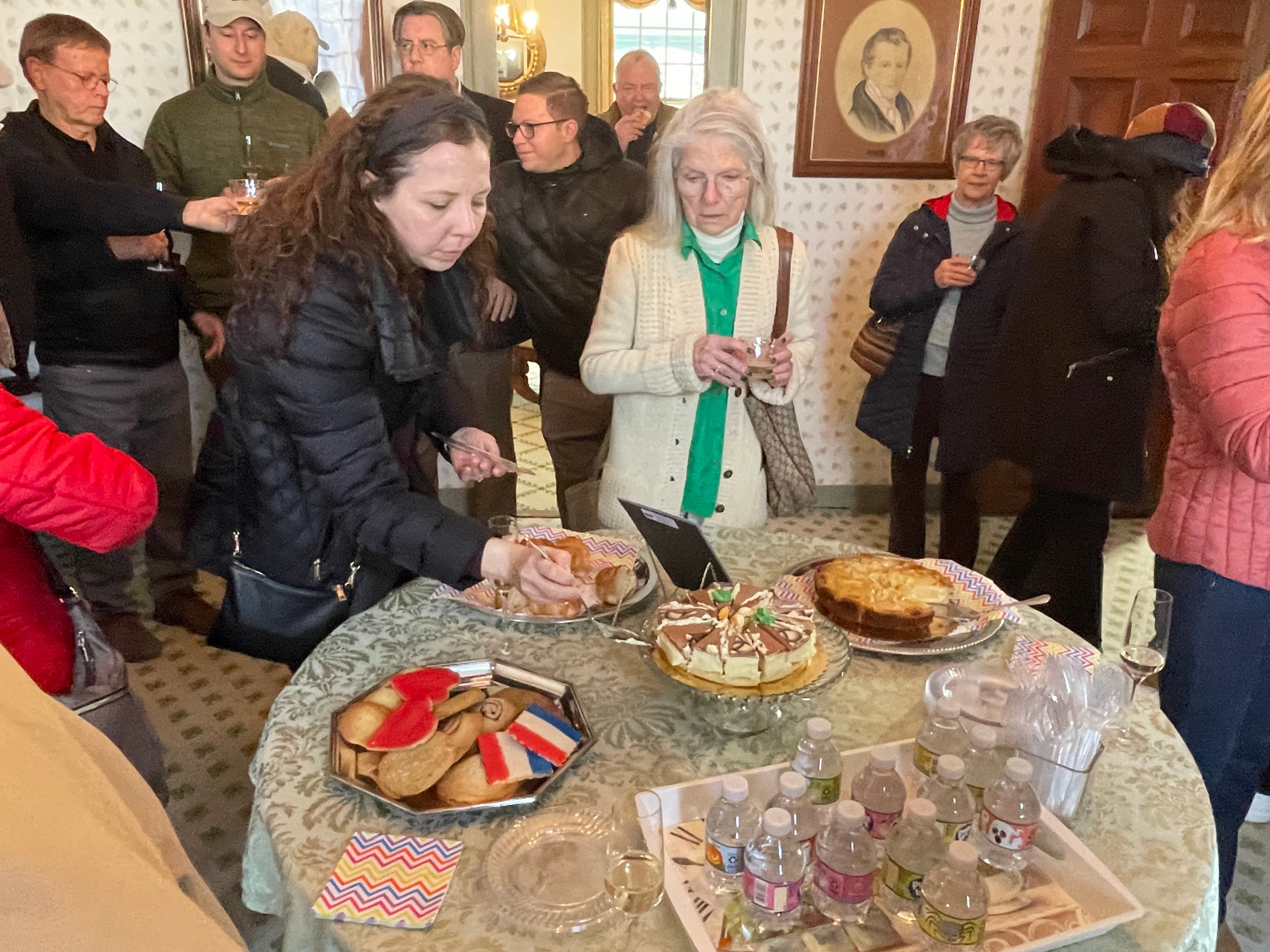
During a birthday celebration inside the Parry House, New Hope historian Roy Ziegler regaled the group with stories about Mr. Parry.


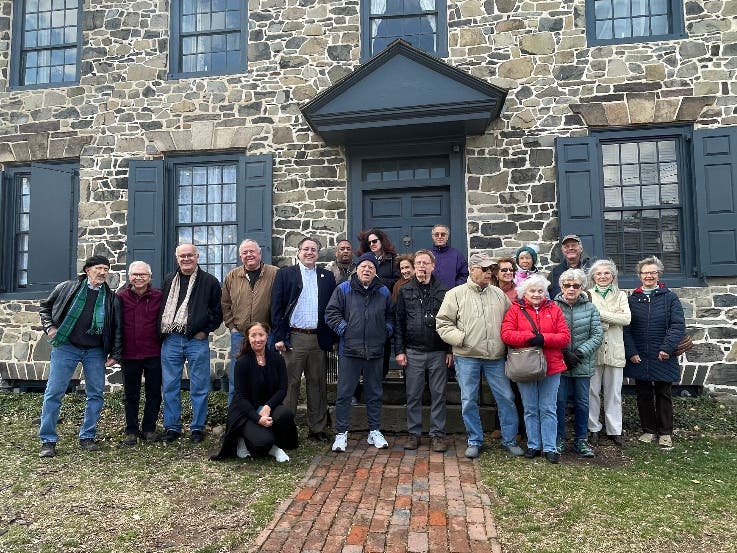
NEW HOPE, PA — Residents and visitors gathered on Sunday to raise a champagne toast to Benjamin Parry, “The Father of New Hope.”
During a birthday celebration inside the Parry House, New Hope historian Roy Ziegler regaled the group with stories about Parry, a community leader during the late 18th and early 19th Centuries who transformed the sleepy riverfront village into an industrial powerhouse and essentially put New Hope on the map.
“He was the man to go to to get things done,” said Ziegler, the author of the book, “The Parry’s of Philadelphia.”
Find out what's happening in New Hope-Lambertvillefor free with the latest updates from Patch.
Earlier, Ziegler took the group on a tour of the town, exploring the sites that were significant in Parry’s life.
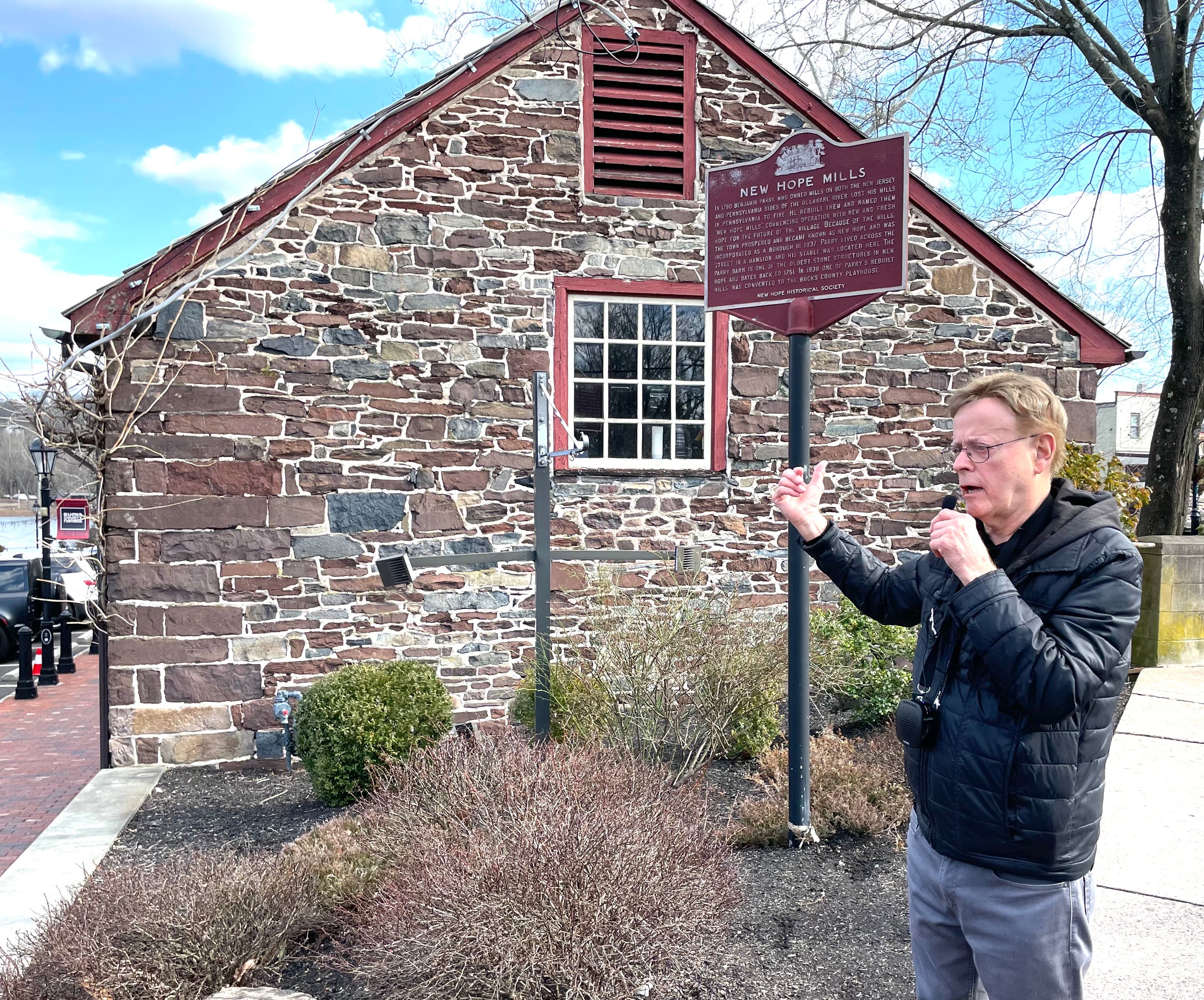
Roy Ziegler next to what once was the Parry House stable.
Find out what's happening in New Hope-Lambertvillefor free with the latest updates from Patch.
As a young apprentice, Parry arrived in Coryell’s Ferry in the late 18th Century after purchasing the local flour mill at the site of the present day Bucks County Playhouse. Not long afterwards, in 1790, the Hope Mill burned to the ground. Undeterred, he rebuilt the mill in one year and renamed it the New Hope Flour Mill. The name quickly became synonymous with the village and later replaced the town’s former name, Coryell’s Ferry, in 1837.
“They call him the Father of New Hope not only because he changed the name of the town, but his work expanded industry in town,” said Ziegler. “He expanded the Grist Mill. And he invented a process for preserving the grain and corn for shipping overseas. That made local farmers happy
because they could send their products as far as the West Indies and it made their crops more valuable.”
A few years later, Ziegler said Parry got the idea that the ferry operations was inadequate and he originated the idea for the first bridge across the Delaware to Lambertville.
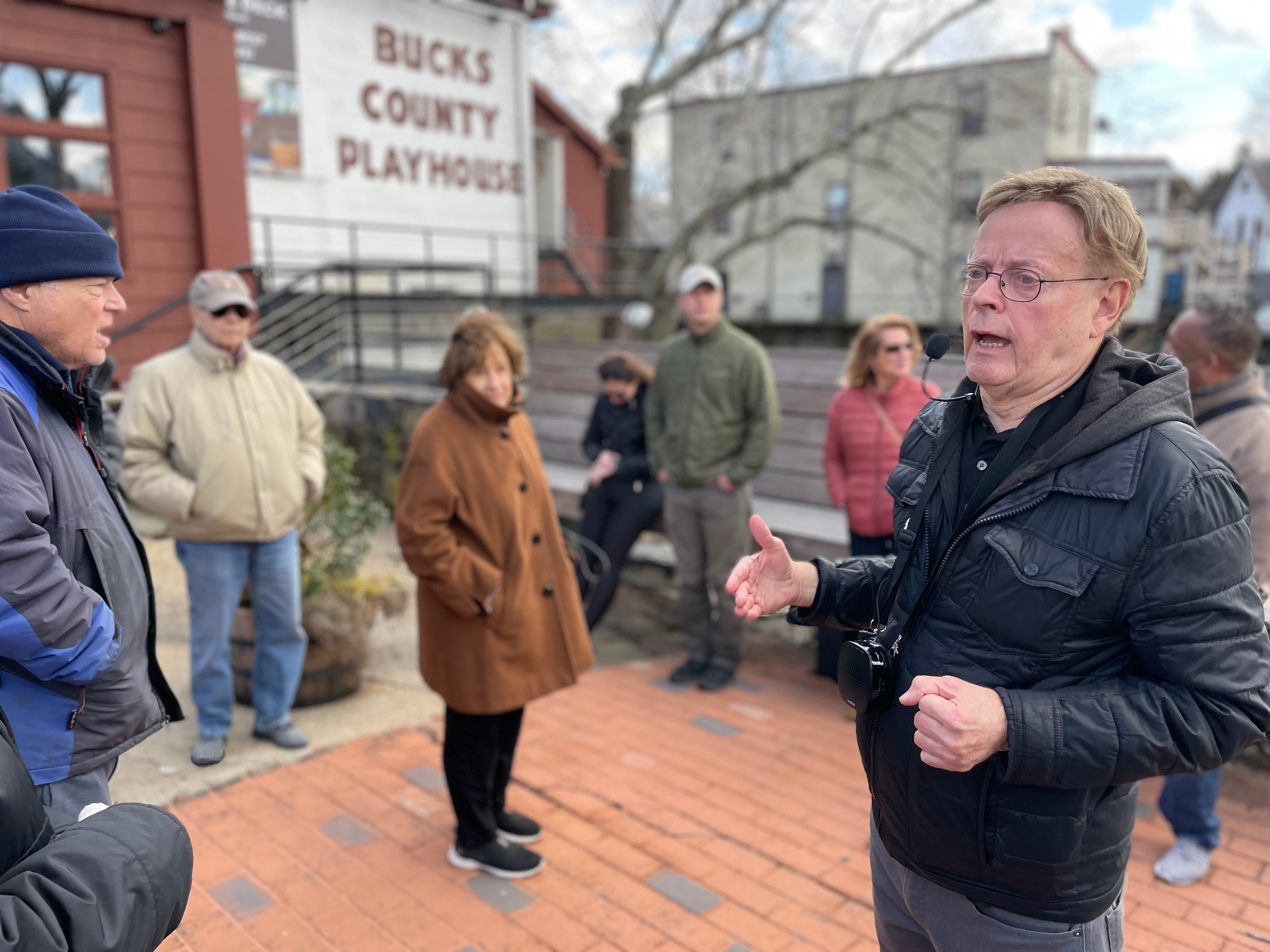
Roy Ziegler shares the history of the New Hope Mill.
“He plunked down the first few bucks - I think it was $7500 - and he got all the big guys in town to contribute. They financed the bridge and got it done in a few years. By 1814 it was open and ready to go.
“He created a saw mill, a lumber mill, a flax seed oil mill and a blacksmith. He expanded Farley’s Book Store. And all that brought more industry and business to town. He wasn’t a founder. The town was founded 300 years ago, but when he arrived here be brought vitality to the town and put it on the map.”
Parry lived long enough to see the town incorporated as a borough in 1837 and his nephew, John Childs Parry, become the first Burgess (mayor) of New Hope Borough. Benjamin Parry died two years later in 1839.
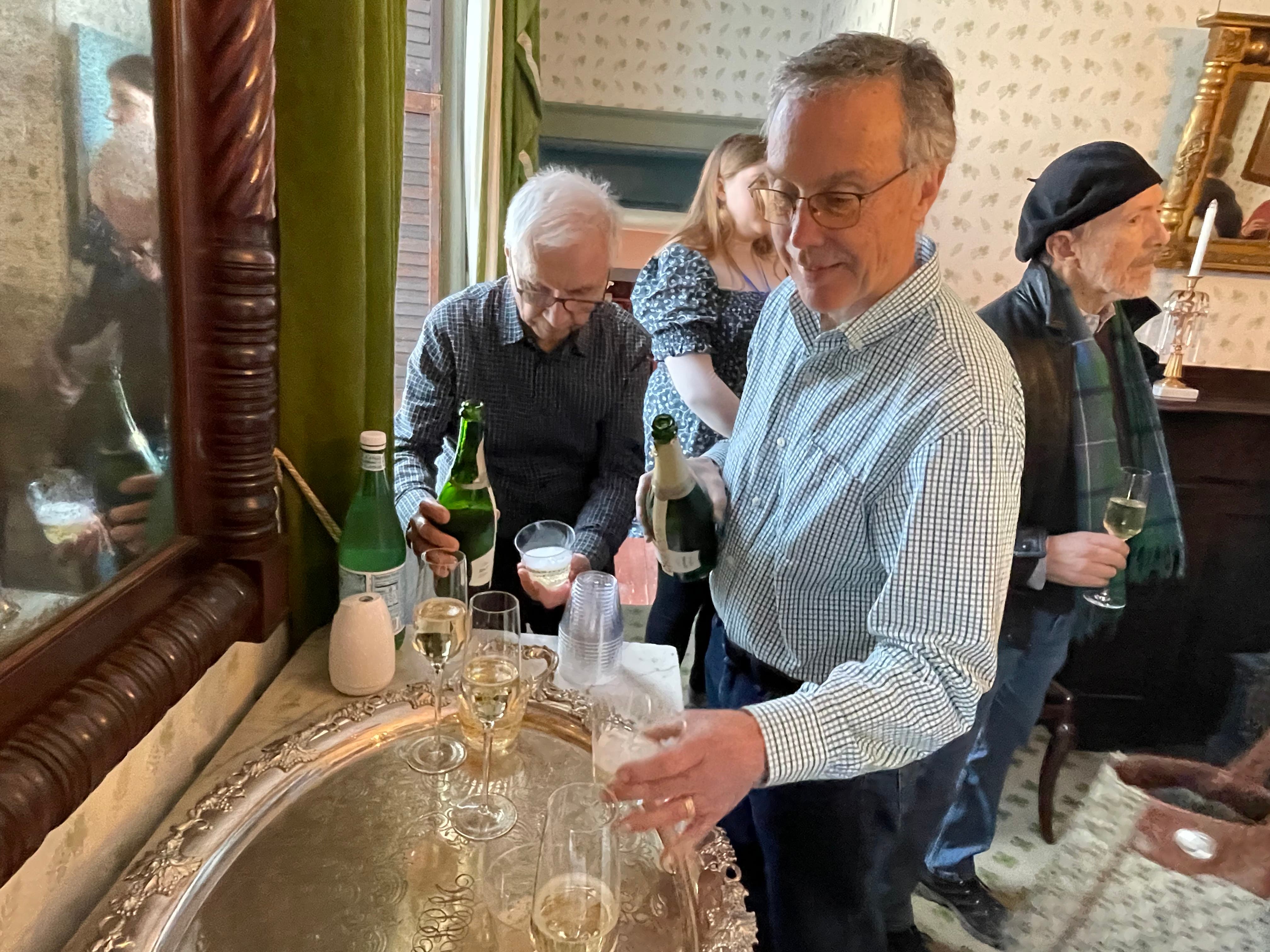

Roy Ziegler with State Representative Tim Brennan.
“We celebrate him as a person and also what he did to grow the town,” said Ziegler. “He came to town as a kid essentially and within a matter of 10 to 15 years he was not only the chief guy in town to go to, he had the idea to build the bridge, he helped finance the Delaware Canal, he was
involved in building the Union Paper Mills. He was pretty much involved with everything contributing to the growth of the town, turning it into the industrial capital of Bucks County.”
For those eager to learn more about Mr. Parry, the society is compiling an exhibit which is scheduled to open in April inside the mansion’s new exhibition space. It will document Parry’s impact on the town and his extensive family history and its influence both in New Hope and in Philadelphia.
Get more local news delivered straight to your inbox. Sign up for free Patch newsletters and alerts.