Arts & Entertainment
Frederick Douglass Returns To Newtown: The Architecture Of The Self-Made Man
A prophetic night unfolds on the stage at the historic Newtown Theatre.

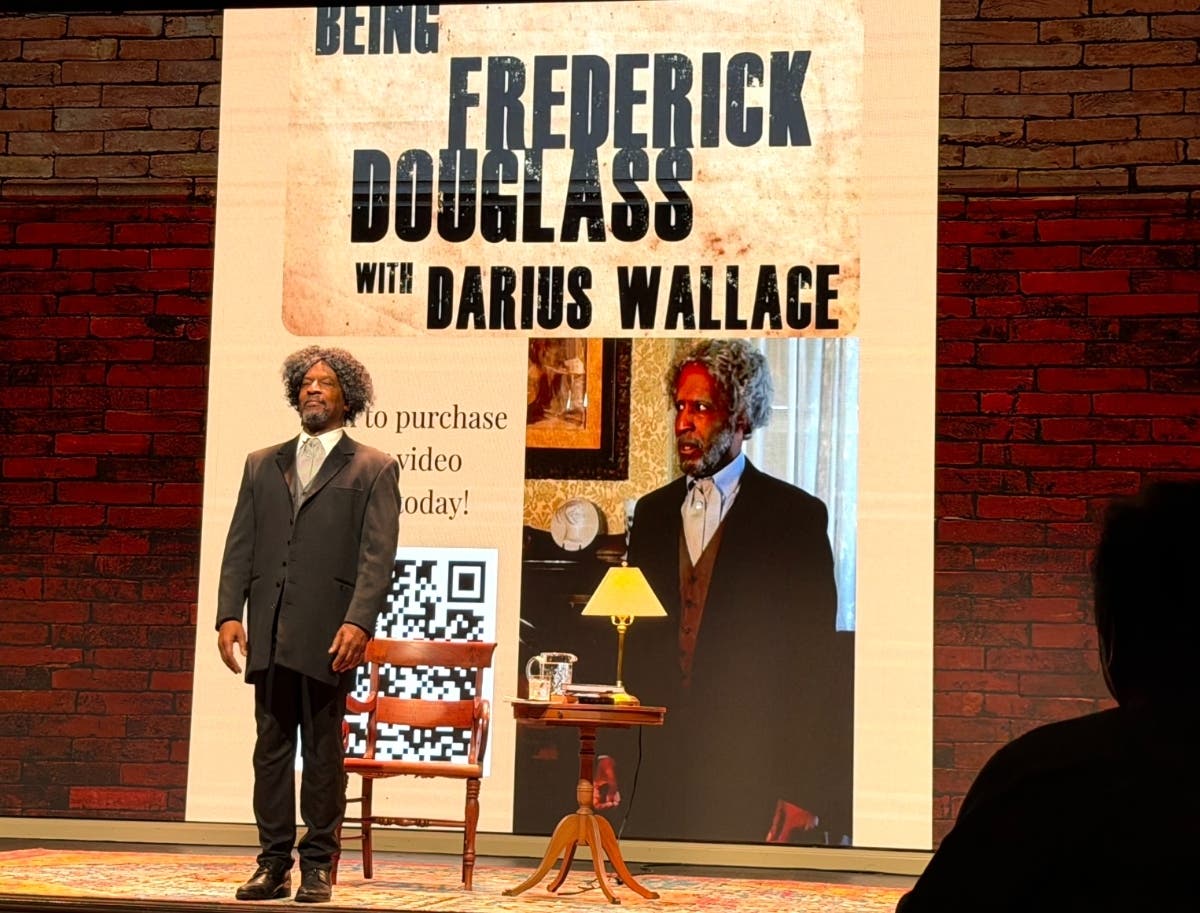
Frederick Douglass’s Prophetic Night in Newtown
A historic return to the Newtown stage—then in 1864, and again in 2026 through a performance by Darius Wallace. “Being Frederick Douglass” brought Douglass’s words and presence back to the Newtown stage. Listen to this short “Deep Dive” podcast review of the performance:
A Giant Returns
Douglass’s story still lands with force because it is, at its core, an “impossible trajectory”—from being legally defined as property to becoming the master of his own narrative.
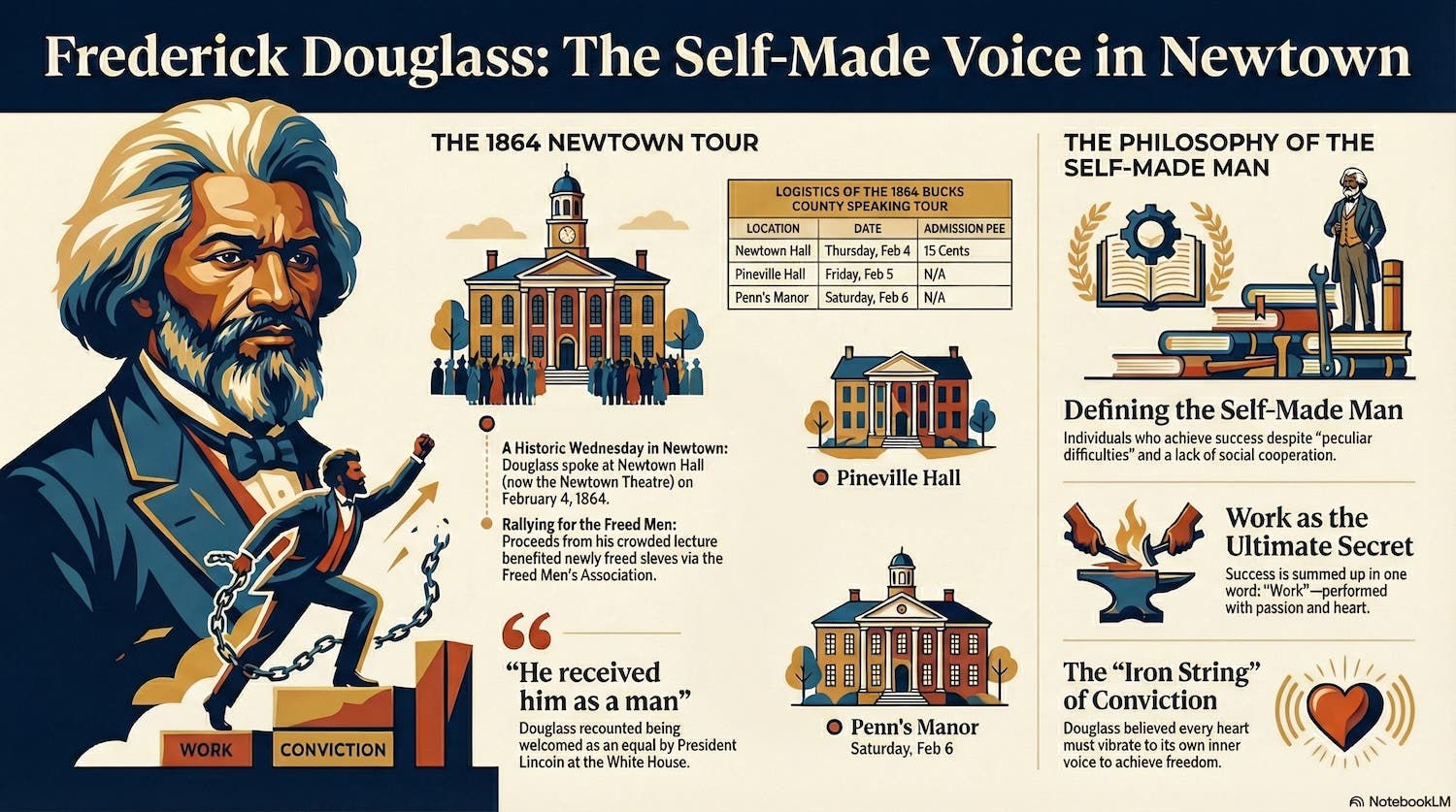
That’s the heartbeat of his “Self-Made Man” philosophy: a blueprint for psychological and social liberation that still applies today. Listen to this short “Deep Dive” podcast review of the performance:
Find out what's happening in Newtownfor free with the latest updates from Patch.
The Myth of Absolute Independence
Douglass rejected the ego-driven myth of the solitary hero. “Self-made,” for him, didn’t mean isolation. It meant recognizing that human progress is built on shared effort across generations—“borrowers who reap where others have sown.”
“I believe in individuality, but individuals are to the mass like waves to the ocean… We all may differ as the waves but we are one as the ocean.” — Frederick Douglass (as quoted)
Freedom Starts in the Mind
One of the most modern elements of Douglass’s thinking is his insistence that freedom must be constructed internally before it can be fully lived externally: “every chain fastened to the body was first fastened to the mind.”
Find out what's happening in Newtownfor free with the latest updates from Patch.
“A free state is a positive state of mind. Freedom starts as a thought, strengthens as a word, and hardens into action.” — Frederick Douglass (as quoted)
The “Tall Tortoise” Lesson in Leadership
Douglass criticized Lincoln’s pace—“the pace of a tall tortoise”—yet later recognized the “miracle” of a leader who could grow. The validation came in the White House, where Douglass recalled being received “as one gentleman would receive another… as a man.”
“Hands Off”: A Radical Extension of Liberty
Douglass’s advocacy for women’s suffrage flowed naturally from his belief in total personhood—woman “full and complete in herself.” :contentReference[oaicite:9]{index=9} His argument was strikingly direct: the best service men can offer is to stop interfering—“get out of her way… Give her fair play and hands off.”
Purpose Over Talent: The Command to Work
Douglass favored gritty consistency over “hair-trigger” talent, praising the steady tortoise and the refining power of struggle. His conclusion is both simple and demanding: Work.
Conclusion: Strike Your Own Iron String
Douglass’s legacy in Newtown is ultimately a call to action. He reminds us that “silence is the final luxury of the oppressor,” and leaves us with a personal challenge: what chains of fear, expectation, or silence must we unfasten from our own minds—today?
When we revisit moments like Douglass’s 1864 appearance in Newtown, we’re not just remembering— we’re measuring ourselves against the standards of courage, voice, and civic responsibility.