Politics & Government
New Local Watchdog Group “Neighbors for Open Government” Challenges Newtown Township Transparency
In a climate where local government proceedings have become increasingly opaque to the average taxpayer, a new force for change has emerged.

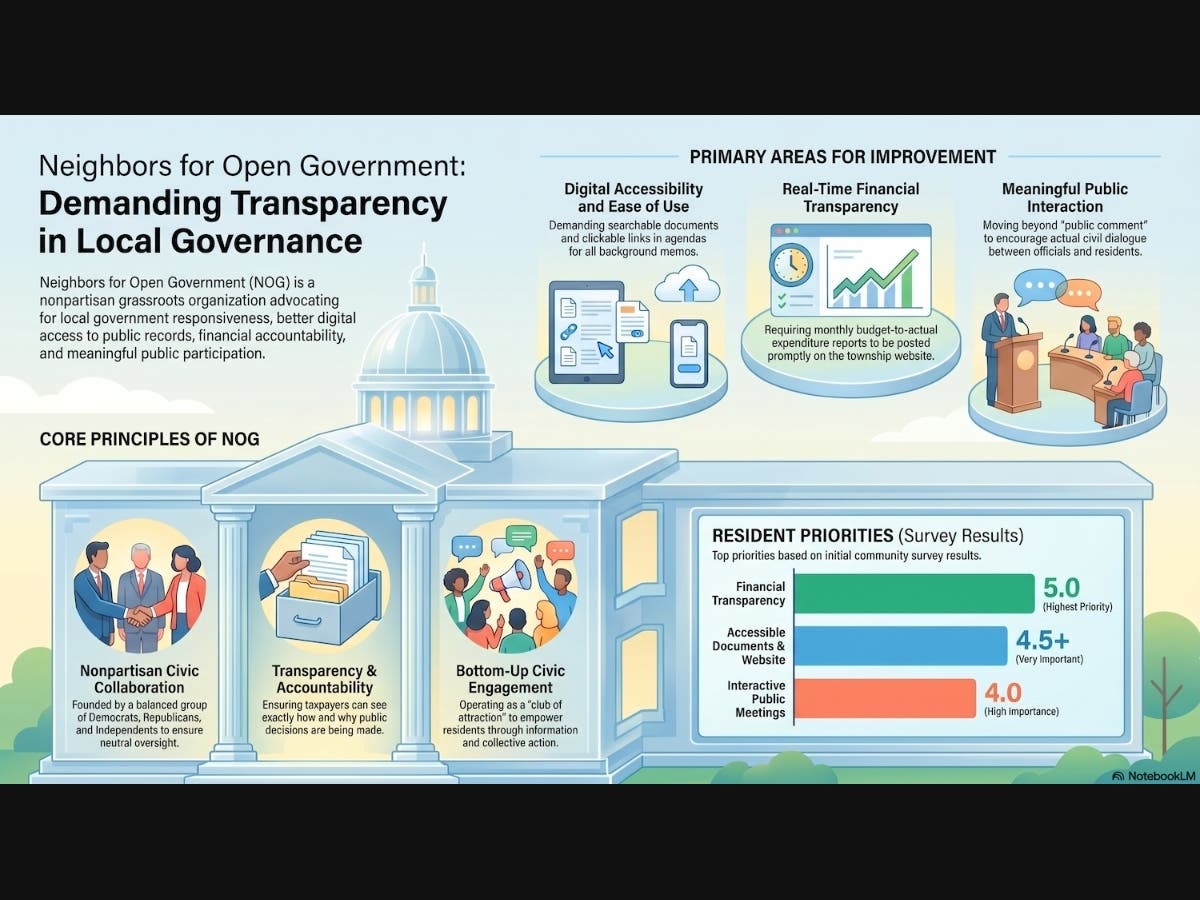
In a climate where local government proceedings have become increasingly opaque to the average taxpayer, a new force for civic engagement has emerged to dismantle the wall of silence in Newtown Township.
During a recent strategy session between local advocates and the media, the groundwork was laid for “Neighbors for Open Government” (NOG)—a grassroots organization dedicated to interrogating municipal decision-making and pulling back the curtain on a governing process many residents describe as secre-tive.
The initiative is spearheaded by a trio of veteran community voices: former Township Supervisor John Mack, advocate Charlie Feuer, and Al Dufault, an independent resident specializing in fiscal oversight. This leadership—specifically Mack’s pivot from the Board of Supervisors (BOS) to an external watchdog role—represents a strategic shift toward a “bottom-up” citizen advocacy model. By operating outside the constraints of the dais, NOG aims to bridge the widening gap between elected officials and the taxpayers they serve, ensuring that community concerns are proactively addressed rather than buried in the minutes.
Find out what's happening in Newtownfor free with the latest updates from Patch.
The Non-Partisan Mandate: Bridging the Political Divide
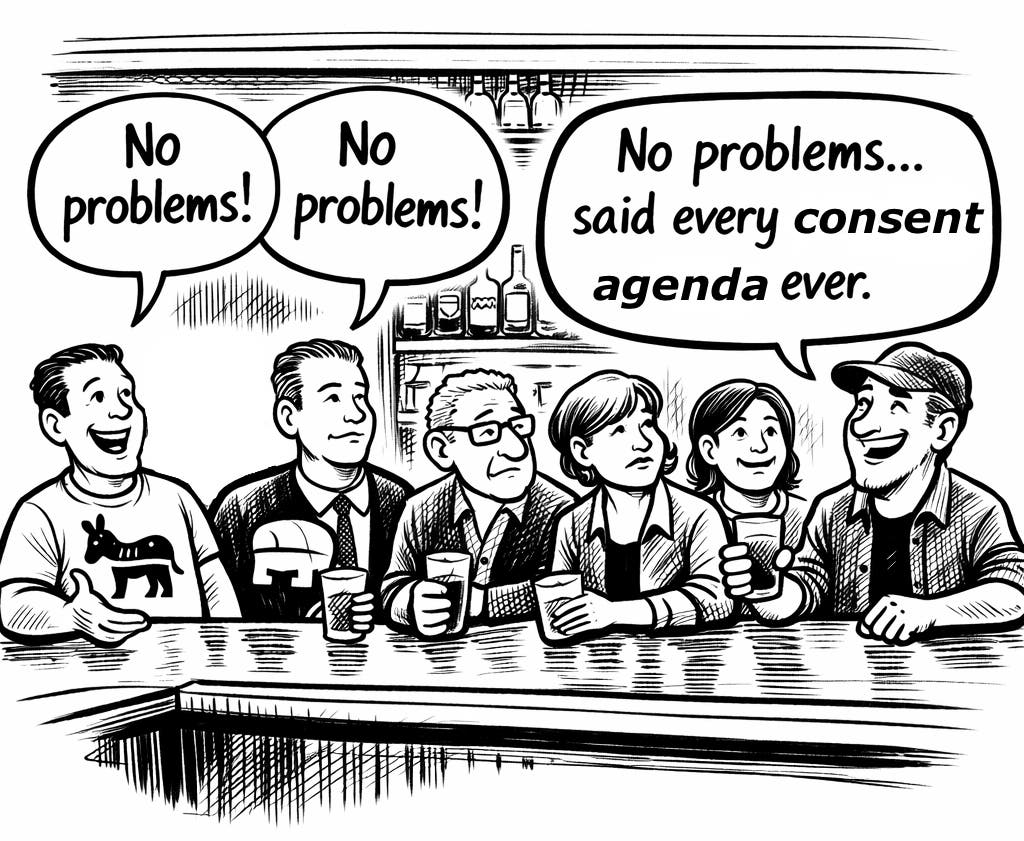
In an era of deep political polarization, NOG’s founders recognized that an effective watchdog must transcend party lines to maintain credibility. The group’s “2-2-2” origin story—comprising two Democrats, two Republicans, and two Independents—was born out of a shared frustration with the secretive process of setting township agendas.
By building this diverse coalition, NOG targets the mechanics of government rather than partisan agendas, making it significantly harder for the Board of Supervisors to dismiss their critiques as political sniping.
Find out what's happening in Newtownfor free with the latest updates from Patch.
The organization’s mission is centered on four core “guiding principles” designed to restore public trust:
- Non-partisanship: Operating independently of political affiliations to focus on government accountability.
- Transparency: Ensuring the “how” and “why” behind every decision is visible to the public before a vote is cast.
- Accessibility: Streamlining the way residents find and interpret township documents and fiscal data.
- Respect and Participation: Demanding a civil, two-way dialogue between officials and the community.
This unified front serves as a strategic necessity. When a cross-section of the electorate demands answers, “crickets” from the board are no longer an acceptable response.
Fiscal Accountability and the “Consent Agenda” Controversy
open responsive local government.
NOG’s most urgent interrogation involves the township’s reliance on the “consent agenda”—a parliamentary tool intended for routine, non-controversial items that is instead being used to mask significant expenditures. When items are bundled into a single vote, it bypasses public debate, effectively allowing the board to operate on autopilot with taxpayer funds.
The group points to the purchase of a $110,000 police vehicle as a quintessential example of this procedural maneuvering. Despite being a tactical, military-style SUV, the expenditure was reportedly tucked into the consent agenda under the deceptive guise of “drug education.” Similarly, NOG members highlighted a dismissive attitude toward capital spending; when questioned about the justification for a new Public Works truck, the administration’s response was a blunt, “He wouldn’t have asked for it if he didn’t need it.”
Al’s analysis of the township’s financial reporting reveals a deeper systemic failure:
- The “Guesswork” Budget: The 2026 budget was built on mere projections of 2025 expenditures, with no real-time data available to the public.
- Reporting Lags: Financial statements for late 2024/2025 were delayed by months, leaving taxpayers in the dark.
- The “True Up” Gap: The township lacks a “true up” process where projected budgets are reconciled with actual spending.
The implications are clear: without real-time data and reconciliation, the public cannot verify if their money is being spent as promised or diverted to unvetted projects.
Digital Barriers: Website Usability and the Right to Know
A municipal website should serve as a digital town square, yet NOG contends Newtown’s current infrastructure acts more like a barrier. The group highlights a “small difference that makes a big difference” in accessibility: while state law allows for editable “Right to Know” forms, the township forces residents to use non-editable PDFs that must be printed and filled by hand.
When official records fail, NOG has begun employing its own “counter-technology.” Following a “glitch” that left the April 22nd meeting without an official recording, the group revealed they are using AI-powered recording devices to create searchable, permanent transcripts. This ensures a record exists even when township systems fail.
NOG points to Doylestown Borough as the “gold standard” Newtown must meet:
| Feature | Newtown Township | Doylestown Borough |
|---|---|---|
| Agenda Format | Plain text; background info hidden. | Digital “packets” with linked documents. |
| Supplemental Info | Often unavailable until the meeting. | Background memos, photos, and plaques included. |
| Public Record Access | Non-editable PDF forms; high friction. | Streamlined, digital-first process. |
| Technology | Frequent recording “glitches.” | Reliable, searchable digital archives. |
Mobilizing the “Noggers”: Future Activities and Community Engagement
The strategy for NOG moving forward is rooted in “Power in Numbers.” Charlie Feuer noted that the board currently discourages interaction, often telling residents at the podium to “submit questions in writing,” only to leave those questions unanswered. NOG plans to disrupt this pattern by mobilizing residents to attend meetings en masse, forcing the board to confront a room full of taxpayers who refuse to be ignored.
The movement is already gaining steam. Initial surveys of the first 34 members show that financial transparency is the community’s top priority. The group’s goal is to reach “hundreds of members” and transform from a small advocacy group into a permanent fixture of municipal oversight.
Join the Movement
Neighbors for Open Government invites all residents to “wrap their noggin” around local governance and reclaim their voice.
- Take Our the Survey: Help shape the group’s advocacy priorities by sharing what matters most to you.
- Sign Up for Alerts: Stay informed about upcoming Board of Supervisors agendas and NOG’s investigative findings. To join the list, email: info@neighborsforopengovernment.org with “Join” in the subject line.
By transitioning from passive observers to active “Noggers,” the community can ensure that the door to local government—currently only open a crack—is finally swung wide.
Related Content
- Neighbors for Open Government Page
- Neighbors for Open Government Survey; https://johnmacknewtown.info/nogsvy.html
- “Residents Criticize #NewtownPA Township's Transparency, Responsiveness”; https://sco.lt/86Nwtk
- Challenges to Good #NewtownPA Government; https://sco.lt/6dRehk
- "A Consent Agenda Should NOT be a Shortcut Around Transparency!" (Video); https://youtu.be/gI6UNg2qD4g
- 2 Democrats, 2 Republicans, and 2 Independent #NewtownPA Township registered voters walk into a bar to discuss "Open Government"...; https://sco.lt/7zkIPw
- Guest Opinion: Transparent "Open Government" is Good Government; https://sco.lt/706SI4