Arts & Entertainment
Global Art News Makes Middle Eastern Connections
Steve Martin gets scammed and the 54th annual Venice Biennale brings the art of the Middle East to the world stage.

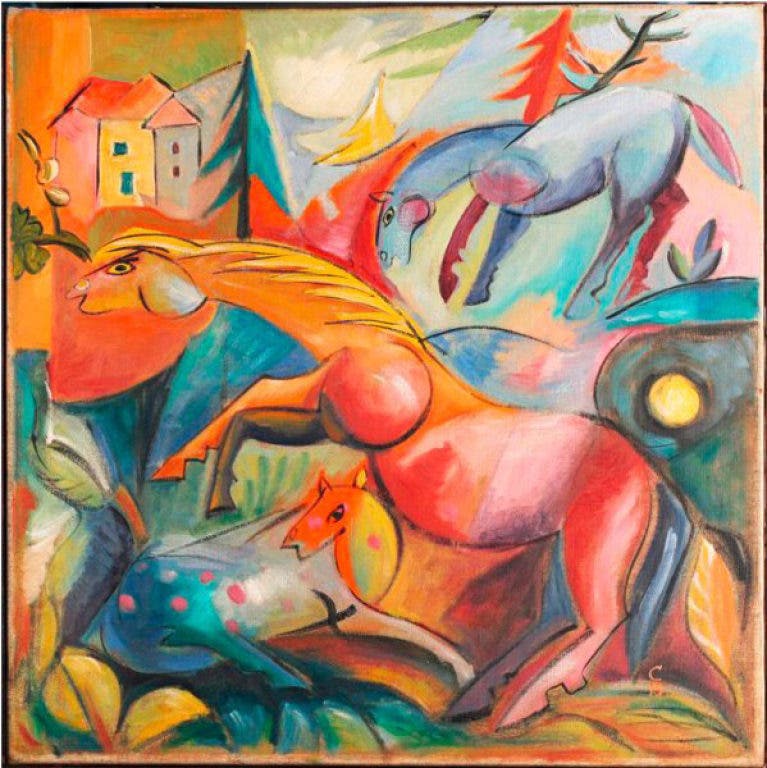
Steve Martin has a book on the shelves of your favorite bookstore or stored on your handy kindle right now about the ups and downs of the art world. Funny how, today, the guy who once danced like an Egyptian king is right in the middle of a major art world fraud.
A family of art forgers scammed comedian and art collector, Steve Martin. A painting Martin purchased, it turns out, was not the real thing!
Martin purchased a painting from an elite Paris gallery for $850,000 in 2004. The expressionistic canvas with its bright colors and abstract figures is in keeping with Martin's taste for high quality, upscale modern and contemporary art. He and others believed that the painting was a work by Heinrich Campendonk (1889-1957) called "Landscape With Horses," circa 1915.
Find out what's happening in Norristownfor free with the latest updates from Patch.
In 2006, Martin sold the work at a loss of $300,000 to a Swiss businesswoman and unknowingly became part of one of Europe's largest art scandals.
Recent investigations indicate that the painting was the work of a family of art forgers who were arrested in 2010. To date, they were responsible for creating and selling 50 forged works of art for millions of dollars since 2000.
Find out what's happening in Norristownfor free with the latest updates from Patch.
Wolfgang Beltracchi and his wife Helene were the masterminds of the art scam. It was claimed that the painting was saved from the Nazis and originated from Helene's family. The provenance (history of the painting via past owners) was created by the forgers to include upstanding businessmen, relatives and others. Turns out, it was all a sham. Losses to the art community connected to the forgery totaled in the tens of millions.
Middle Eastern Art invades Venice
In other global art news, the 54th Venice Biennale was unveiled to the world of artists, critics, collectors and others with 89 nations represented. The great show was not without its problems including, but not limited to, a protest by artists, cancellations of showings of particular works of art, malfunctioning installation pieces and probably the worst of all, a water taxi (vaporetto) strike in the world’s wettest city. But the tried and true art lovers were able to take it all in and experience the "art olympics."
The artists from the major art nations were on hand like the United States pavilion featuring R.H. Quaytman and Great Britain’s Anish Kapoor, among others. Six Middle Eastern countries (Egypt, Iran, Iraq, Saudi Arabia, Syria, and UAE) have their own pavilions at the world class exhibition. Some artists to watch from that part of the world include photographer, Latifa bint Maktoum and artists Reem al Ghaith and Abdullah al Saadi.
There is a new look to the Egyptian Pavillion at this year’s Venice Biennale and one that strongly suggests the way in which technology and community impact can move art forward.
In years past, Egyptian art on display at the Venice Biennale could be described as safe, expected, even typical. But this year, in the wake of the role of social media and the Internet in Egypt’s uprising, artists from that ancient land are bravely working to express their beliefs via art. Works of art by the old guard have been replaced this year in Venice with film clips and installation pieces generated by new age artists focusing on Tahrir Square and the variety of political viewpoints. The work of the late activist and Helwan University professor Ahmed Basiony is featured. His work went beyond traditional painting and focused on media art highlighting the new political atmosphere of Egypt and its people.
The Venice Biennale continues from through November 27.