Schools
Ursinus College President Encourages Open Dialogue on Race Matters
Dr. Bobby Fong says differences must be discussed, acknowledged and embraced.
Editor's Note: Patch contributor Hillary Anderson is a student at Ursinus College.
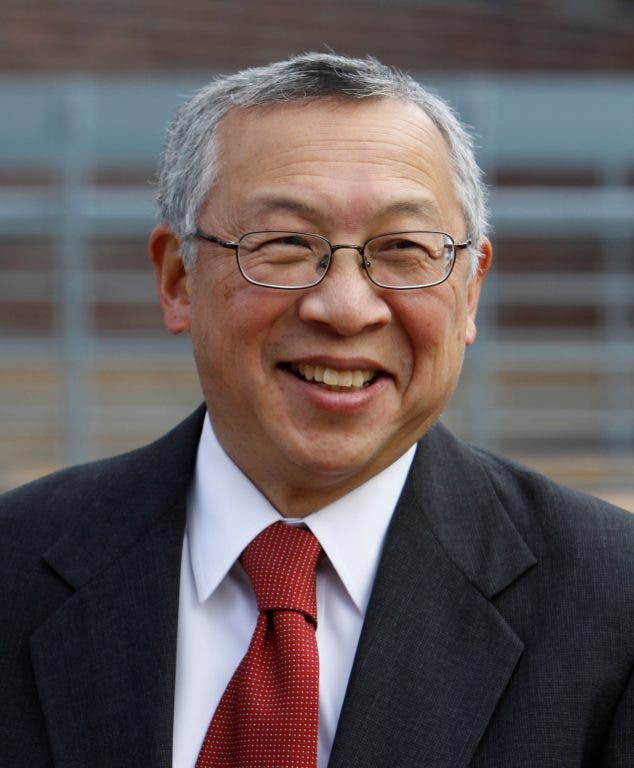
In early August, Dr. Bobby Fong traveled to New York to . The award is an esteemed one, and is proud to have the honored Fong in the president’s office.
The OCA was originally established in the 1970s and continues its work today to recognize Asian Pacific Americans for their commitment to excellence in America’s society.
Find out what's happening in Perkiomen Valleyfor free with the latest updates from Patch.
Fong’s receipt of the award was to recognize him for being an Asian American who has made great strides to improve the world around him.
Though students, faculty and staff are all proud of their new president and the recognition of his accomplishments, there was a unique question to be asked: How can a campus struggling to ignore racial differences also embrace a rich heritage?
Find out what's happening in Perkiomen Valleyfor free with the latest updates from Patch.
Fong had a great deal to say to help the community of which he has become a part of understand him a little bit better.
As many will remember, in January of 2011, , causing a campus-wide uproar. Students gathered in town meetings and smaller discussion groups to express their disgust with what had happened and refusal to tolerate the behavior, searching for coping mechanisms and response options.
Many students still, today, share their frustrations with the hate crime and how the Ursinus community dealt with it. Before the crime was even committed, an outside committee was hired to come to campus and evaluate life at Ursinus in its many facets. Though there were many positive notes on the committee’s report, including the approachability and friendliness of students, members of the committee also mentioned a concern that many students at Ursinus have a tendency to avoid larger, controversial issues.
After the report was received and the crime was committed, though, many students felt as though nothing changed. That is not to say there was a great deal of opposition or united outrage over the incident, but, after that first week of “response,” it seemed to many that life went back all too easily to the way it had always been.
Many rationalized by saying, “What other option do we have?”
There are essentially two schools of thought on race and the way people’s ethnic differences should be approached in today’s world. One is that there should be no differences. Black, white, Chinese, Spanish—we are all just people trying to get by in this crazy world.
The other method of approach, though, is that we explicitly define these differences between us, celebrating our own cultures and backgrounds. A partner to this is the learning and acceptance of cultures and ethnicities different from our own.
This winter, the general feeling on Ursinus’ campus was to adopt the first. Most students preached that everyone was the same; we were all just one body, one community. However, many said this “approach” was really just reinforcement of what most students had been doing all along: ignoring the racial lines that separate us.
Now, with the coming of this president and his award, Ursinus is forced yet again to re-evaluate its approach to differences in race and ethnicity. Though the college is welcoming back most of the students who were part of the victim community just a few short months ago, the different leadership guiding them will absolutely make a difference this time.
Contradicting student sentiments established in January, Dr. Fong said the real hate crime is in Ursinus students continuing to avoid issues of racial differences.
“People want to say race shouldn’t matter, and I think you’re doing violence to people,” he said.
These differences cannot be forgotten or ignored. This type of avoidance can actually add to a motive for commiting a hate crime, according to Fong.
“People seem more upset that the hate crime reminded everybody that race still matters in America, rather than saying, ‘Well, of course it still matters.' The tragedy is that we still haven’t learned how to deal with it in healthy ways,’” Fong said.
Though the root of this crime, the issue of racism itself, is something that still needs to be addressed at Ursinus, the response to a hate crime has to be present and effective, as well. Fong said that first, community members must be able to stand together and declare such actions will not be tolerated.
“We’re better than that,” he said.
Ursinus students were able to do this on their own last winter, but Fong demonstrates a will to take such a response further.
If the offender is a citizen outside the Ursinus community, standing in solidarity against that offender’s actions is key, he said.
However, “if it’s a person within our community, we have to ask the hard question. 'Why is your action so at variance with what we stand for as a community?'” Fong asked.
As for establishing what that community does stand for, Fong has bright visions of Ursinus’ future.
“What we need in the Ursinus community is not, ‘Let’s forget race,’” he said. On the contrary, the president said the members of the Ursinus family need to be doing the opposite.
“The solution is not to background race, but to make it part of the foreground and live through it.”
But how does one man plan to bring a community so committed to looking beyond racial differences to come back to the point where they exist, and then to actually acknowledge them?
“You get there not by saying, ‘I want to forget that you’re black,’ or, ‘I want to forget that you’re white,’ but, ‘I want to be able to understand how your ethnic or racial or cultural background has shaped your way of approaching the world, and I want to find ways in which I can work with you and actually come to esteem you precisely because of that difference,” said Fong.
An important point the life-experienced instructor raised was that of a cyclical movement of socially appropriate topics, as well. Issues of race became approachable for people who grew up during the Civil Rights Movement and through the reign of “race man” Jackie Robinson. For Fong, it is “natural discussion.”
Ursinus students, however, have been raised in a different revolution entirely. While we are generally open about our sexual orientations and find the subject comfortable to discuss, Fong and other members of his generation had to “learn” to talk about such topics.
Dr. Fong’s plans for the academic year can be read in whole in his State of the College Address.
“One of the propositions I do want to give to the campus community is we need to shape our approaches to diversity,” said Fong. “That doesn’t just mean presence—that means how we practice the esteeming of differences.”
If UC students are still finding the whole thing difficult to approach, starting with their new Chinese president seems a logical first step.
“You really can talk about me being Chinese because I am,” Fong said.