Schools
US Poet Laureate Roberty Pinsky Shares Power of Poetry with Ursinus Students
Verse has a 'unique intimacy.'
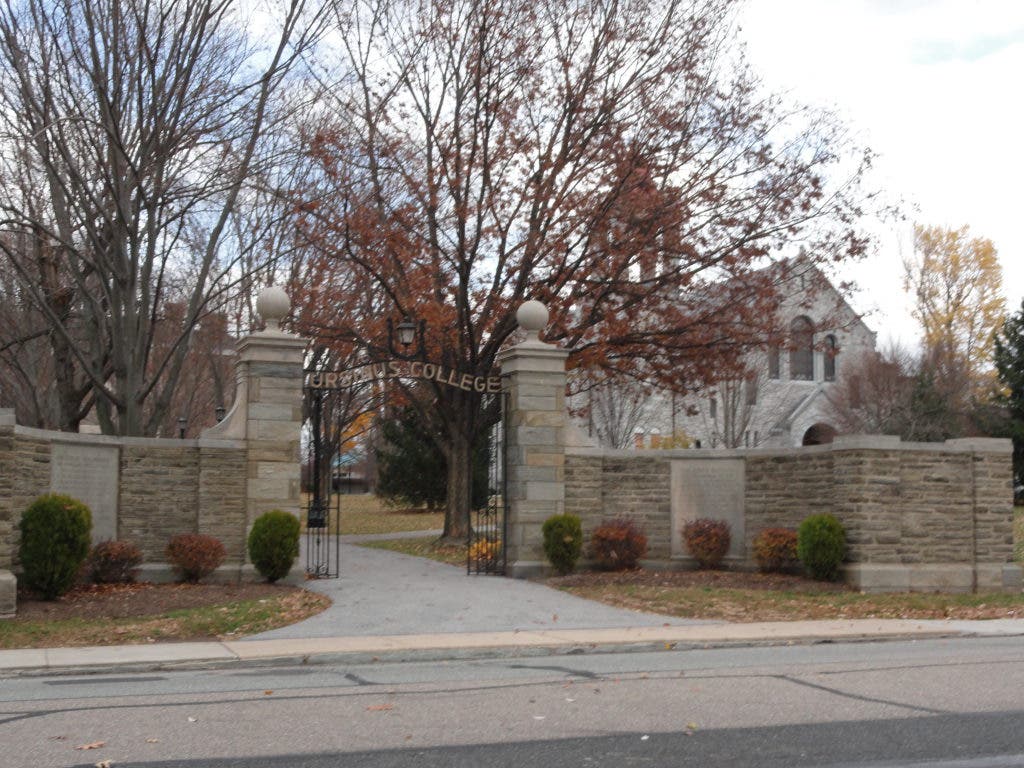
Though most meeting the U.S. Poet Laureate may not be immediately star-struck, meeting the man who served in the position for three years (1997-2000), Robert Pinsky, was quite an experience for many students recently, especially because the event took place on their turf, in many locations on Ursinus’ campus.
In the words of the Library of Congress, “The Poet Laureate Consultant in Poetry to the Library of Congress serves as the nation's official lightning rod for the poetic impulse of Americans. During his or her term, the Poet Laureate seeks to raise the national consciousness to a greater appreciation of the reading and writing of poetry.”
Pinsky was finally able to make it to Ursinus last month after his initial trip had been cancelled due to the weather. While it was amazing just to have the former Poet Laureate on campus, applying his experience and persona to the freshman CIE class was more than fitting and very exciting for all involved.
Find out what's happening in Perkiomen Valleyfor free with the latest updates from Patch.
Ursinus’ version of the “freshmen seminar” is the Common Intellectual Experience, fondly known to freshmen across campus as CIE. In their CIE classes, students work their way chronologically through texts, always keeping in mind three major questions which form the core of the class and its theories: “What does it mean to be human?” “How should we live our lives?” and “What is the universe and how do we fit into it?”
Dr. M. Nzadi Keita, a professor at Ursinus, introduced Pinsky to the freshman class in terms of its CIE coursework, claiming the renowned poet has spent a lifetime answering the three most pressing questions in the classroom. Keita remarked on the poet’s “deep insight and faithful adherence to show us our many splendored selves,” pointing out he had most certainly touched on the subjects students spend every class talking about. She smiled, saying having him at Ursinus as a guest of the freshmen CIE classes was a “particularly splendid idea, indeed.”
Find out what's happening in Perkiomen Valleyfor free with the latest updates from Patch.
Pinsky’s talk was to be incorporated into a CIE class lesson set of romantic poetry the freshmen students had been working with previous to his visit. The poet, though enthusiastic about the college’s CIE program and his relation to it, quickly moved away from the logistics of his being there and into the logistics of poetry itself. He opened saying, “In my opinion, the medium for a poem is not words. And it is certainly not images… The medium for a poem is breath. It is physical. It is a human body.” His point in doing so was to bring students away from the preconceptions of dryness of the pieces and marginal apathy toward them and throw them into the poems themselves. “The author’s been dead for years, but my breath is his medium.” He joked with students, telling them the “little bones in [their] ears” were part of the medium of the poetry he read aloud to the group. “Poetry is uniquely intimate,” he said softly to the auditorium. “It is inherently on a human scale.”
From his introduction of poetry as a concept and captivation of the audience, Pinsky moved to analysis of some of the poems he had asked students to read prior to the event. Among his selections were John Keats and John Donne, Wallace Stevens and Alan Dugan. The Poet Laureate went over the logistics of these poems with brevity, however. He highlighted the key points of the works, making important points on the poems’ compositions and practical purposes. However, Pinsky was more interested in speaking to students about the poem’s relevance in the world and in life.
Bringing the discussion back to the points of CIE, Pinsky told students, “We are born for death. That’s why this course exists.” The poet told students humans are not strong. “We can’t fly or climb, yet we thrive. We dominate. [Humans] may still destroy the world!”
Humans’ only advantage?
“We can transmit information vertically in time.”
And how is it done?
“Poetry is the epitome of how human intelligence is built to transmit things to the next generation.”
The talk ended with a challenge. Pinsky told students they were unimportant, that their teachers were unimportant. Those of greater importance were those who had come before and passed the information to those in the auditorium. Those of the greatest importance are those we have yet to teach; they are those of the future. Pinsky told students, “Being born for death has a glorious, exciting aspect, too. We have work to do.”