Politics & Government
Residents Ask Plymouth Council Not to Settle 'Ridge Park Hotel' Lawsuit
Council heard concerns at special meeting Tuesday night.

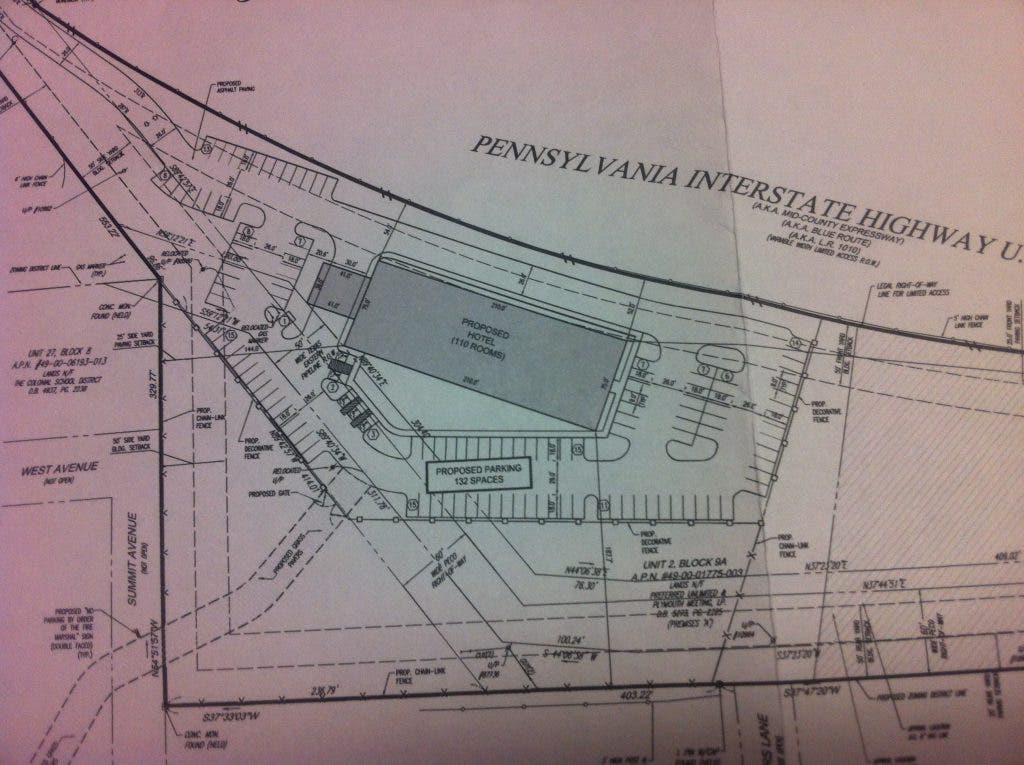

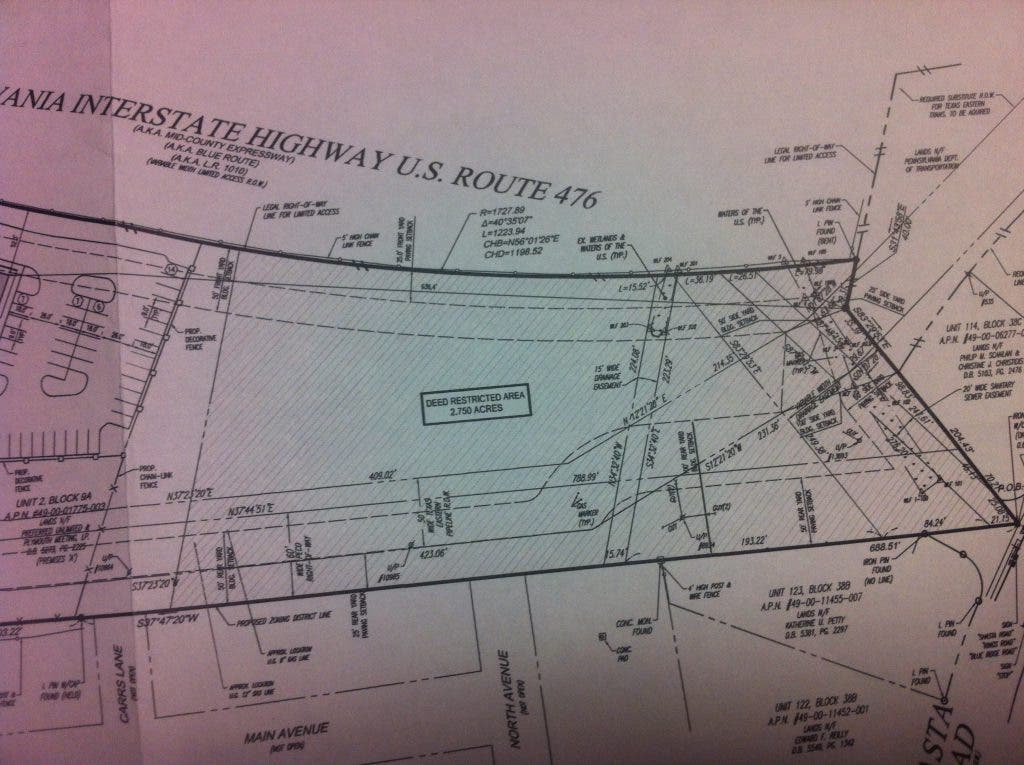
Plymouth Council has a tough decision to make regarding the proposed hotel near Ridge Park Elementary and an associated lawsuit: Go for the win and risk the worst possible outcome, or settle the suit and draw guaranteed ire from township residents.
Council held a special public meeting before its regularly scheduled workshop session Tuesday night, hearing comments from an audience of approximately fifty residents on a proposal from developer Prime Hotels to build a hotel at 2005 Chemical Road, adjacent to Ridge Park Elementary School.
An application for an 82-room building was first presented last year, but failed to clear the first township hurdle when it was denied by the Plymouth Zoning Hearing Board on the grounds that it did not have enough frontage along Chemical Road and was located in a Limited Industrial district outside the township core. That decision was appealed to the Montgomery County Court of Common Pleas by attorney Craig Robert Lewis, but the ensuing court case has yet to be heard, township solicitor Thomas Speers said.
Lewis then took a new approach last month, when he appeared before council with a settlement proposal. Lewis presented updated plans that he says addressed many of the original concerns, such as moving the building farther away from the school, and also increasing the hotel size to 110 rooms, in order to attract more upscale hotel chains.
However, the offer also came with a threat. Lewis said that he may file a second lawsuit claiming "inverse condemnation" should the original appeal be dismissed, essentially claiming that the township has deprived the property's owners from their right to develop the land, therefore requiring Plymouth to pay market value for it.
That would likely be one of the two worst possible outcomes for the township, which would be required to pay anywhere from several hundred thousand to several million dollars for the property if that suit is successful, numerous officials have said. The second worst outcome would be for the township to lose the current appeal, at which point the developer would have much more freedom to build the hotel on their terms, without the changes offered last month.
Accepting the settlement would avoid both of those scenarios, and council chair Sheldon Simpson implored the audience to consider the wisdom of that option.
"If they go to court and are successful, we have absolutely no control over what they do," said Simpson. "We're trying to do the best thing for the township, where we have some say about what's going to go in there."
However, audience members spoke overwhelmingly against that option. Rudolph Degeorge, of 1974 Main Avenue, introduced himself as a resident with safety concerns and as a lawyer who believed any claim of inverse condemnation would be frivolous.
"I was a former child abuse prosecutor in the DA's office in Philadelphia, and my biggest concern is out of the backyard of that hotel, is a K-3 elementary school… it's like giving the fox the keys to the hen house," Degeorge said. "The hotel is four floors, it's high enough to see over the treetops right into the [elementary] area."
Degeorge also read from a Pennsylvania Supreme Court opinion that he believes would support the township in the case of inverse condemnation proceedings. Degeorge said there were 18 possible uses for the property, including light manufacturing and storage, that could be developed.
"The land owner must show that he was deprived of all beneficial use and enjoyment of his property," Degeorge read from the ruling.
Speers said that while the property does provide a number of allowed uses, that he would not discuss potential township strategy in the event of a claim.
Jeffrey Branagh, a township Planning Agency member who has organized opposition to the proposal and lives at 127 Shasta Road, also spoke against the proposal or settling.
"There's a recurring statement from council, that they're looking for what the best interest of the township would be," Branagh said. "I can't say that a hotel, even with the stipulations in the settlement agreement, is in the best interest of the township."
Branagh also shared his opinion that the developer purchased the property in 2007 and has yet to provide a development application within the allowed uses, and therefore does not have grounds to claim reverse condemnation.
Council took additional audience input for about 45 minutes, before adjourning the meeting. Council said there is no immediate action to be taken, and that a public vote on whether or not to accept the settlement would likely come in October at the earliest.
You may also be interested in:
Find out what's happening in Plymouth-Whitemarshfor free with the latest updates from Patch.
Get more local news delivered straight to your inbox. Sign up for free Patch newsletters and alerts.