Health & Fitness
Energy and History in Sewickley
Local governments are trying to keep up with the expansion of new energy technology. How are they faring so far? Considering the past, not all that badly.

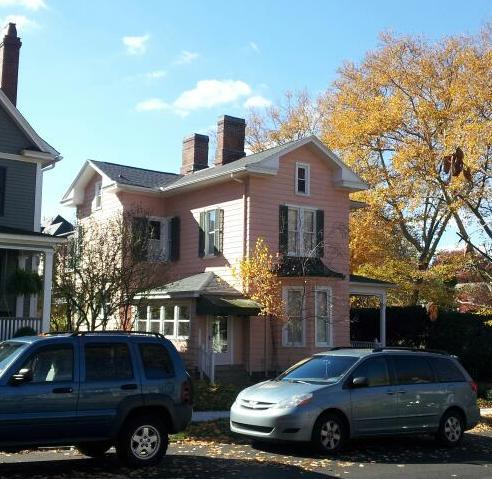


Sewickley Borough government, in the form of borough council and the Historic Review Commission, deserves credit for deftly navigating some tricky waters, with their recent approval of a solar panel installation within one of the zones established by the borough's historic preservation ordinance.
As the Sewickley Herald has reported over the last couple of months, at least two neighbors of Andrew and Dorothy Falk have questioned the approval and subsequent installation of solar panels at the Falk house on Henry Avenue.
The initial objections by Christy Semple and others appeared to be driven initially by esthetic concerns, but most recently has centered on the historic review process itself. Quoting the Herald: “The review process is so abbreviated,” (Ms. Semple) said, adding that nearby neighbors had to go through a lengthy evaluation for projects on their homes."
Find out what's happening in Sewickleyfor free with the latest updates from Patch.
Assuming that the guidelines for historic review are as old as the last time a historic district was established in Sewickley under the ordinance - 1987 - it's not surprising that they might not address something like solar energy, and kind of ironic that solar would not require the same level of review as perhaps a wholesale roof replacement would.
As I wrote last year when the Pink House controversy was in full blush, the ordinance is overdue for comprehensive review, along with the areas affected by it and the review guidelines that give it meaning. The borough appears to be listening about the need to update those guidelines, in response to the increased viability of residential solar as an affordable and desirable technology.
Find out what's happening in Sewickleyfor free with the latest updates from Patch.
I gave solar panel installation a long hard look when I lived in Colorado. Even with a higher average of sunny days per year out there, the design requirements for my house weren't feasible from a logistical or esthetic standpoint at the time.
As it goes so often with technology, the times they are a-changin.
Residential solar is indeed becoming more affordable and efficient, but in my opinion is still not within reach of the average homeowner just yet. A report published in August claimed that the cost of equipment and installation is going down, and the number of U.S. installations has gone up in response. However, the federal tax credits and a state rebate program that contributed to this affordability are both set to expire at the end of the year.
Even with the potential loss of these incentives, solar still makes sense if you have the up front costs in hand. This of course depends on how the system is designed, and how efficiently it operates - in short, how much savings in utility costs over time until the system pays for itself.
The big utility companies seem to be working with owners of residential solar systems, but there has been some push-back when concerns grow about proliferating individual solar users making too big a footprint in the electric grid, and upsetting some business plan or investment strategy somewhere.
A few years ago, the primary electric utility in Colorado tried to get additional fees levied on solar users that sold excess power back to the grid. After some serious backlash, they quickly backed off of their proposal to the Colorado PUC.
Other initiatives around the country have the potential to make consumers even more able to produce renewable energy independently. The Post-Gazette gave a good overview last week on the concept of Community Solar, which is basically where multiple consumers benefit from a collectively owned solar facility. This effort is running into some roadblocks at the state level, due to existing Pennsylvania law regarding electric metering.
The Tribune-Review also gave an overview in Sunday's paper of the cooperative efforts to develop a model solar energy ordinance. This can be used to develop a consistent method of oversight for solar installations, instead of the regulatory potluck that is too often the byproduct of a region with too many individual local governments.
The group driving the effort to develop that consistency is PennFuture. Their website is extremely informative on the issues surrounding solar development in Southwest Pennsylvania, as well as a primary source of information on all manner of environmental issues.
While researching this post elsewhere, I was also drawn to the historical aspects of something most of us take for granted today - the electrification of our homes and workplaces in the late 19th and early 20th Century.
According to Allegheny County property records, some houses in the 300 block of Henry Avenue date back into the 1870's and 1880's. I wonder what those residing in homes at that time thought about all of those unsightly wires being strung through their neighborhoods to provide electricity, and later telephone service. The same goes for those big antennas with the advent of broadcast television, and satellite dishes today.
Sewickley Borough's decision strikes a balance on several fronts:
As there is reportedly no guiding language regarding how solar panels may be utilized in a historic district, the borough worked with the homeowners to limit placement of the panels to a configuration that would minimize ground level visibility from the street. This is illustrated in the photos above.
They fairly applied the existing review processes and construction guidelines to approve the installation on the Falk property, while at the same time signaling a need to update the review guidelines to respond to this technology change.
Perhaps most importantly, the borough balanced their ordinance as written with the rights of the homeowners to make permitted changes to their property.
Those residents still upset with the amount of notification they received, or the perceived visual intrusiveness of the Falk installation, deserve to have their complaints considered for future solar installations in historic areas.
As technology continues to improve efficiency and reduce the visual impact of today's solar systems, perhaps guidelines can be written that address blending in of panels to match the color of the roof, or incorporate other types of solar applications to reduce the visual impact in historic areas. Thin film solar and solar shingles are examples of this.
As important as it is to keep up with technology, this instance also illustrates the need for scheduled periodic review of municipal codes and ordinances, to assure consistency and currency with all manner of changes over time.
The historic nature of these homes has, by default, been balanced with the deployment of technologies designed to improve residential quality of life.
Why should solar power be treated any differently?
Have a good week ahead.
The opinions expressed in this weblog are solely my own as an individual and private citizen, and do not represent the opinion or policy of my family, my employer, or any other private or public entity.