Schools
A Day in the Life of a School Principal on 9/11: Decisions, Teaching Moments, Keeping the Memory
Springfield High School Principal Frank McKnight tells Patch his memories of 9/11 as principal of E.T. Richardson Middle School in 2001.

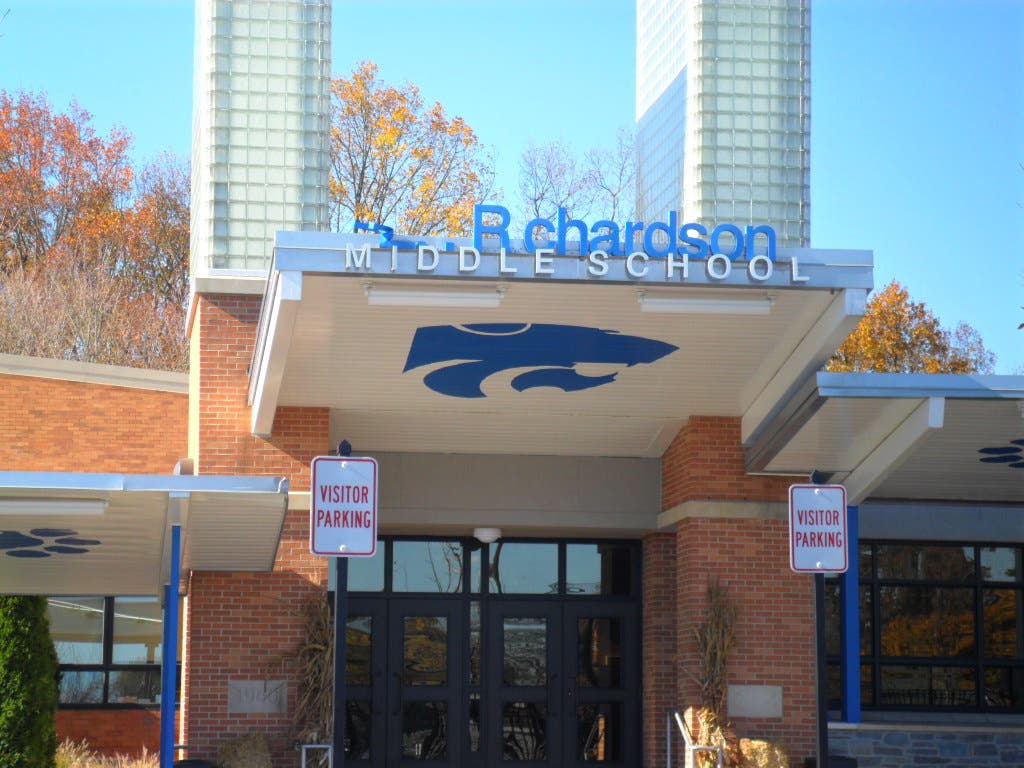


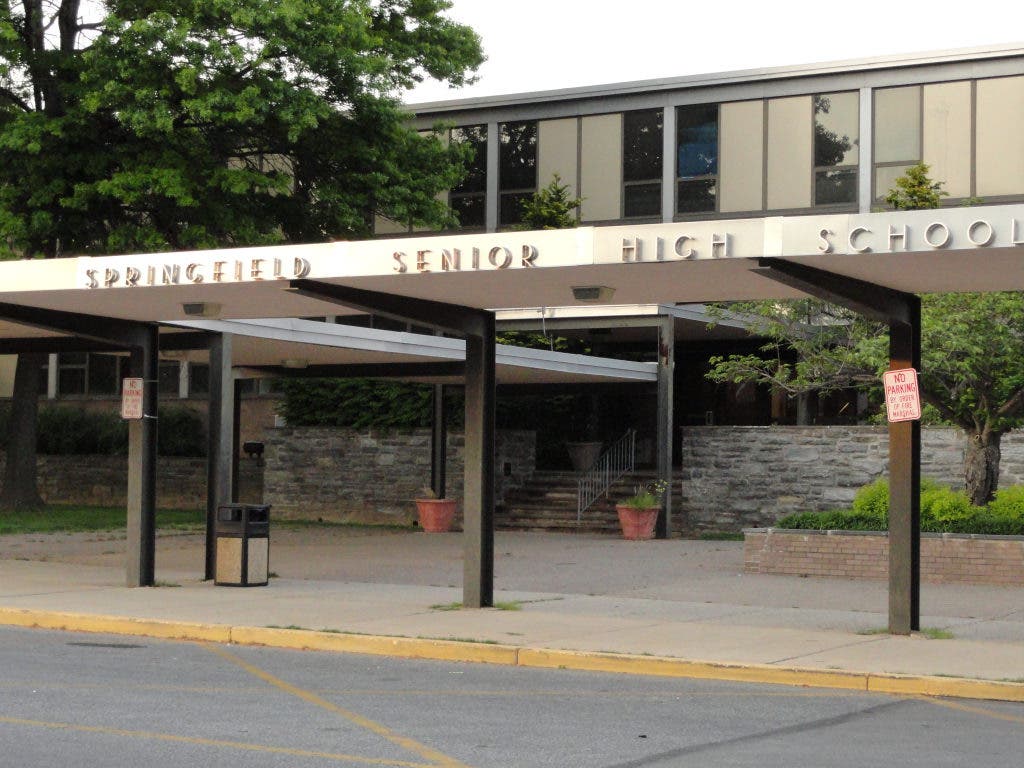


“Sept 11 was one of those days that you vividly remember exactly where you were when you first heard the shocking news," said Frank McKnight, current principal, who was principal of in 2001.
"As a middle school principal, my goal was to maintain normalcy as best as possible so that students could learn about the news at home with the support and explanations from parents.”
The News
Find out what's happening in Springfieldfor free with the latest updates from Patch.
McKnight was transitioning from the role of assistant Springfield High School principal to head principal at E.T. Richardson Middle School.
He was organizing an assembly for the junior class in the auditorium Tuesday, Sept. 11, 2001, a little after 9 a.m., when his colleague Tom Grubb told him 1 World Trade Center had just been struck by an airplane.
“I had assumed that it was an aviation accident; I thought hopefully there were minimal or no major injuries. We didn't know how bad it was. By the time we ended that meeting, 15 minutes later, after the second tower was struck, we realized: this is no accident; we’re being attacked,” he said.
Find out what's happening in Springfieldfor free with the latest updates from Patch.
McKnight's most vivid memory of Sept. 11 was the realization that it was a purposeful, deliberate, attack.
“When the second tower was struck, that's when I realized our lives are going to change. It just hit me like a ton of bricks. I'm sure they had already identified it as an attack in the newsrooms; but I wasn't watching the news, I was in an assembly,” he said.
McKnight did not see the towers being struck live.
“When I did get to see news coverage, that's when I realized that everything is going to change for us now. I knew that it was going to affect all of us.
“Tom told me just as reporting a fact, but I could tell, in hindsight, that he had been processing it as more than just an accident; whereas, I initially had reason to think anything except, ‘Wow, that's a shame, what a terrible accident.’
McKnight said Grubb had reason to be concerned; his daughter was living in New York City and attending NYU.
"As I think back, the way he said it, he was skeptical. I think he had thought it through already and realized it was not an accident. As he reported it to me, I could tell he was concerned; he had a right to be concerned,” he said.
“We didn't all have cell phones back then, but I did call my wife to checked in.”
Decisions
“At that time, I had to go down to the middle school for a meeting as interim principal. I quickly became involved with, ‘How do we handle the middle school?’ Within half an hour, parents began calling and wanting to pick up their kids. I worked with the head principal and we made some decisions," he said.
McKnight said about 20 percent of parents took their kids out of school that day.
“When the Pentagon was hit, we ended up having more parents take their kids home. After the attacks on Washington, I think parents realized it wasn't an isolated incident to the Twin Towers; this could be any big city.”
McKnight walked around the middle school and spoke with teachers about how to field questions from the district's youngest students.
“The 5th and 6th grade teachers were able to continue with normal instruction. If the TV wasn’t on, the kids were otherwise occupied. If kids did learn about it, teachers were told to say, ‘Everything will be okay; you are safe. When you go home, you can ask your parents about what happened.’ We differed the details of the incident for parents to share,” he said.
Preparedness
McKnight said some of the district’s existing emergency evacuation plans changed as a result of 9/11 and the Columbine High School massacre. Students are now required to get at least 500 feet away from the building.
“It takes a little more time when we run an evacuation drill, but now our students know exactly where to go when we need to evacuate,” McKnight said.
Lockdown procedures are in place to keep children in the building but away from windows, in the event of serious weather conditions, if there were an attack in the vicinity, or any event in which the school might be the safest place for kids to stay.
A Teaching Moment
“Basically, the 5th- and 6th-graders were shielded from any news reports. In 7th and 8th grades, we did allow teachers to talk to students about what was happening and use it as a learning opportunity. As the morning went on, and several parents started to call and come for their kids, we realized that, although it is a teaching moment, this is a tragic event in our country.
"We decided to just keep the TVs off and continue with normal instruction, just to get through the day, until students could go home and process it more clearly with the support of their parents.
“It became an opportunity to teach the children about tolerance and diversity. We had to work our way through some unpleasant incidences, where students of the Muslim faith had listened to some negative comments or were bullied in some ways.
“We tried to make it an opportunity for all of our students to understand that this attack actually killed people from all backgrounds, all religions and all ethnicities. It was not necessarily a Muslim-based attack and our Muslim students had nothing to do with this.
"Parents of Muslim students were concerned, but were very supportive in working with us because they understood what non-Muslim students, and people in general, were thinking and feeling. While it was frustrating, they wanted to work with us to create a better understanding, a better tolerance, for the good students we have of all backgrounds.”
has about 8 percent minority students; of that, roughly 6 percent are African American and about 2 percent are a non-African American minority, McKnight said. He said those numbers are the same today as they were in 2001.
Memorials
"We had a very moving ceremony at the middle school for the one-year anniversary," McKnight said. "We brought all the students out to the field where we had a wood model of the Twin Towers. We had a prolonged moment of silence while the students walked by the model and had a moment to themselves, one grade at a time."
This year the district will have a moment of silence on Friday, Sept. 9 as the 10th anniversary of 9/11 is on a Sunday.
Too Young to Remember
"The first year we had a very significant memorial service. After that, it became moments of silence. Then we realized students at the elementary and middle school levels now are too young to remember that day and those events," McKnight said.
Current high school seniors, the oldest students in the district, were in 2nd grade in 2001, he noted.
Keeping the Memory
"So the social studies teachers talk about it in class, where they have an intimate environment to try to make sense of it for the students and answer questions. Ultimately our goal is to continue to talk about it.
“We will speak to the students once again about the significance, how it changed our country and why it's important to never forget the victims and the event.”
This article was created as part of a larger project in coordination with Action America to document how the country has been affected by 9/11. See how you can become an Actionist and turn the events of 9/11 into positive action at www.ActionAmerica.com and look for more local coverage of the 10th anniversary of 9/11 on Patch.
Get more local news delivered straight to your inbox. Sign up for free Patch newsletters and alerts.