Politics & Government
West Nile Mosquito Spraying Set For Warminster This Week
Spraying will occur in several areas where mosquito populations are known to thrive and breed.


WARMINSTER, PA — Parts of Warminster and Warrington townships will be sprayed to help control mosquito populations and prevent the spread of West Nile Virus this week, officials said.
The spraying will occur on Thursday, Aug. 11. It comes just days after spraying was conducted in several other Bucks County municipalities, including
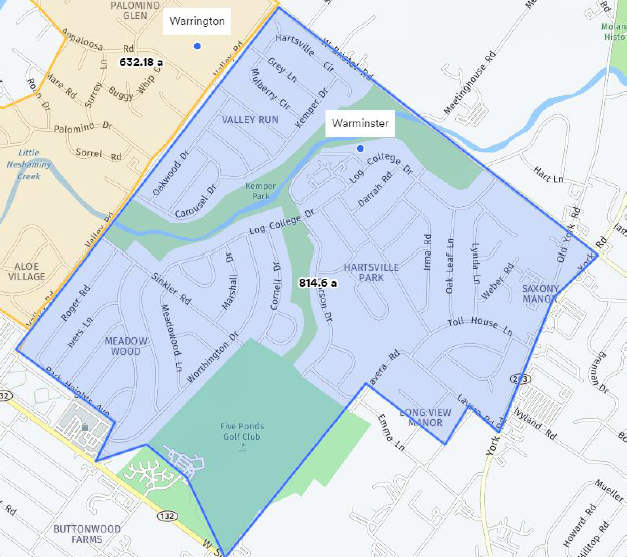
In Warminster, the treatment area is surrounded by Valley Road, Bristol Road, York Road (263), Lavera Road, Sloan Road, Worthington Drive, and Park Heights, officials said.
Find out what's happening in Warminsterfor free with the latest updates from Patch.
Five Ponds Golf Course and Kemper Park will also receive spraying.
The spray will be delivered from a truck-mounted sprayer with the insecticide Biomist, at a rate 1.5 ounces per acre. Biomist, which uses permethrin, one of the more common insecticides. Officials expressed confidence the spray would not harm local ecology. "These application materials have a very low toxicity profile to mammals and will have negligible impact to non-target insects and the environment," the county said in a statement.
Find out what's happening in Warminsterfor free with the latest updates from Patch.
A map of the spray area is included below.
In Warrington, treatment will be focused between 611 North, Oxford Drive, Bristol Road, Valley Road, Street Road, Neshaminy Ave., Carriage Way, Georges Lane, Rodgers Ave., Palomino Drive, and Blackhorse Drive.
The spray is Warrington is a Altosid SR5 larviciding solution at 4 ounces per acre, and is meant to specifically disrupt breeding.
If weather conditions disrupt Thursday's spraying, it will occur on Friday instead.
The mosquitoes that transmit WNV breed in areas with standing and stagnant water. "These areas can include urban catch basins, clogged gutters, discarded tires, poorly maintained swimming pools, flower pots and other types of plastic containers," the DEP said.
West Nile virus appeared for the first time in Pennsylvania in birds, mosquitoes and a horse in 2000.
It is most commonly spread to humans by infected mosquitoes. It can cause febrile illness, encephalitis (inflammation of the brain) or meningitis (inflammation of the lining of the brain and spinal cord), according to the CDC.
Although mosquitoes can bite at any time of day or night, they are most active at dawn and dusk.
" When outdoors, people can avoid mosquito bites by properly and consistently using DEET-containing insect repellants and covering exposed skin with lightweight clothing. To keep mosquitoes from entering a home, make sure window and door screens are in place and are in good condition," the Pennsylvania Department of Environmental Protection said.
Get more local news delivered straight to your inbox. Sign up for free Patch newsletters and alerts.